


Friday May 1, 2026     7:00 PM ET


MAY 2026
May 3 - New York City 5 Boro Bike Tour
May 4 - The Met Gala
May 4-8 National Teacher Appreciation Week
May 5 - National Teacher Appreciation Day
May 5 - Cinco de Mayo
May 6-12 - International Nurses Week
May 10 - Mother's Day
May 12-23 - Cannes Film Festival
May 16 - New Moon 25° Taurus
May 16 - Preakness
May 20 - Sun in Gemini
May 21-23 - Shavuot (Sunset)
May 24 - American Music Awards - AMAs
May 24-29 - Hajj
May 25 - Indianapolis 500
May 25 - Memorial Day
May 31 - Full Moon 9° Sagittarius


New & Updated Files
Scientists found the Milky Way's edge and it's closer than expected
Dreams are shaped by your personality, habits, and life experiences
Your Pleasant Memories Can Vanish For a Surprisingly Simple Reason
Scientists restore memory by blocking a single Alzheimer's protein
7,000-Year-Old DNA Rewrites the Story of the Neolithic Revolution


Archived Blogs
Class of 2026 - Reality Check
US Military Draft - Reality Check 2026
King George and Queen Camilla visit the US


Today's Birthday

May 1, 1910 - April 27, 1986

J. Allen Hynek Astronomer, UFOlogist, Professor, Videos
Consulted on Close Encounters of the Third Kind
Project Sign (1947-49) - Project Grudge (1949-52) - Project Blue Book (1952-69)

When the long awaited solution to the UFO problem comes, I believe that it will prove to be not merely the next small step in the march of science, but a mighty and totally unexpected quantum leap. We had a job to do, whether right or wrong, to keep the public from getting excited, but the day will come when the truth will come out.


Remembering UFO Author and Researcher David Wilcock


Ellie's World Today
Empire State Building Opens
Astronaut Scott Carpenter
Astrologer William Lily
Full Moon 11° Scorpio
National Bike Month - NYC 5 Boro Bike Tour
May Day Celebrations
International Workers' Day
Class of 2026 - Reality Check
US Military Draft - Reality Check 2026


Reading with Ellie


Ellie's Archives

Crystalinks Turns 30


Ellie's Verrazano Bridge Sunset Pics


May 1, 1931

The Empire State Building opened.


I hosted a live global call-in TV show "Satellite Psychic" in
1992 from a studio near the top of the Empire State Building.

My guest that week was UFO researcher Pat Marcattilio from New Jersey.


May 1, 1925 - October 10, 2013

Scott Carpenter Astronaut - Videos

At no time when the astronauts were in space were they alone.


May 1, 1602 - June 9, 1681

William Lilly English Astrologer - Videos

"The Man Who Saw the Future"

In astrology, the Moon represents your emotions, your comfort zone,
your maternal side, and how you express your feelings and vulnerability.

Centuries from now Man will visit the Moon on his exploration of space.


May 1, 2026


Full Moon 11° Scorpio

Full moon alert: May's Flower 'micromoon' will look extra small tonight, with a rare Blue Moon following

Scorpio is a zodiac sign often linked with intensity, mystery, and transformation. Life is a mystery in one sense or another. What mystery would you like to see revealed? In an age driven by science and technology, mystery remains part of the human experience. The more we discover, the more new questions emerge. Some mysteries are cosmic, others deeply personal, involving the hidden truths within our own lives and the unknown paths still ahead of us.


May is National Bike Month

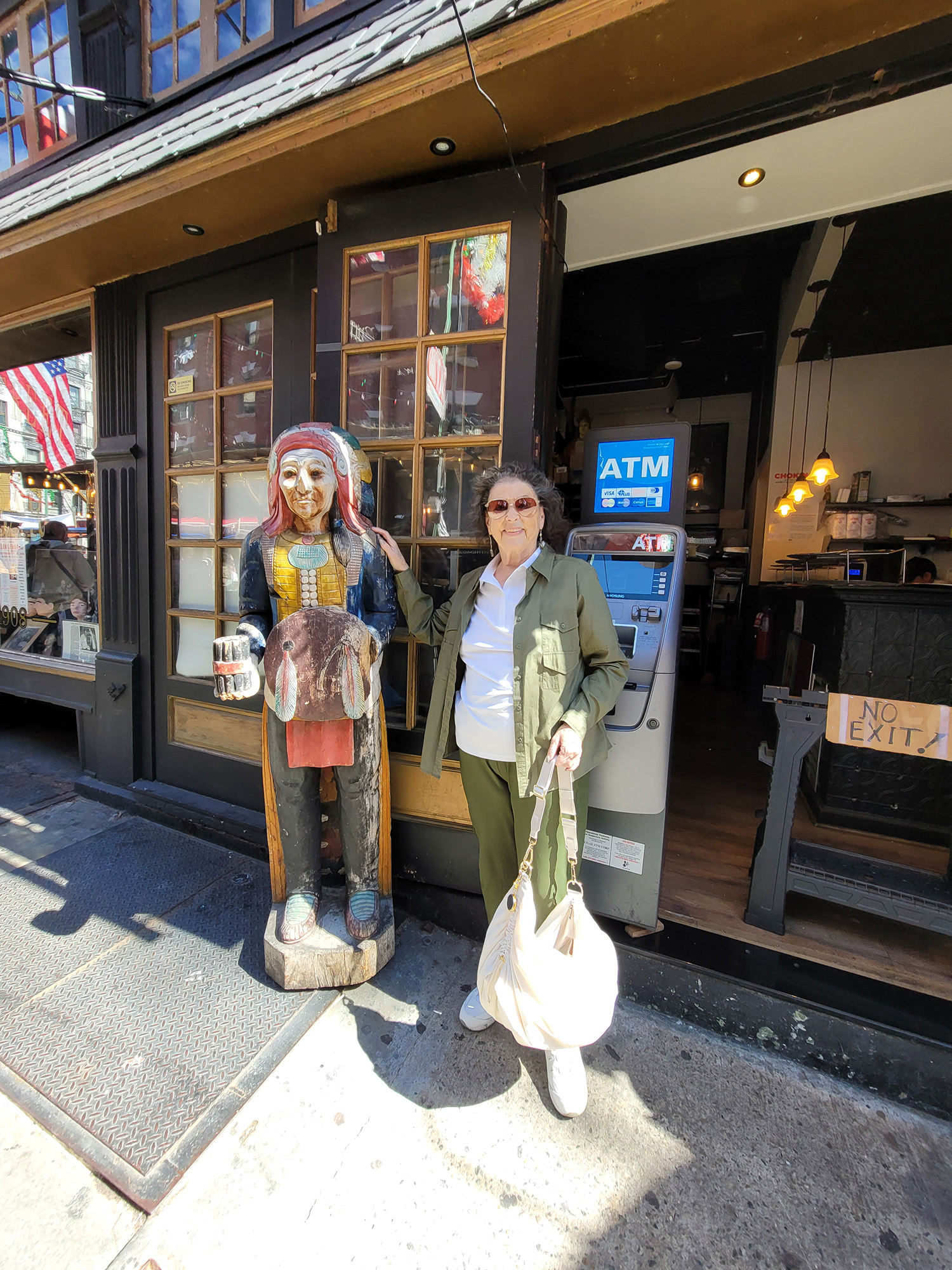
The Shore Road Promenade near the Verrazano Bridge

From exercise to transportation - bike riding is healthy and fun.


May 3, 2026


New York City 5 Boro Bike Tour - Wikipedia


May 1, 2026

May Day Origins and Spring Celebrations

When I taught Elementary School we always celebrated May Day in style.


May 1, 2026


International Workers' Day is referred to as May Day in some countries.

The way we work today is changing.

May Day protests to highlight struggles of workers across the US

Nationwide May Day protests expected to pick up mantle of 'No Kings'


Class of 2026 - Reality Check


It's the last day of April 2026, and by now most high school seniors, and others, have chosen their college or university. This is a time of high emotion for both students and parents, as plans are set into motion and long-anticipated transitions become real.

In the past, earning top grades and meeting the expected academic standards almost guaranteed admission into a student's college of choice. Strong test scores, extracurricular activities, and recommendations were often enough to secure a place at a respected university. There was a clearer sense of predictability in the admissions process, giving students confidence that hard work would be rewarded with acceptance letters from the schools they dreamed of attending.

Today, however, the landscape has changed dramatically. Competition has intensified as applications pour in from across the country and around the world. Many universities receive record numbers of applicants each year, making even highly qualified students uncertain about their chances.

Factors beyond academics - such as essays, personal stories, diversity goals, financial considerations, legacy admissions, athletic recruitment, institutional priorities, and scholarships, now play a significant role in decisions.

As a result, students anxiously wait for admissions results knowing that even near-perfect grades may no longer guarantee acceptance. The process can feel unpredictable and emotionally exhausting, especially for those who have spent years striving toward a specific goal. For many families, this period becomes a mixture of hope, stress, excitement, and fear of disappointment as young people stand at the threshold of an important new chapter in life.

For some the feeling is excitement because they got into their college of choice. For others it's the uncertainty about leaving behind friends and family to go off on a journey that will shape their future. Some already know what they want from college while others expect college to show them the way.

Teens, as you know, are very emotional people - especially as those are the years that full blown mental illness shows itself. They are influenced not only by their emotions but by many factors such as social media, friendships, family expectations, and the world at large - all playing a role in how decisions are made and experienced.

For some in 2026 it is a time of joy while for others it's a feeling that they have settled because they didn't get into their first college choice. Little do they know that wherever they wind up - destiny has already planned their futures. Where they begin is only one part of a much larger story.

Even small factors can shape big decisions. A recent survey noted that something as simple as the weather on a campus visit can influence a student's choice - too hot, too cold, or too rainy, and a school might suddenly feel less appealing. This "Goldilocks Effect" can quietly tip the scales, even when more meaningful factors are at play.

I remember when my four grandsons in Connecticut and New Jersey were exploring colleges in the South. The idea of spending four years in places like Miami or California certainly had its appeal, but in the end, their decisions were guided by more lasting considerations - academic programs, distance from home, finances, and a willingness to see where the next four years might lead.

The world will be a very different place in four years. Wherever students land today - their paths will continue to evolve. The college they choose is not the final destination - it's simply the starting point.

When choosing a major, students are increasingly encouraged to think beyond immediate interests and consider fields that have the potential to shape their long-term future. A major is no longer simply about selecting a subject to study - it can influence career opportunities, financial stability, personal fulfillment, and the ability to adapt in a rapidly changing world.

Many students now weigh factors such as advances in technology, the growth of artificial intelligence, healthcare needs, environmental challenges, and global economic shifts when making their decision. Others focus on choosing a path that has the potential to make a meaningful impact on society or align with personal passions and values.

At the same time, the pressure to choose correctly can feel overwhelming for young people standing at the crossroads of adulthood. Some worry about selecting a major that may become less relevant in the future, while others fear committing to a path before fully understanding who they are or what they truly want from life. Despite these uncertainties, choosing a major remains an important step - not necessarily a permanent definition of one's future, but the beginning of a journey filled with growth, discovery, and evolving possibilities.

Whether students move on to a university, community college, associate degree program, trade school, military service, or directly into the workforce after finishing high school, they are stepping into a world far more uncertain and rapidly changing than previous generations experienced. The transition into adulthood has always carried challenges, but today’s young people face an environment shaped by economic instability, rising living costs, political division, technological disruption, and constant social change.

Many students are entering adulthood while questioning what career paths will remain stable in the future as artificial intelligence and automation continue transforming industries at remarkable speed. Others worry about financial independence, affordable housing, healthcare, student debt, and whether traditional ideas of success still apply in a world that seems to evolve almost daily.

At the same time, this generation is also entering adulthood with extraordinary access to information, innovation, and opportunities that did not exist decades ago. Technology allows young people to learn, create, connect, and build careers in ways previous generations could scarcely imagine. Trade schools and skilled labor professions are becoming increasingly valuable, while entrepreneurial paths and digital careers continue to expand beyond conventional office jobs.

No matter which direction students choose after high school, the journey ahead will require adaptability, resilience, emotional strength, and a willingness to continue learning throughout life. The world they are inheriting may feel unpredictable, but it is also filled with possibilities for those prepared to grow alongside change rather than fear it.


In an uncertain world filled with political tension, economic instability, technological disruption, and social chaos, recent college graduates are facing one of the most dismal and unpredictable job markets in years - with hopes that the future carves out a better path.

Employers across many industries are slowing hiring, reducing opportunities for young adults attempting to enter the workforce for the very first time. Positions once considered stepping stones into professional careers are becoming harder to find, leaving many graduates questioning where they fit into an increasingly competitive economy.

Adding to these anxieties is the rapid rise of artificial intelligence and automation. As A.I. systems continue to evolve and perform tasks once handled by humans, fears are growing that many traditional entry-level jobs may disappear altogether. Careers in administration, customer service, media, technology, and even creative fields are already being reshaped by machines capable of working faster and at lower cost than human employees.

For graduates who spent years studying, preparing resumes, and accumulating student debt in pursuit of stability, the future can suddenly feel uncertain and fragile. Many now face the difficult reality of competing not only against one another, but against technologies advancing at extraordinary speed.

Some are reconsidering career paths entirely, while others are attempting to adapt by developing skills that emphasize creativity, critical thinking, emotional intelligence, and human connection - qualities still difficult for machines to fully replicate.

Yet despite the uncertainty, this generation also possesses remarkable resilience and adaptability. History has shown that periods of disruption often create entirely new industries, opportunities, and ways of living. The challenge for today's graduates may not simply be finding a job, but learning how to evolve alongside a rapidly changing world that is redefining the meaning of work itself.

Graduates Reset Ambitions in Pursuit of First Jobs. Young people aiming to build careers are entering fields they had not considered to find their footing.   NYT - April 28, 2026


US Military Draft - Reality Check 2026


Automatic military draft registration takes effect in December
CNN - April 29, 2026

Today we are faced with war in Iran, rising global instability, political unrest, cyber warfare, economic uncertainty, and growing fears about how quickly international conflicts can escalate.

As tensions increase across the Middle East and governments strengthen military preparedness, many young Americans and their families are once again discussing something that previous generations hoped would remain part of history - the possibility of a military draft.

Although the United States still operates with an all-volunteer military force, recent changes involving the Selective Service System and automatic registration requirements have intensified public concern and speculation. Discussions surrounding military readiness, troop shortages, and expanding global conflicts have fueled anxiety among many Americans, especially younger generations already facing uncertainty about their future.

For many in my generation, memories of the Vietnam era and the last active draft still carry emotional weight. We remember the fear, the protests, the divisions within families and communities, those killed and others wounded returning with PTSD, and the lengths some young men went to in order to avoid being sent into a deeply controversial war.

One of the most frequently mentioned examples remains Donald Trump and the medical deferment he received for heel spurs during the Vietnam era - something critics and comedians still reference today.

Even decades later, stories from that era continue to shape how Americans react whenever the word 'draft' resurfaces in public discussion. Today's generation faces a different world shaped by artificial intelligence, digital surveillance, drone warfare, and global instability, yet the fear of being called into military service during uncertain times still resonates powerfully.

At the same time, there is currently no official military draft in the United States, and experts note that reinstating one would require major political and congressional action though it should be noted that Trump makes decisions on a whim, and without the consent of Congress.

The recent changes to the draft largely involve automatic Selective Service registration rather than active conscription.

Still, in a world where headlines are increasingly dominated by war, unrest, and geopolitical tension, the topic alone is enough to create anxiety for students, graduates, and young adults already navigating one of the most unpredictable periods in modern history.

Now, with the latest Trump administration policy moving the Selective Service system toward automatic registration beginning in December, anxiety has once again entered the national conversation.

Young men today are already navigating economic uncertainty, rising costs, social pressures, rapid technological change, and concerns about the future. The idea of mandatory military registration - even if only administrative - naturally raises questions and emotions.

At the same time, it is important to separate political rhetoric from legal reality. Automatic registration does not mean an active military draft is coming. Congress would first have to authorize any draft before one could ever take place.

The new policy simply replaces the old self-registration system, where failing to register could technically result in criminal penalties. Under the updated system, eligible men ages 18 to 26 would be registered automatically through existing government records.

Questions have also circulated online about whether this would apply to Trump's youngest son, Barron Trump, 20. Some have joked that his reported height at 6 feet 9 inches tall - would exempt him from service, though military standards and exemptions are far more complex than internet commentary suggests.

Let us hope the latest Trump administration draft advisory does not become a "thing" today's young man have to deal with.

Still, broader concerns remain. Critics question whether increasing military preparedness signals a more aggressive foreign policy direction, while supporters argue it is simply a modernization of an outdated bureaucratic system. In today's polarized climate, even procedural government changes can quickly become symbols of larger fears about war, leadership, and national identity.

For those who lived through Vietnam - the emotional response is understandable. The word 'draft' carries historical weight. It recalls a time when young Americans faced life-altering uncertainty, and when trust in government institutions was deeply tested. Many hope the nation never returns to that point again.

Further let's hope a deranged Trump isn't planning to send troops and start wars around the world in the name of peace - or is he already doing that? We know it's always about money for him so follow the money ...


Ellie's World Archived Blogs 2026


CRYSTALINKS HOME PAGE


ALPHABETICAL INDEX


PSYCHIC READING WITH ELLIE


Book Reviews - Order Your e-Book


Spiritual Symbols and Sacred Geometry Jewelry

Ka Gold Jewelry - Spiritual Symbols and Sacred geometry
David Weitzman's work harnesses the power of spiritual symbols and sacred geometry to bring those wearing them health, happiness, vitality, abundance, and above all - love. In the collage above you can find Genesa Crystal, Flower of Life, Sun Talisman and Merkaba Prana. David's Work is based on Sacred Geometry, Kabbalah, Astrology. To learn more visit Ka Gold Jewelry