
Global warming and climate change are terms for the observed century-scale rise in the average temperature of the Earth's climate system and its related effects. Read more
2026 - How much longer will planet Earth be sustainable? We are currently experiencing unprecedented global warming, wildfires, tornadoes, and flooding. With earth changes accelerating exponentially I tend to think about Earth Changes: What Will Next Year Bring?
Earth's Biggest Mass Extinction Reveals Chilling Parallels to Today's World Science Alert - August 2, 2026
There can be no doubt that planet Earth is warming up - each year setting new records - seeing the repercussions of global warming from increasing wild fires to extreme temperatures. It is all part of accelerating Earth changes that lead to closure in the simulation of reality.
Alongside climate change we also find an natural disasters increasing exponentially - destruction of the tectonic plates, increase in earthquake activity, active volcanoes with more to come. There is no going back. Some believe this is the natural cycles of Earth history while others have different theories bordering on conspiracies and pseudoscience.
Global warming appears to have shifted into a faster gear. Science Daily - August 2, 2026
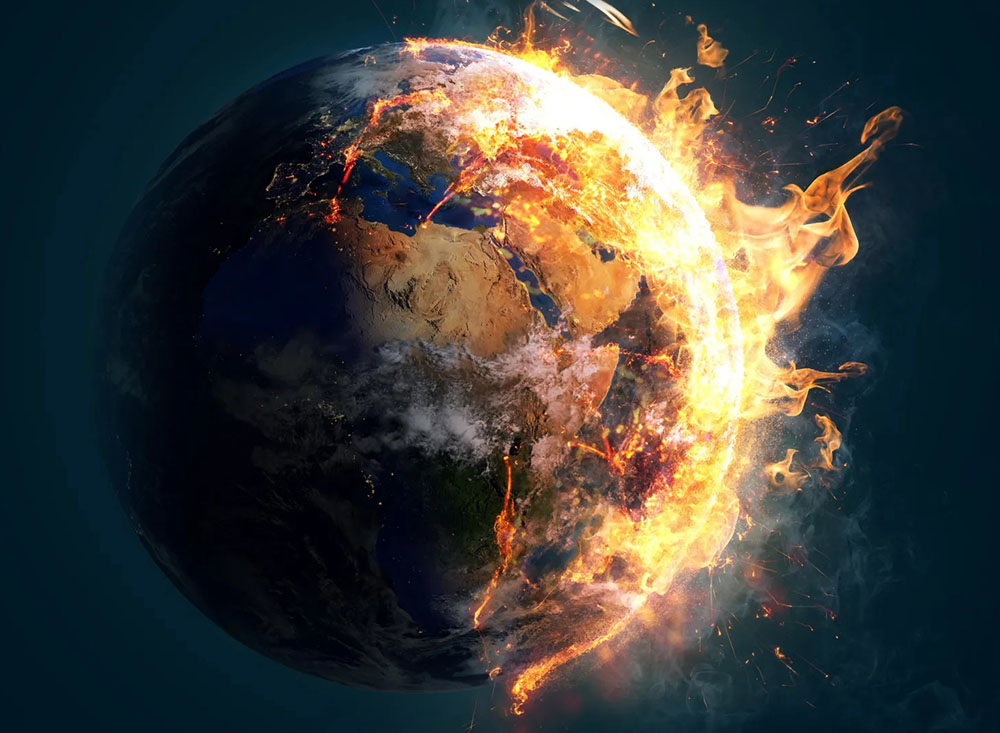
Global warming has sped up since around 2015. Over the past decade, global temperatures have risen at an estimated pace of about 0.35°C per decade, depending on the dataset used.
European heat wave shattering temperature records PhysOrg - June 26, 2026

It's having major impacts on human health, on ecosystems, on agriculture, on labor productivity, and it's accompanied in some areas, in particular France, by worsening drought and the risk of wildfires, as well as localized storms

Why is Europe the world's fastest warming continent? PhysOrg - May 25, 2026
Europe: World's Fastest-Warming Continent Swelters Under Record 'Heat Dome' Science Alert - May 27, 2026
Exceptionally early heat wave shatters records and brings deaths in Europe PhysOrg - May 27, 2026
UK beats May heat record with 33.5C registered near London PhysOrg - May 26, 2026
Over 400 records broken as historic heatwave roasts more than 40M across the West with dangerous temperatures Fox Weather - March 19, 2026

Regional temperature records broken across the world in 2025 PhysOrg - December 31, 2025
Globally, the last 12 months are expected to be the third hottest ever recorded after 2024 and 2023, according to the provisional data, which will be confirmed by Copernicus in its annual report in early January
Heat Waves Can Accelerate Aging as Much as Smoking or Drinking Science Alert - August 29, 2025

As our planet steadily gets warmer, our bodies will need to cope with the stresses of higher temperatures. A new study shows that continued exposure to heat waves can age the body as much as regular drinking or smoking.
UAE breaks May temperature record two days in a row, reaching 124.9°F Watchers - May 27, 2025
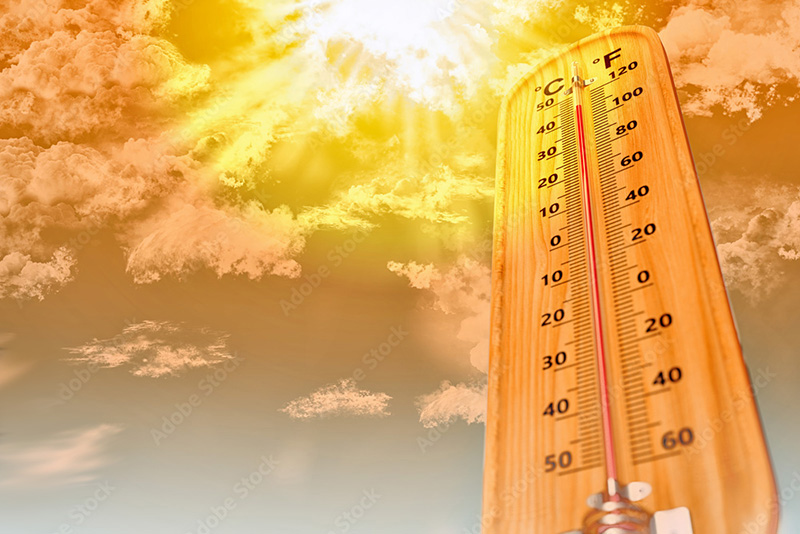
Havana sets new May temperature record at 38°C (100.4°F) Watchers - May 24, 2025
Record-high share of Americans now consider global warming to be a major concern, poll reveals PhysOrg - April 17, 2025

In the latest Gallup survey, 48% of respondents said global warming will pose a "serious threat" to them or their way of life during their lifetime
NASA Reports Sea Levels Rose by 'Unexpected' Amount in Earth's Hottest Year Science Alert - March 14, 2025

This was due to an unusual amount of ocean warming, combined with meltwater from land-based ice such as glaciers
Extreme Heat Can Accelerate Aging, New Research Finds Science Alert - February 27, 2025

Sustained periods of heat do more than that - they age us faster. Cumulative heat stress changes our epigenetics - how our cells turn on or off gene switches in response to environmental pressure.
Unraveling a paradox: Study explores why extreme cold events persist despite global warming PhysOrg - February 11, 2025

Findings show that climate change has reduced the intensity of extreme cold events.
Climate modeling study: Rise in heat deaths will substantially outweigh fewer cold deaths PhysOrg - January 27, 2025

2024 first year to pass 1.5C global warming limit BBC - January 10, 2025

Humanity Faces a Brutal Future as Scientists Warn of 2.7°C Warming Science Alert - October 9, 2024

You don't have to look far to see what climate change is doing to the planet. The word "unprecedented" is everywhere this year. We are seeing unprecedented rapidly intensifying tropical storms such as Hurricane Helene in the eastern United States and Super Typhoon Yagi in Vietnam. Unprecedented fires in Canada have destroyed towns. Unprecedented drought in Brazil has dried out enormous rivers and left swathes of empty river beds. At least 1,300 pilgrims died during this year's Hajj in Mecca as temperatures passed 50°C. Unfortunately, we are headed for far worse. The new 2024 State of the Climate report, produced by our team of international scientists, is yet another stark warning about the intensifying climate crisis.
Monday Was The Hottest Day on Earth, Breaking Sunday's Record Science Alert - July 25, 2024

Earth withered through a second-straight day of record-breaking temperatures on July 22, the EU's climate monitor said Wednesday, as parts of the world suffer devastating heatwaves and wildfires.
It's Official: Summer of 2023 Was The Hottest in 2,000 Years Science Alert - May 15, 2024

Tree ring data confirms it's been 2,000 years since the Northern Hemisphere had a summer as hot as last year's. Not since the height of the Roman Empire has life on Earth experienced a summer so extreme.
The planet just shattered heat records for the ninth month in a row CNN - March 7, 2024
Last month was the planetŐs hottest February on record, marking the ninth month in a row that global records tumbled, according to new data from Copernicus, the European UnionŐs climate monitoring service. February was 1.77 degrees Celsius warmer than the average February in pre-industrial times, Copernicus found, and it capped off the hottest 12-month period in recorded history, at 1.56 degrees above pre-industrial levels. ItŐs yet another grim climate change milestone, as the long-term impacts of human-caused global warming are given a boost by El Ni–o, a natural climate fluctuation.
Scientists Discover Alarming Evidence Global Warning Is Accelerating Science Alert - January 19, 2024
Since the 1960s each decade has been hotter than the last, exactly as predicted by many climate models. But there has been some debate in the science community about whether or not this rate of warming is accelerating, particularly in light of last year's climate chaos.
It's a moment scientists have warned about for months: Earth has just ended its warmest year since people began keeping records, and scientists say it may have been the warmest in 125,000 years USA Today - January 1, 2024
Each year since 2014 stands among the top 10 warmest years since people began keeping track, based on increases in global average temperatures above the previous century, according to NASA and NOAA. The year 2016, which included the influence of a strong El Nino, was the warmest year on record. Then 2020 matched it.
Our Planet Is Literally Shaking Under The Effects of Global Warming Science Alert - November 7, 2023

As oceans waves rise and fall, they apply forces to the sea floor below and generate seismic waves. These seismic waves are so powerful and widespread that they show up as a steady thrum on seismographs, the same instruments used to monitor and study earthquakes.
The world has just experienced the hottest summer on record by a significant margin CNN - September 6, 2023
As heat waves continue to bake parts of the world, scientists are reporting that this blistering, deadly summer was the hottest on record - and by a significant margin.
It's Now Official: July Was Earth's Hottest Month Since Official Records Science Alert - August 9, 2023
July was the hottest month ever recorded on Earth, the European Union's climate observatory confirmed Tuesday, warning of dire consequences. Marked by heatwaves and fires all around the world, the previous month was 0.33 degrees Celsius higher than the record set in July 2019 when the average temperature was 16.63C (32 Fahrenheit), it said.
One of 2023's most extreme heat waves is happening in the middle of winter in parts of Chile and northern Argentina PhysOrg - August 9, 2023
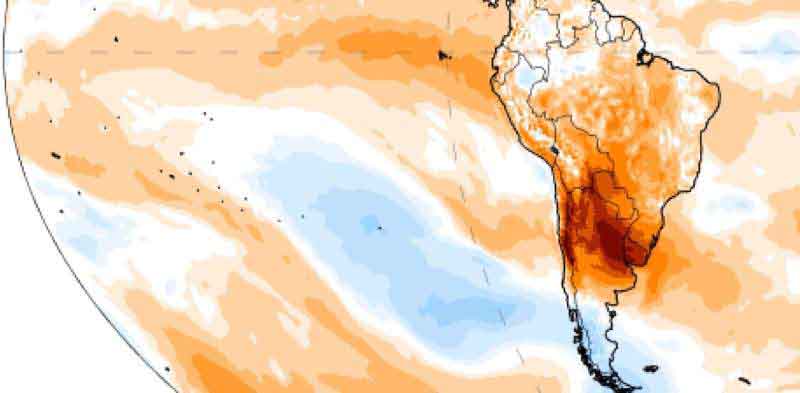
Temperatures in parts of Chile and northern Argentina have soared to 10°C-20°C above average over the last few days. Towns in the Andes mountains have reached 38°C or more, while Argentina's capital, Buenos Aires, saw temperatures above 30ˇC - breaking its previous August record by more than 5°C. Temperatures peaked at 39°C in the town of Rivadavia.
It's Official: Monday Was The Hottest Day on Earth Since Records Began Science Alert - July 5, 2023
Monday was the world's hottest day on record, exceeding an average of 17 degrees Celsius (62.6 degrees Fahrenheit) for the first time, according to initial measurements taken on Tuesday by US meteorologists.
The Last 8 Years Have Been The Hottest Ever Recorded on Earth even with the cooling influence of a La Nina weather pattern since 2020 Science Alert - January 11, 2023
Average temperatures across 2022 - which saw a cascade of unprecedented natural disasters made more likely and deadly by climate change - make it the fifth warmest year since records began in the 19th century, according to the Copernicus Climate Change Service. France, Britain, Spain, and Italy set new average temperature records for 2022, with Europe as a whole enduring its second hottest year ever. Heatwaves across the continent were compounded by severe drought conditions. European temperatures have increased by more than twice the global average over the past 30 years, with the region showing the highest rate of increase of any continent on the globe.
Rain fell at the normally snowy summit of Greenland for the first time on record CNN - August 19, 2021
For the first time on record, precipitation on Saturday at the summit of Greenland roughly two miles above sea level - fell as rain and not snow. Temperatures at the Greenland summit over the weekend rose above freezing for the third time in less than a decade. The warm air fueled an extreme rain event that dumped 7 billion tons of water on the ice sheet.
South Pole warming three times faster than rest of Earth: study PhysOrg - June 29, 2020
The South Pole has warmed three times faster than the rest of the planet in the last 30 years due to warmer tropical ocean temperatures Antarctica's temperature varies widely according to season and region, and for years it had been thought that the South Pole had stayed cool even as the continent heated up. Researchers in New Zealand, Britain and the United States analyzed 60 years of weather station data and used computer modeling to show what was causing the accelerated warming. They found that warmer ocean temperatures in the western Pacific had over the decades lowered atmospheric pressure over the Weddell Sea in the southern Atlantic. This in turn had increased the flow of warm air directly over the South Pole - warming it by more than 1.83C (about 3.3F) since 1989..
Siberian town records 100° F day - the hottest in Arctic history Live Science - June 23, 2020
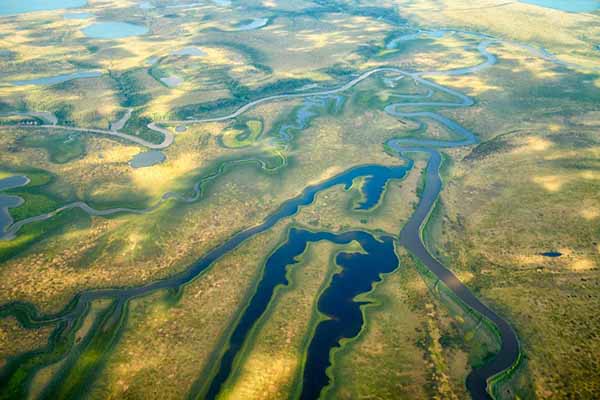
Siberia - the land of black snow, blood rain and spontaneous solar eclipses - may have just set a dire new climate record. On Saturday (June 20), temperatures in the far-north town of Verkhoyansk broke 100 degrees Fahrenheit (38 degrees Celsius) for the first time, according to news reports. That makes Saturday's high the hottest-ever temperature documented above the Arctic Circle
A Never-Before-Seen Event Is Collapsing an Ice Sheet in the Russian Arctic Live Science - December 19, 2019
For the first time, scientists think they're watching a fast-moving river of ice being born. These so-called ice streams are rapid, long-lasting flows of ice that form in the middle of more static ice formations known as ice sheets. There are only a handful of them on Earth. They form in remote parts of the arctic and antarctic and, once established, can last decades or even centuries. Until now, no one had ever seen one emerge.
Greenland Is Literally Cracking Apart and Flooding the World Live Science - March 16, 2018
Visit Greenland on the right summer day, and you could see a 12-billion-gallon lake disappear before your very eyes. Glaciologists saw this happen for the first time in 2006, when a 2.2-square-mile (5.6 square kilometers) lake of melted ice drained away into nothing in less than 2 hours. Researchers now see such events as a regular part of Greenland's increasingly hot summer routine; every year, thousands of temporary lakes pop up on Greenland's surface as the surrounding ice melts, sit around for a few weeks or months, and then suddenly drain away through cracks in the ice sheet underneath. On a recent expedition, however, researchers saw an alarming new pattern behind Greenland's mysterious disappearing lakes: They're starting to drain farther and farther inland. That's because the summer lakes of Greenland drain in a "cascading" chain reaction enabled by a vast, interconnected web of cracks below the ice - and as temperatures climb, the web is getting wider.
A half degree more global warming could flood out 5 million more people PhysOrg - March 9, 2018
The 2015 Paris climate agreement sought to stabilize global temperatures by limiting warming to "well below 2.0 degrees Celsius above pre-industrial levels," but a recent literature review found the 2 degree limitation "inadequate" and concluded that limiting global warming to no more than 1.5 degrees would "come with several advantages."
Evidence disproving tropical 'thermostat' theory: global warming can breach limits for life PhysOrg - March 4, 2017
New research findings show that as the world warmed millions of years ago, conditions in the tropics may have made it so hot some organisms couldn't survive. Longstanding theories dating to the 1980s suggest that as the rest of the earth warms, the tropical temperatures would be strictly limited, or regulated by an internal 'thermostat.' These theories are controversial, but the debate is of great importance because the tropics and subtropics comprise half of the earth's surface area, greater than half of the earth's biodiversity, as well as over half the earth's human population. But new geological and climate-based research indicates the tropics may have reached a temperature 56 million years ago that was, indeed, too hot for living organisms to survive in parts of the tropics.
Wind, Rain, Heat: Health Risks Grow with Extreme Weather Live Science - February 17, 2017
As climate change proceeds, there will be more extreme weather events, and these events pose a threat to people's health, experts say. The annual number of natural disasters appears to be increasing around the world. These include, for example, not only weather- and water-related disasters, but also geological disasters, such as earthquakes, and biological disasters, such as pandemics. Data from the past 50 years show that 41 percent of all global disasters are related to extreme weather or water events.
This January Was the Third Warmest on Record Globally Live Science - February 17, 2017
While a powerful El Ni–o has faded, the globe's heat continues to be an enduring phenomenon due largely to carbon pollution. This January was the third-warmest January on record, according to data released this week from both NASA and the National Oceanic and Atmospheric Administration. The agencies use different baselines and techniques to measure the Earth's temperature. NASA's data shows the planet was 1.7 degrees Fahrenheit above the 1951-1980 average while NOAA's data indicates the planet was 1.6 degrees Fahrenheit above the 20th century average.
Wind, Rain, Heat: Health Risks Grow with Extreme Weather Live Science - February 17, 2017
As climate change proceeds, there will be more extreme weather events, and these events pose a threat to people's health, experts say. The annual number of natural disasters appears to be increasing around the world. These include, for example, not only weather- and water-related disasters, but also geological disasters, such as earthquakes, and biological disasters, such as pandemics. Data from the past 50 years show that 41 percent of all global disasters are related to extreme weather or water events.
2016 to be hottest year yet as April smashes records CNN - May 16, 2016
The Earth is heating up like an oven and is showing no signs of slowing. This year recorded the highest land and ocean April temperatures on record, keeping 2016 on track to be the hottest year yet and by the biggest margin ever.
April breaks global temperature record BBC - May 16, 2016
April was the seventh month in a row that broke global temperature records, Nasa figures show. Last month smashed the previous record for April by the largest margin ever, the data show. That makes it three months in a row that the monthly record was broken by the largest margin ever. But in terms of its departure from the 1951-1980 temperature average used by Nasa, April was equal with January 2016.
Global Increase In Atmospheric Methane Likely Caused By Unusual Arctic Warmth, Tropical Wetness Science Daily - September 28, 2009
Unusually high temperatures in the Arctic and heavy rains in the tropics likely drove a global increase in atmospheric methane in 2007 and 2008 after a decade of near-zero growth, according to a new study. Methane is the second most abundant greenhouse gas after carbon dioxide, albeit a distant second.
Heavier Rainstorms Ahead Due To Global Climate Change, Study Predicts Science Daily - September 28, 2009
Heavier rainstorms lie in our future. That's the clear conclusion of a new MIT and Caltech study on the impact that global climate change will have on precipitation patterns. But the increase in extreme downpours is not uniformly spread around the world, the analysis shows. While the pattern is clear and consistent outside of the tropics, climate models give conflicting results within the tropics and more research will be needed to determine the likely outcomes in tropical regions. Overall, previous studies have shown that average annual precipitation will increase in both the deep tropics and in temperate zones, but will decrease in the subtropics. However, it's important to know how the frequency and magnitude of extreme precipitation events will be affected, as these heavy downpours can lead to increased flooding and soil erosion.
Mystery mechanism drove global warming 55 million years ago PhysOrg - July 14, 2009
A runaway spurt of global warming 55 million years ago turned Earth into a hothouse but how this happened remains worryingly unclear. Previous research into this period, called the Palaeocene-Eocene Thermal Maximum, or PETM, estimates the planet's surface temperature blasted upwards by between five and nine degrees Celsius (nine and 16.2 degrees Fahrenheit) in just a few thousand years. The Arctic Ocean warmed to 23 C (73 F), or about the temperature of a lukewarm bath. How PETM happened is unclear but climatologists are eager to find out, as this could shed light on aspects of global warming today. What seems clear is that a huge amount of heat-trapping "greenhouse" gases -- natural, as opposed to man-made -- were disgorged in a very short time. The theorised sources include volcanic activity and the sudden release of methane hydrates in the ocean.
Greenland Snow Melting Hit Record High In High Places, NASA Finds Science Daily - September 26, 2007
A new NASA-supported study reports that 2007 marked an overall rise in the melting trend over the entire Greenland ice sheet and, remarkably, melting in high-altitude areas was greater than ever at 150 percent more than average. In fact, the amount of snow that has melted this year over Greenland could cover the surface size of the U.S. more than twice.