The Hopi are a Native America Nation who primarily live on the 1.5 million acre Hopi Reservation in northeaster Arizona. The reservation is surrounded by the Navajo reservation. Hopis call themselves Hopitu - 'The Peaceful People'.
The name Hopi is the shortened form of the title to what they called themselves, "Hopituh Sinom", "the people of Hopi". Hopi is a concept deeply rooted in the culture's religion, spirituality, and its view of morality and ethics. To be Hopi is to strive toward this concept, but one never achieves in this life. This concept is one where you are in a state of total reverence and respect for all things, to be at peace with these things, and to live in accordance with the teachings of 'maasaw'.
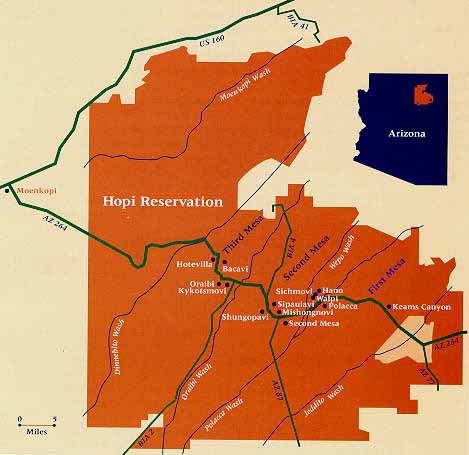
Hopis live in northeast Arizona at the southern end of the Black Mesa. A mesa is the name given to a small isolated flat-topped hill with three steep sides called the 1st< Mesa, 2nd Mesa, and the 3rd Mesa. On the mesa tops are the Hopi villages called pueblos. The pueblo of Oraibi on the 3rd Mesa started in 1050, and is the oldest in North America that was lived in continuously.

Evidence suggest that the Hopi consist of the descendants of various groups that entered the country from the north, the east, and the south, and that a series of movements covered a period of probably three centuries, and perhaps considerably longer.
Their ancestors, the Anasazi, appear to have been related to the Aztecs of Mexico, and may have arrived in their current location 5 to 10 thousand years ago. In that time, they have developed an intricate ceremonial calendar that has helped them survive and be strong in a place that would not seem to have enough reliable water to sustain life.
Related to people of the various Pueblos to the east, the Hopis never actually had a single group identity--they were independent villages, sharing with the Zuni and other Pueblos a basic culture and view of the sacred, while sharing among themselves their own (Uto-Aztecan) language base.
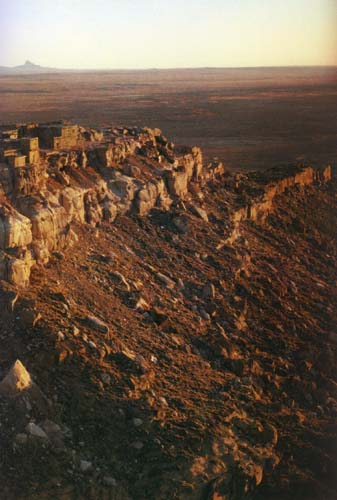
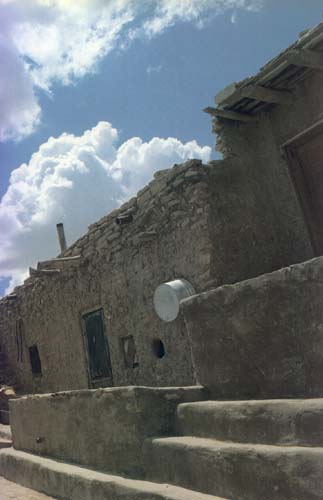
Hopi Mesa Homes
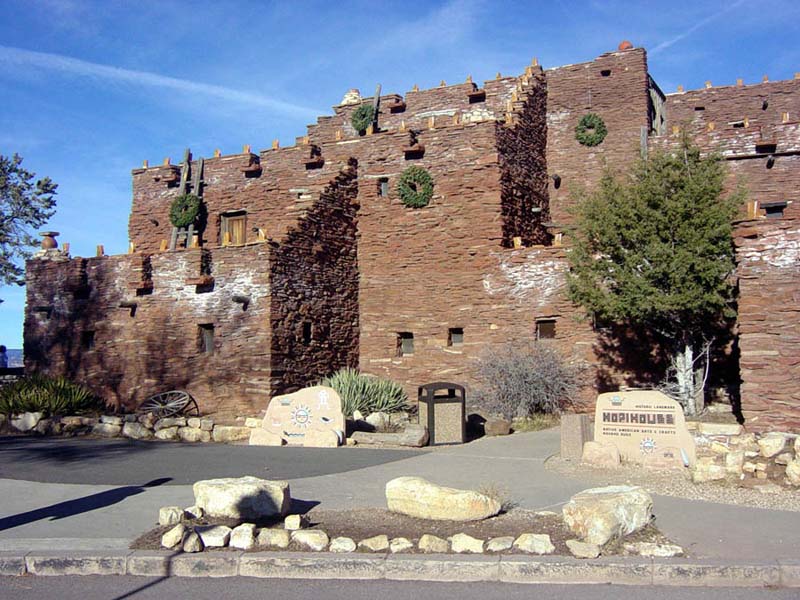
Hopis live in pueblos that are made of stone and mud and stand several stories high. The Kivas are an underground chamber in the pueblo home that they used to talk and have religious ceremonies in. They used the kivas for 100 years. The center of the floor had a fire pit. You climb down a ladder to get to the south end where a bench was placed for spectators.
The walls of some Hopi houses are constructed of undressed stone fragments bound with mud plaster. The flat roof consists of beams resting on the tops of the walls, pole battens, rod and grass thatching, a layer of gumbo plaster, and a covering of dry earth. Most of the houses are more than single story, some as much as four stories. The upper apartments are reached by outside ladders.
Honanki Ruins: Photos Reveal Sprawling, Ancient Pueblos Live Science - December 18, 2017
Early native people have long made their homes in the east-central region of today's Arizona. The Clovis People (11,500 B.C. to 9000 B.C.) once hunted mammoths, giant sloths, bison and camels here in what was a savanna-like climate. When the big-game animals disappeared around 9000 B.C., so too did the Clovis people. Yet, the land was still rich in natural resources, and soon groups of archaic people with their hunting-gathering nomadic lifestyles moved into and across the land.
The Honanki Heritage Site is a cliff dwelling and rock art site located in the Coconino National Forest, about 15 miles (24 km) west of Sedona, Arizona. The Sinagua people of the Ancient Pueblo Peoples, and ancestors of the Hopi people, lived here from about 1100 to 1300 AD. The Palatki Heritage Site is nearby, also in the Coconino National Forest.
Although the Hopi are composed of elements that must have spoken diverse tongues, their speech is readily recognized as a dialog of the Shoshonean language, which in various forms was spoken in a large part of the Great Basin between the Rocky mountains and the Sierra Nevada, in southwestern Oregon, and in southern California even to the coast and on Santa Catalina island; and which furthermore is undoubtedly allied to the great Aztecan language. A linguistic map would represent the Hopi as an isolated people surrounded by alien tongues
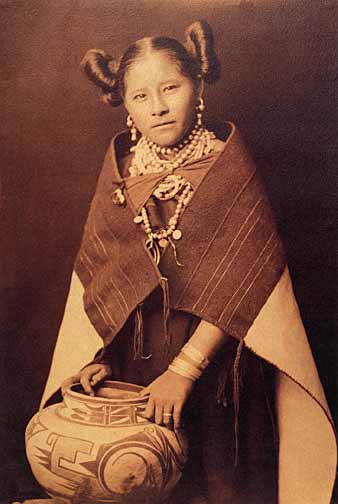
The traditional Hopi are organized into matrilineal clans. When a man marries, the children from the relationship are members of his wife's clan. The Bear Clan is one of the more prominent clans.
The women and men each have specific jobs or duties they perform. The women own the land and the house. They also cook and weave the baskets. The men plant and harvest, weave cloth, and perform the ceremonies.
When a child is born they get a special blanket and a perfect ear of corn. On the 20th day they take the child to the mesa cliff and hold it facing the rising sun. When the sun hits the baby is given a name.
The traditional Hopi are organized into matrilineal clans. When a man marries, the children from the relationship are members of his wife's clan. The Bear Clan is one of the more prominent clans. The Hopi, more than most Native American peoples, retain and continue to practice their traditional ceremonial culture. However, like other tribes, they are severely impacted by the ambient American culture.
A Hopi bride grinds corn for three days at her future husband's house to show she has wife skills. The groom and his male relatives weave her wedding clothes. After they are finished, the bride to be walks home in one wedding outfit, and carries the other in a container. Women are also buried in their wedding outfit so when they entered the spirit world they would be dressed appropriately. A Hopi man wears several bead necklaces on his wedding day.
Traditionally the Hopi were highly skilled subsistence farmers. With the installation of electricity and the necessity of having a motor vehicle and the other things which can be purchased, the Hopi have been moving into a cash economy with many people seeking and holding outside jobs as well as earning money from traditional crafts.
Art is a way for the Southwestern Native Americans to communicate their dreams, visions, and beliefs to each other or to people today.
Pottery, clothing, and making baskets are just a portion of the great arts and crafts of the Southwest Native Americans. Their art used symbols and signs to represent their ideas, beliefs, dreams, and visions.
Pottery was made for everyday use, including cooking, storage, bathing, and religious ceremonies.They were painted and carved with designs that told a story.
Modern earthen ware is considerably softer and of coarser texture than the pieces that have been exhumed in large numbers from the ruins of this region. The most successful imitator of this ancient ware, who is not a Hopi at all, but the Tewa woman Nampeyo, of the village Hano, says that its superiority was obtained by the use of lignite, by which the prehistoric potters were able to fire their vessels for several days; but a well-informed traditionalist, on the contrary, asserts that it is the result of burying the clay in moist sand for a long time, perhaps two moons, which 'caused something in the clay to rot'."
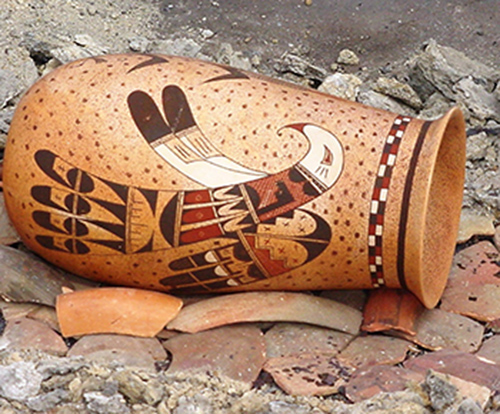
Centuries of Tradition: Stunning Photos of Native American Hopi Pottery
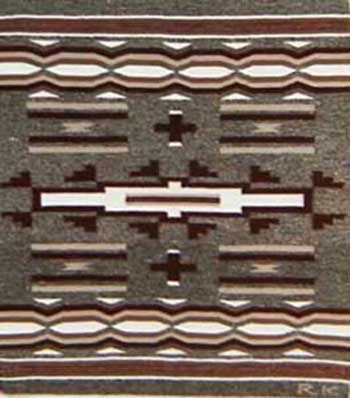
Hopi Cross Rug
The clothing they wore depended on what they did. They lived in a warm climate so they wore little clothing. They would dress in flowers and paint with feather headdresses. They also used clothing to signify their fighting skills.
The Southwest Indians were the most skilled in making baskets. They would decorate the baskets with colors and patterns. They could be very symbolic like the art they made. The Hopi method of basket making has not changed for hundreds of years.
The very first Southwest Native Americans hunted mammoths until they became extinct. Then people began to hunt buffalo, also known as bison, as well as collect wild plants for food. They also learned to grow maize, or corn, that was their most common grain, which became domesticated in Mexico.
Corn is the central food of daily life, and piki - paper thin bread made from corn and ash--is the dominant food at ceremonies. Corn relies on the farmer to survive, and the Hopi relies on the corn - all life is designed to be interrelated.
The Hopi Indians grew food similar to the Navajo Indians. They raised corn or maize as the basic food. The Hopi Indians based religious ceremonies on the corn they grew.They grew 24 different kinds of corn, but the blue and white was the most common.They also grew beans, squash, melons, pumpkins, and fruit.
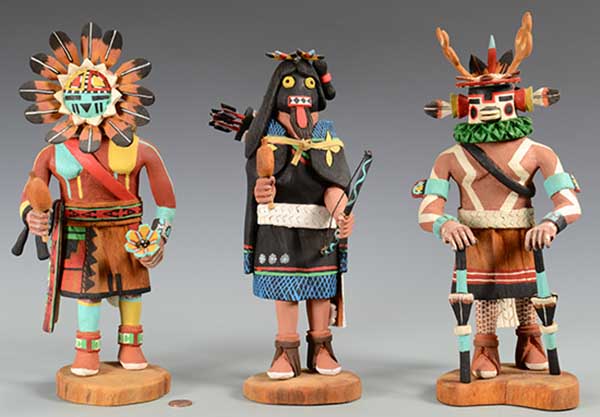
Kachina dolls were carved out wood by the Zuni and Hopi tribes. There are over 300 different Kachinas. They are generally clothed in masks and costumes to look like the men who dressed up as Kachina spirits. They were given to children to teach them to identify the different parts of Kachina dolls, and the parts they play in tribal ceremonies.
The Kachinas, or Gods, were beings of a great might and power to the Native Americans. They were known to come down to Earth and help the native Americans tend their fields brining wisdom about agriculture, law and government. They physically interacted with the people themselves. There are drawings of them on cave walls.
The famous Hopi Prophecy speaks about the return of the Blue Kachina to herald in the Fifth Age of Man. This is not unlike any other culture who await the return of their god or creational force - Example - Jesus.
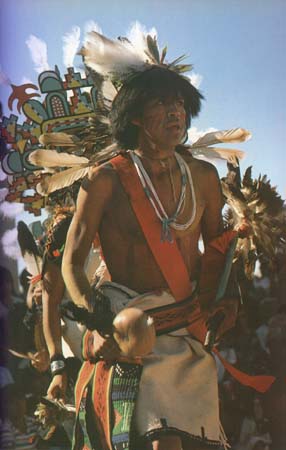
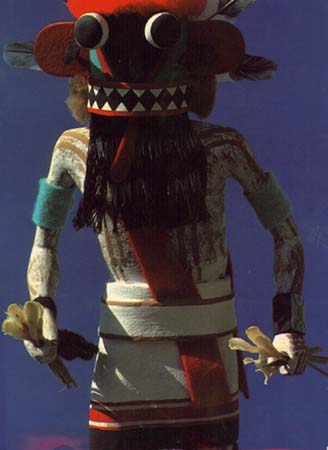
Hopi Kachina Dancer and Kachina Doll
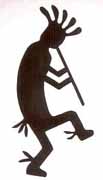 Kokopelli is a god worshipped by many southeastern tribes. He is a humpbacked flautist. Among the Hopi, he brought the fetuses to pregnant women, and took part in many rituals relating to marriage.
Muyingwa is the god of germination.
Taiowa is the creator god. He made Sotuknang and ordered him to make the universe. The first world was called Topela and had land, water and air, as well as Koyangwuti (spider woman), who then created twins, Poqanghoya and Palongawhoya. They made rivers, oceans and mountains. Koyangwuti then made all organisms, but most of the men did not obey the gods, so Sotuknang killed them with a flood. Two more bad worlds were created and destroyed.
The fourth world, the modern world, is Tuwaqachi.
Tokpela was the endless, primordial space before creation. Good people go west and become kachinas, but there is no absolute connection between the former soul and the kachina.
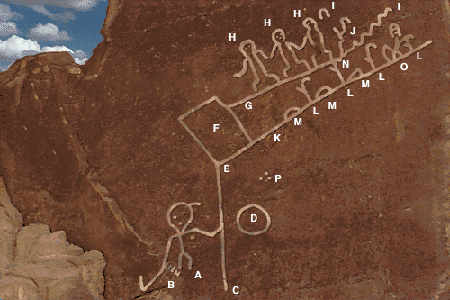
Hopi Prophecies - Blue Star Kachina
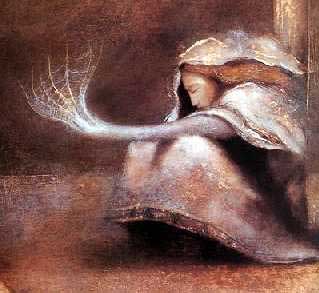
Spider Women Legends
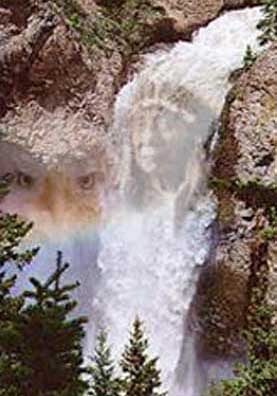
Myths From Hopi Stone Tablets
Myth 1: The Mission of Two Brothers
This Bow Clan chief had two grown sons. When they learned of their father's misdeed, they were very sad. Their knowledge of the teachings which they had received from him was all in order. Now they were left alone to lead their people, for the very next day their father died.
They asked their mother to permit them to carry out the order of their instructions for an event of this nature. She replied that it was up to them, for their knowledge was complete. Upon agreement, the younger brother was to continue in search of Maasau'u, and to settle where he found him. There he would await the return of this older brother, who was to travel eastward toward the rising sun, where he would rest briefly. While resting, he must listen for the voice of his younger brother, who would expect him to come to his aid, for the change in the life pattern will have disrupted the way of life of his people. Under the pressure of a new ruler they will surely be wiped off the face of the earth unless he comes.
So today we are still standing firmly on the Great Spirit's instructions. We will continue to look and pray toward the East for his prompt return. The younger brother warned the elder that the land and the people would change "But do not let your heart be troubled," he said, "for you will find us. Many will turn away from the life plan of Maasau'u, but a few of us who are true to his teachings will remain in our dwellings. The ancient character of our heads, the shape of our houses, the layout of our villages, and the type of land upon which our village stands, and our way of life. All will be in order, by which you will find us."
Before the first people had begun their migrations the people named Hopi were given a set of stone tablets. Into these tablets the Great Spirit inscribed the laws by which the Hopi were to travel and live the good way of life, the peaceful way. They also contain a warning that the Hopi must beware, for in time they would be influenced by wicked people to forsake the life plan of Maasau'u. It would not be easy to stand up against this, for it would involve many good things that would tempt many good people to forsake these laws. The Hopi would be led into a most difficult position. The stones contain instructions to be followed in such a case.
The older brother was to take one of the stone tablets with him to the rising sun, and bring it back with him when he hears the desperate call for aid. His brother will be in a state of hopelessness and despair. His people may have forsaken the teachings, no longer respecting their elders, and even turning upon their elders to destroy their way of life. The stone tablets will be the final acknowledgment of their true identity and brotherhood. Their mother is Sun Clan. They are the children of the sun.
So it must be a Hopi who travelled from here to the rising sun and is waiting someplace. Therefore it is only the Hopi that still have this world rotating properly, and it is the Hopi who must be purified if this world is to be saved. No other person anyplace will accomplish this. The older brother had to travel fast on his journey for there was not much time, so the horse was created for him. The younger brother and his people continued on in search of Maasau'u.
On their way they came to a land that looked fertile and warm. Here they marked their clan symbols on the rock to claim the land. This was done by the Fire Clan,the Spider Clan, and the Snake Clank. This place is know called Moencopi. They did not settle there at that time. While the people were migrating, Maasau'u was waiting for the first ones to arrive. In those days he used to take walks near the place where he lived, carrying a bunch of violet flowers (du-kyam-see) in his belt. One day he lost them along the way. When he went to look for them he found that they had been picked up by the Hornytoad Woman. When he asked her for the flowers she refused to give them back, but instead gave him her promise that she would help him in time of need. "I too have a metal helmet," she told him, (possibly meaning that certain people with metal helmets would help the Hopi when they get into difficulty).
Often Maasau'u would walk about a half mile north of his du-pa-cha ( a type of temporary house) to a place where there lay a long rock which formed a natural shelter, which he must have picked as the place where he and the first people would find each other. While waiting there he would amuse himself by playing a game to test his skill, the name of which (Nadu-won-pi-kya), was to play an important part later on in the life of the Hopi, for it was here that the knowledge and wisdom of the first people was to be tested. Until recent times children used to play a similar game there, something like "hide-and-seek." One person would hide, then signal by tapping on the rock, which would transmit the sound in a peculiar way so that the others could not tell exactly where the tapping was coming from. (Some years ago this rock was destroyed by government road builders.) It was here that they found Maasau'u waiting.
Before the migrations began Maasau'u had let it be known, though perhaps not by direct instructions, that whoever would find him first would be the leader there. Later it became clear that this was a procedure by which their true character would be specified.
When they found him, the people gathered and sat down with him to talk. The first thing they wanted to know was where he lived. He replied that he lived just north of there at a place called Oraibi. For a certain reason he did not name it fully. The full name is Sip-Oraibi, meaning something that has been solidified, referring to the fact that this is the place where the earth was made solid.
They asked permission to live there with him. He did not answer directly, for within them he saw evil. "It is up to you," he said. "I have nothing here. My life is simple. All I have is my planting stick and my corn. If you are willing to live as I do, and follow my instructions, the life plan which I shall give you, you may live here with me, and take care of the land. Then you may have a long, happy, fruitful life."
Then they asked him whether he would be their leader, thinking that thus they would be assured a peaceful life. "No," he replied, "the one who led you here will be the leader until you fulfill your pattern of life," (for he saw into their hearts and knew that they still had many selfish desires). "After that I will be the leader, but not before, for I am the first and I shall be the last." Having left all the instructions with them, he disappeared.
Chief Dan Evehema, Grandfather Martin Gashweseoma and son-in-law Emery Homes shared wisdom's about the stones how they came to be and current events and where about of the sacred tablets. The presentation took over 2 hours but according to the Chief Martin & Emery to get the full details you would need 8 to 9 days. This is what was recorded of this conversation.
As Emery spoke of mankind's future according to our Native Prophecies he unfolded the story of the five Hopi stone tablets, given by the creator long, long ago. One of these tablets was kept by the Creator.
Two tablets were kept by the Hopis themselves passed down from generation to generation and used to renew Holy vows of spiritual commitments to the people and the creator at special times of the year. Martin was the last one who held the great responsibility for its care, a duty that had evolved to him by default because his uncle had lost honor by an act of adultery and was therefore no longer worthy to be the caretaker. Miss fortune later came to Martin also in this quest.
He was instructed and trained by his uncle earlier that when certain signs in nature were observed, the tablet should be taken to Santa Fe, the first US capital in the West recognized by the Hopi people. The signs came, Emery explained as he translated Martins story, Chief Martin set in deep thought and prayer a sadness of the ages around him.
As Grandfather Martin has been taught, he watched for the sign. It was the middle of winter, and the peach tree came into full bloom. Desert flowers came into full bloom, and snakes were seen out when they should have been in hibernation. These were the signs he had been waiting for, his signal to take the tablet to Santa Fe. So a delegation was organized to go to Santa Fe to share this knowledge with other Spiritual leaders.
As this story unfolds his relatives objected strongly. They organized and assessed that he had done wrong in taking the stone to Santa Fe saying he had made grave errors in judgments and was not fit to have the stone, saying that it was in the wrong household. So they took the stone tablet from him by force. Now Martin and Emery, said as of that day they did not know where the stone is.
In asking what the tablets looked like the Elders explained that 4 of them were exactly the same, two were left with the Hopi people, two were given to the true brothers to bring back at a special time in history, along with other sacred items from the four directions, when the world reunites in peace. The fifth one the Elders tell us was kept by the Creator and was different markings. Similar to one on the poster of a Hinduism Today paper "Truth is One, Paths Are Many" Grandfather Martin said.
This is a great loss for the Elder and now his life is centered around finding the true Brothers and telling the world of the great prophecies of the Hopis, the Mayans and other civilizations. These were shared next as the elders explained to us about there commitment to the human race and mother earth Chief Martin would often say, "We are humans: we cannot eat the money." We must plant our fields and pray for guidance honor all the ceremonials, we can eat the Corn. He then disclosed a package of pictographs, the main one the size of a road map, consisting of numerous papers tapped together all in a single strip that we rolled out, page after page until it was open, over 8 feet long.
Emery and Martin explained to us very patiently and slowly the Mayan pictographs. The story of the pictures in words sometimes Hopi sometimes English. Beginning in ancient times and ending with four possible pathways that mankind can choose from their actions as a collective group. The choices range from complete destruction and loss of sunlight, to less server circumstances, providing corruption and greed has not already gone to far. The Elders seemed less optimistic then we had all hoped. The main concerns of the Elders and Holy people was Starvation and Marshal Law both they are already seeing to close as a new reality.
On this day, still waiting for the true white brother, the Elders came together in a meeting when East meets West. Hopi spiritual leaders of Hotevilla Arizona hosted The Hindu delegation led by Satguru Sivaya Subramuniyaswami in a special prayer meeting at the corn fields at Chief Dan Evehema's corn fields.
The Hopi have been affected by missionary work by several religions and also by consumerism and alcoholism. Nevertheless there remains a traditionalist core.
The people of the Southwest, along with the Southeast had full-time religious leaders with shrines or temple buildings. Most Native Americans believe that in the universe there exists an Almighty, a spiritual force that is the source of all life. The Almighty belief is not pictured as a man in the sky, but is believed to be formless and exist in the universe. The sun is viewed as the power of the Almighty.
They are not worshipping the sun, but praying to the Almighty, and the sun is a sign and symbol for that. Native Americans show less interest in an afterlife unlike the Christians. They assume the souls of the dead go to another part of the universe where they have a new existence carrying on everyday activities like they were still alive. They are just in a different world.
The religious and ceremonial life of the Hopi centers in the kiva, which is simply a room, wholly or partly subterranean and entered by way of ladder through an opening in the flat roof. While the membership of the kiva consists principally of men and boys from certain clan or clans, there is no case in which all the members of a kiva belong to one clan- a condition inseparable from the provision that a man may change his kiva membership, and in fact made necessary by the existence of more clans than kivas. It is probable, nevertheless, that originally the kivas were clan institutions."
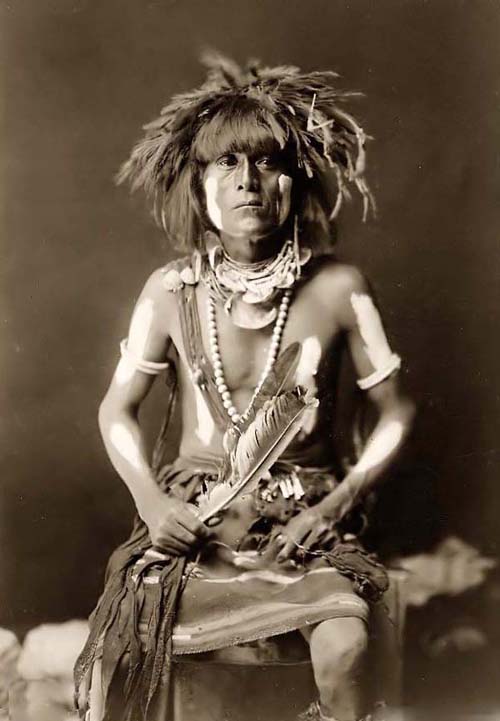
The Hopi or "Hopituh Shi-nu-mu" meaning "The Peaceful People" or the "Peaceful Little Ones" are a well know Indian Nation in Northern Arizona, especially known for their "Kachina Dolls". The Navajo name for the Hopi is Anazazi which means "ancient enemies". The Hopi's are a very peaceful tribe whose reservation lies somewhat in the center of the Navajo Nation and although the co-exist because of their geography their relationship is somewhat strained because of their tribal histories.
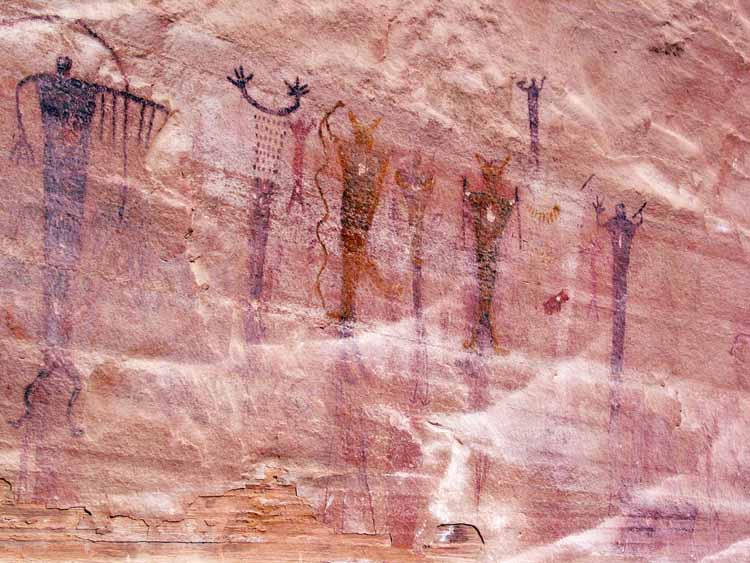
The cliff painting of the Mesa Verde and other areas are said to be "guides" for their warriors and they claim that the "snake-shaped" mounds in the eastern United States were built by their ancestors.
The "Snake Dance" is performed even today although the picture is of a Snake Priest Circa 1890. The dance takes about two weeks to prepare and the snakes are gathered and watched over by the children. The snakes are usually rattle snakes and are dangerous but no harm seems to befall the children. Before the dance begins the dancers take an emetic (probably a sedative herb or hallucinogenic) and then dance with the snakes in their mouths. There is usually an Antelope Priest in attendance who helps with the dance, sometimes stroking the snakes with a feather or supporting their weight. After the dance the snakes are released to carry the prayers of the dancers.
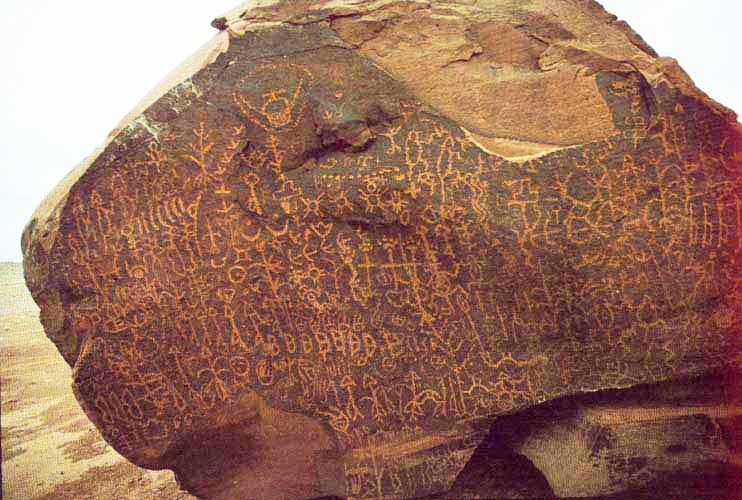
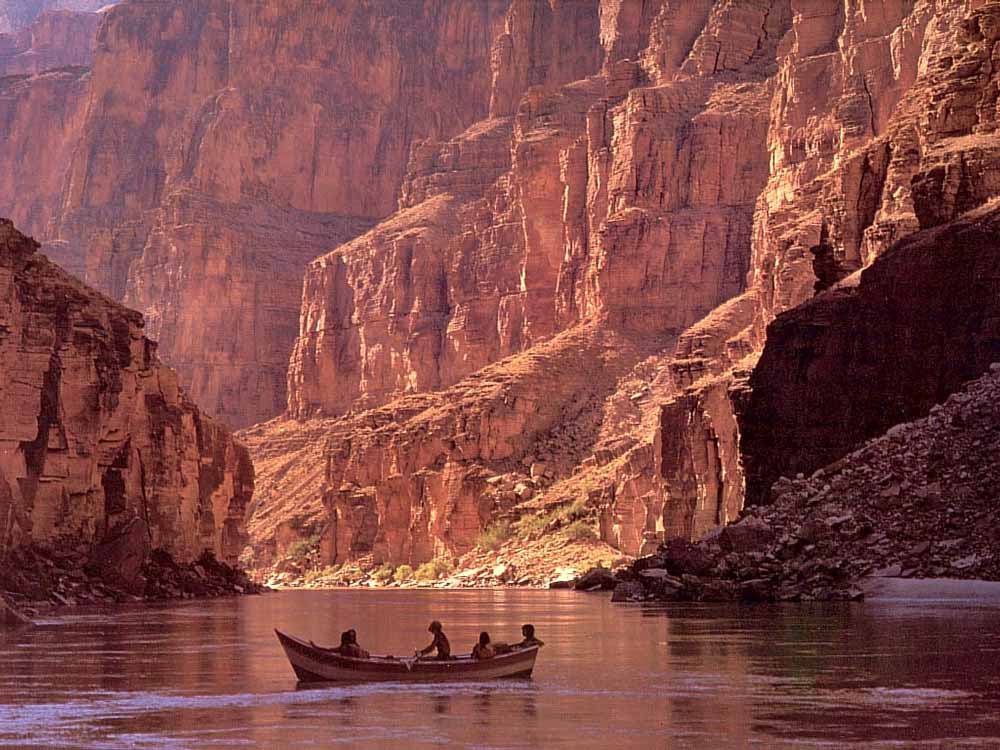
Beside the trail that leads from the Hopi mesas to an ancient shrine where salt was gathered in the Grand Canyon, a large boulder bears the markings of clans which carved their emblems into the rock each time they passed on a pilgrimage.
From various quarters, the Hopi have brought with them in their migration from other regions or have borrowed from other pueblo a mass of religious practices, and the result is a complex presenting many anomalies and obscurities. They recognize a very large number of deities, and of none can it be said that he is supreme. The explanation may be that that each was the principal deity of some one group that entered into the making of the present Hopi people. Numerous ceremonies are performed at proscribed times, which are determined by the position of the rising sun with reference to certain landmarks or by the moon.
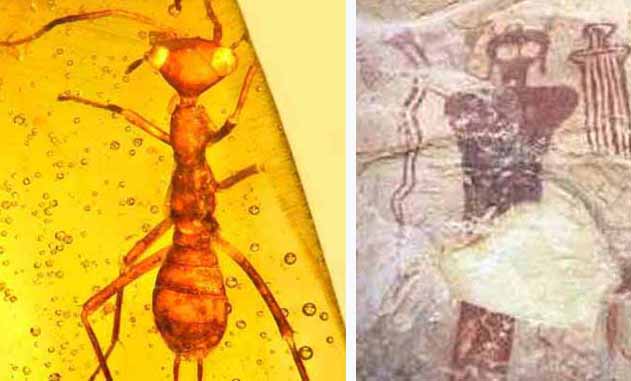
Hopi Ant People are sometimes likened to Gray Aliens and Ancient Astronaut Pictograms
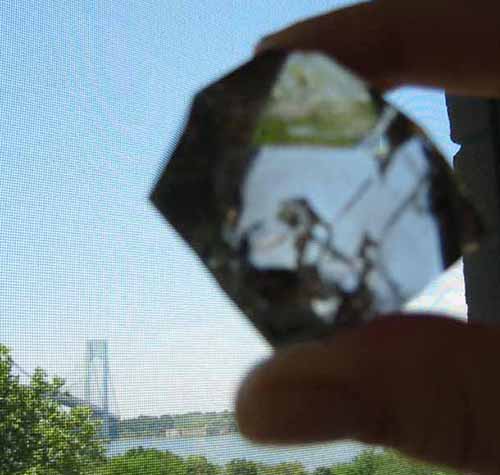
In this pic I am sitting on a mountain in Sedona holding what was a clear crystal before I got there. When I came down from the mountain, the image of a gray alien was imprinted in the crystal. The telepathic message was ... "My name is Solux. I came here from the 'other side' of the universe."
I know it's hard to see in this pic but ... Solux appears to be seated on a floating object, a book on his lap, a scepter in his hand, a UFO above to his right, a pyramid above him, a mountain below with what appears as mountains of ice behind it. We could look at my interpretation as crystal scrying but others have seen the same thing. It all goes back to the beginning.
In Hopi mythology, the Ant People (also known as the Tukwintuki) are a group of beings who are believed to have helped the Hopi people during times of hardship. They are depicted as industrious and generous, teaching the Hopi about food storage and providing them with sustenance.
In some Hopi myths - the Ant People were crucial to the survival of the Hopi People - not just once but twice. The so-called 'First World' (or world-age) was apparently destroyed by fire - possibly some sort of volcanism, asteroid strike, or coronal mass ejection from the sun. The Second World was destroyed by ice - Ice Age glaciers or a pole shift.
During these two global cataclysms, the virtuous members of the Hopi tribe were guided by an odd-shaped cloud during the day and a moving star at night that led them to the sky god named Sotuknang, who finally took them to the Ant People - in Hopi, Anu Sinom. The Ant People then escorted the Hopi into subterranean caves where they found refuge and sustenance.
Some Hopi legends state that the Ant People taught the Hopi how to use their "third eye" to see in the dark underground caverns and how to navigate using the reflected sunlight from underground crystals.
The Ant People's role extends to other Hopi creation stories, where they are linked to the transition between worlds.
The Hopi word for "ant" is "anu," and the Hopi root word "naki" means "friends," further highlighting the connection between the Hopi and the Ant People.
It is interesting to note that the Babylonian sky god was named Anu. The Hopi word for 'ant' is also anu, and the Hopi root word naki means 'friends'. Thus, the Hopi Anu-naki, or 'ant friends,' may have been the same as the Sumerian Annunaki - entities who once came to Earth from the heavens as creators, teachers, and watchers.
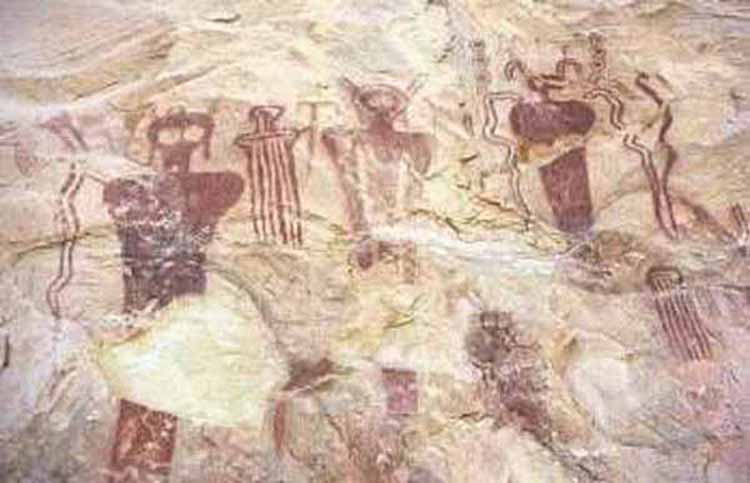
The Apache and other Pueblo Indians, such as the Zunis and Hopi, have legends about their ancestors emerging from an underground world, generally after some cataclysmic event, as if a cycle in time, or a reboot in the simulation of the human experiment - always linked to star gods, or star people, who allegedly brought them here from outer space.
They speak of the Snake People and the Ant People who protected them beneath the surface. Physical reality is a metaphor for 'beneath the surface'. To rise above is to return to higher consciousness, through the Back Hole (Eye of Time) or the Stargate of human creation. Hopi Prophecy speaks of the return of the Blue Kachina, or Star People, at the end.
Native Americans followed the movements of the celestial markers - much as we do today. They called it Star Knowledge. Beyond the land where they lived, was the sky, and that beyond were dimensional portals or sky holes. Beyond that was an area that they called the Ocean of Pitch, were the beauty of the night sky and the galaxies spun out towards them. Beyond that were the boundaries of the universe. And that set along the rim at the boundaries of the universe were 4 different extraterrestrial groups.
The Hopi called the Pleiadians the Chuhukon, meaning those who cling together. They considered themselves direct descendents of the Pleiadians. The Navajos named the Pleiades the Sparkling Suns or the Delyahey, the home of the Black God. The Iroquois pray to them for happiness. The Cree came to have come to earth from the stars in spirit form first and then became flesh and blood.
Each year a medicine man performs the green corn dance where he takes 7 ears of corn from 7 fields of the 7 clans to insure a healthy harvest. Early Dakota stories speak of the Tiyami home of the ancestors as being the Pleiades. Astronomy tells us that the Pleiades rise with the sun in May and that when you die your spirit returns south to the seven sisters.
They believe that Mythic Mountain is actually the home of the Kachinas. This mountain top is a sacred one. Being the home of the kachina spirits it is the place where all of the large mythic beings they honor in their rituals land. "We come as clouds to bless the Hopi people" is a quote passed from generation to generation.
There are some remarkable drawings that appear to be luminous discs of light in the petroglyphs all along the south west. Photographs of Billy Meier's Pleiadian space and beam ships look just like these rock petroglyphs from long ago.
Today there are 12 Hopi villages on or below the three mesas, with Moencopi to the west (on Dinetah), and Keams Canyon to the east. Each village has its own village chief, and each contributes to the annual cycle its own ceremonies. Each village presents its own distinct cast of katsinam, and each village has maintained its own balance of engagement with the Euro-American culture and traditional Hopi practices and views.
Today, the Hopi Indians are divided into to traditional --which preserve ancient lands and customs, and new - who work with outsiders. The Hopi Indians today love their traditions, arts, and land, but also love the modern American life. Their kids go to school and they use medical centers. The Hopi live and work outside of the reservations. Troubles with the Navajo whose reservations surround the Hopi still continue today.
There are now eight Hopi pueblos, all of them on the tops of mesas. The Hopi villages were established on their present almost inaccessible sites for purposes of defense; and with the same object in view the builders formerly never left a door in the outer walls of the first story, access to the rooms invariably being through hatchways in the roof.