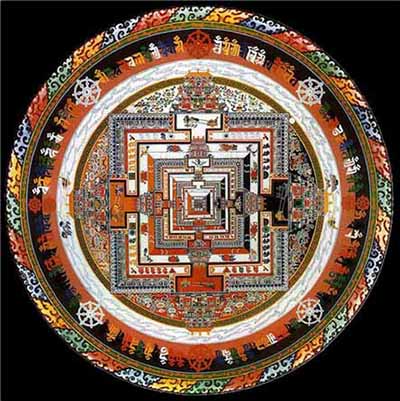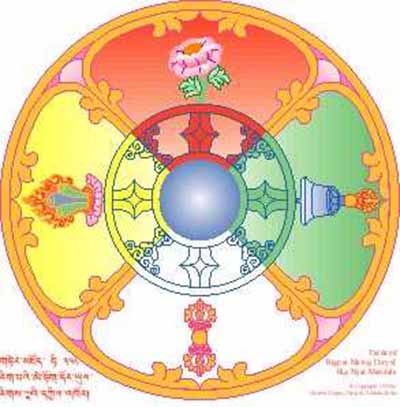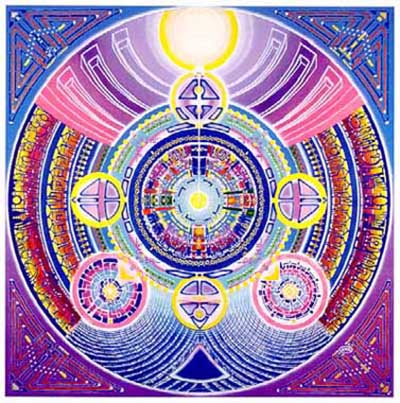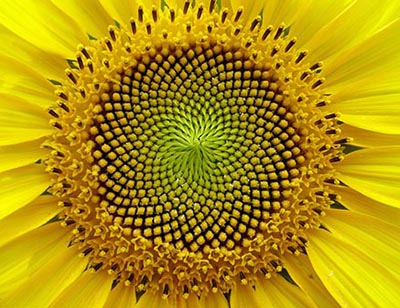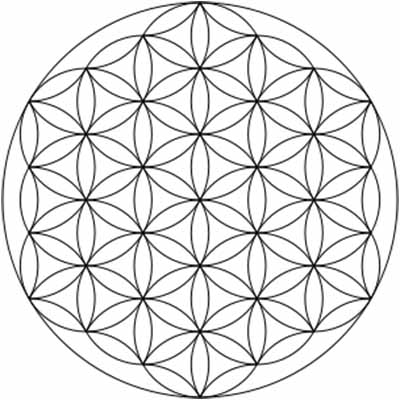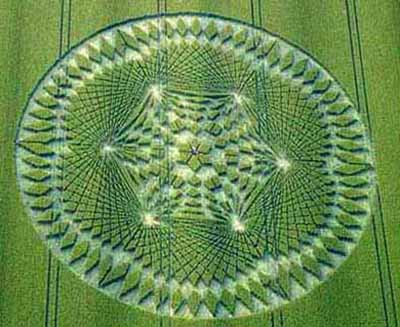
the word Mandala derives from the Hindu language meaning 'concentric energy circle.' A circle represents protection, good luck, or completion. Mandalas link with the spiraling movement of consciousness, sacred geometry, psychology, and healing. It is a spiritual and ritual symbol in Hinduism and Buddhism, representing the Universe.
The basic form of most mandalas is a square with four gates containing a circle with a center point. Each gate is in the general shape of a T. Mandalas often exhibit radial balance.
In various spiritual traditions, mandalas may be employed for focusing attention of aspirants and adepts, as a spiritual teaching tool, for establishing a sacred space, and as an aid to meditation and trance induction.
In practice, the term 'Mandala' has become a generic term for any plan, chart, or geometric pattern which represents the cosmos metaphysically or symbolically, a microcosm of the universe from the human perspective. A mandala, especially its center, can be used during meditation as an object for focusing attention. The symmetrical geometric shapes which mandalas tend to have, draw the attention of the eyes towards their center.
In Hindu cosmology the surface of the Earth is represented as a square, the most fundamental of all Hindu forms. The earth is represented as four cornered with reference to the horizon's relationship with sunrise and sunset, the north and south direction. The Earth is thus called 'Caturbhrsti (four-cornered)' and is represented in the symbolic form of the Prithvi Mandala. The astrological charts or horoscopes (Rasi, Navamsa, etc) also represent in a square plan the ecliptic - the positions of the sun, moon, planets, and zodiacal constellations with reference to the native's place and time of birth. The Vaastu Purusha Mandala is the metaphysical plan of a building, temple, or site that incorporates the course of the heavenly bodies and supernatural forces. The square is the box. We experience 'inside the box. 4 goes to 4th dimension or time. We experience through the spiraling patterns of sacred geometry in the alchemy of timem moving away from the central source, and then returning.
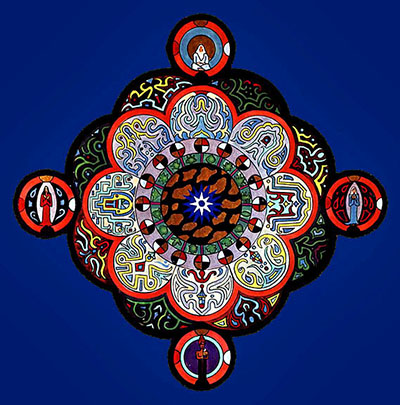
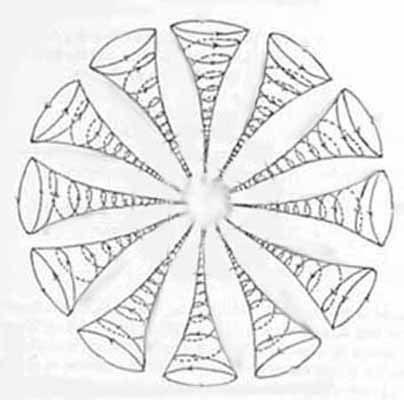
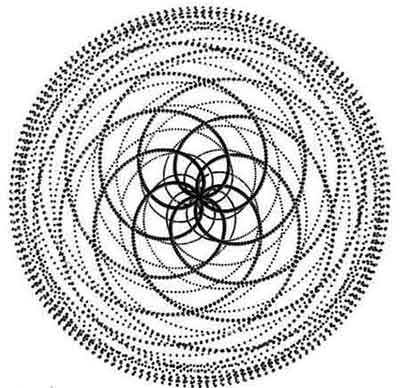
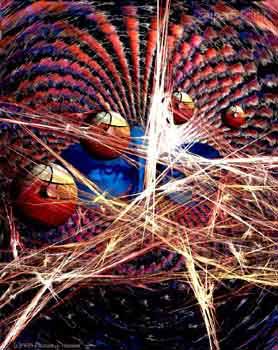
Psychoanalyst Carl Jung saw the mandala as "a representation of the unconscious self," and believed his paintings of mandalas enabled him to identify emotional disorders and work towards wholeness in personality. The mandala as psychological phenomena appear spontaneously in dreams, in certain states of conflict, and in cases of schizophrenia. The main goal of this presentation is to give a theoretical explanation and a mathematical model for computer simulation of mandalas, based on the mechanisms of biochemical reactions in a human brain and on discrete chaotic dynamics.
The discrete dynamics of physicochemical reactions is a new theory based on the analogy between the p -Theorem of the theory of dimensionality, the principle of maximum entropy and the stoichiometry of complex chemical reactions. Application of this theory to the spatiotemporal behavior of complex biochemical reactions has revealed symmetric patterns similar to the mandalas presented by C.G.Jung in his book "Mandala Symbolism". This theory has also been shown to possess the ability to generate complex oscillations, that may be used for mathematical modeling of EEG and ECG and of living systems dynamics in general . According to the results obtained, when the human brain is generating mandalas, it can be regarded as a complex biochemical reactor that creates different images reflecting its internal state (or the distribution of chemicals and their biochemical interactions) and all these processes based on the laws of nature.
-
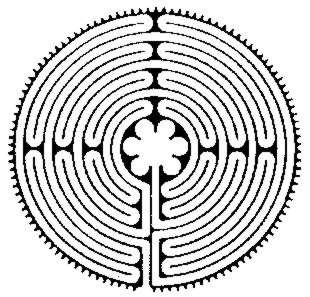
When I taught Special Ed to High School students, I used sand and string to create mandalas. The project was very therapeutic, having a balancing effect on the students. Without realizing it, they were able to work with both sides of the brain in a creative positive way. The use of right/left brain functioning also is similar to walking a labyrinth.
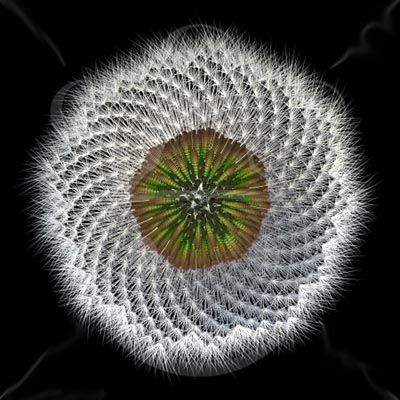
Dandelions Are Free
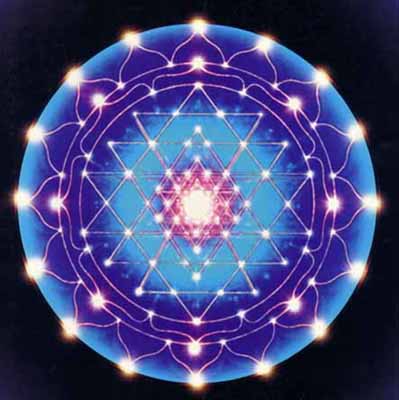
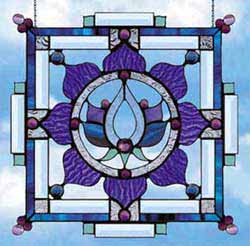
Mandalas can be made out of just about anything, some materials becoming the basic foundation of early cultures, but today can be created on a computer. In the years I worked with mandalas I was focused on stained-glass as I loved the prisms of light when the rays of the sun shine through. I was worked with this medium in a local store that produced stained-glass items, such as lamps, windows, and various music and plain boxes. When my daughters were growing up, I bought them coloring books with mandalas designs, which we all enjoyed.
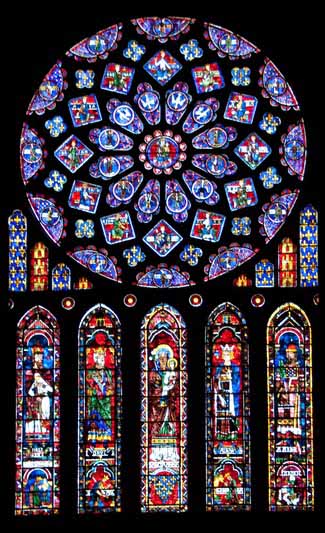
The basic design of the mandala is found in most cultures
as all of reality follows the same creational blueprint.
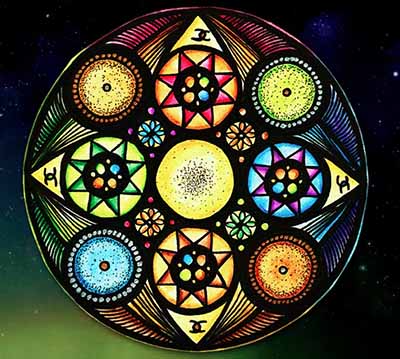
In the West, mandala is also used to refer to the "personal world" in which one lives, the various elements of the mandala being the activities and interests in which one engages, the most important being at the centre of the mandala, and the least important at the periphery. Depicting one's personal mandala in pictorial form can give one a good indication of the state of one's spiritual life.
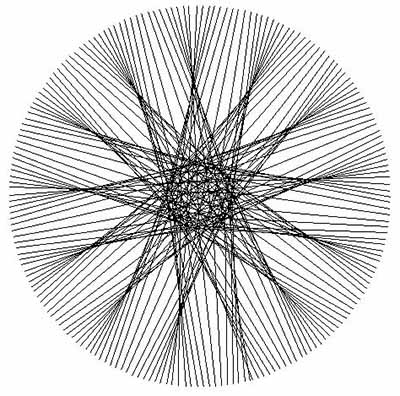
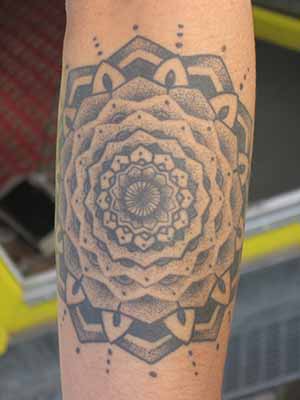
Tattoos
To the Native American the mandala symbolizes the shield of good luck. With this shield it is believed the gods would protect them. By having one in their home, it would bring them prosperity, good health, and happiness. To some tribes a mandela was considered a shield. It was a prized possession of the plains Indians with each area having a specific meaning.
Mandalas are sometimes a variation of the dance shield used by the Plains Indians, influenced by the herders of the West. It was thought to bring its owner good luck, prosperity, wealth, and happiness.
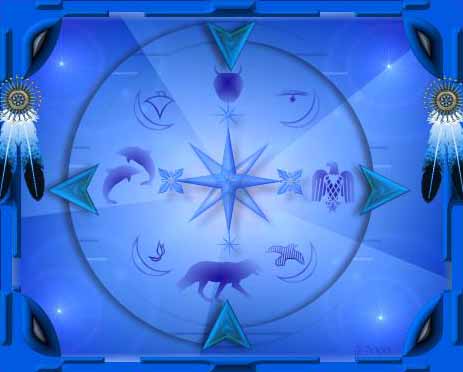
Mandalas were originally made from Buffalo hides, Eagle feathers, and wild animal furs. Currently all natural materials are used, which come solely as by-products from domesticated animals.
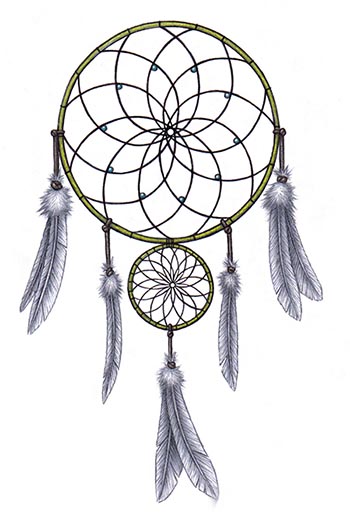
Dreamcatchers
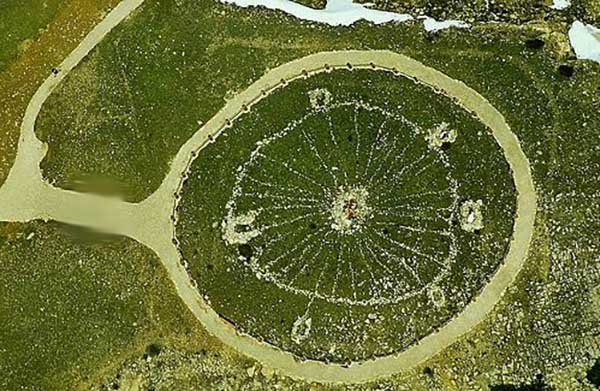
Medicine Wheel
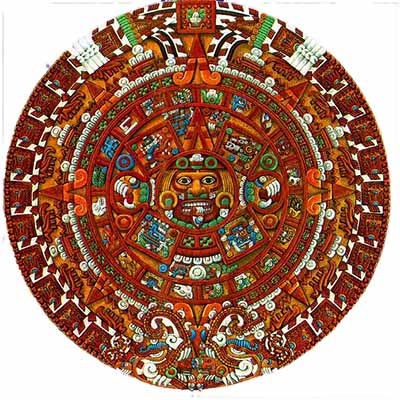
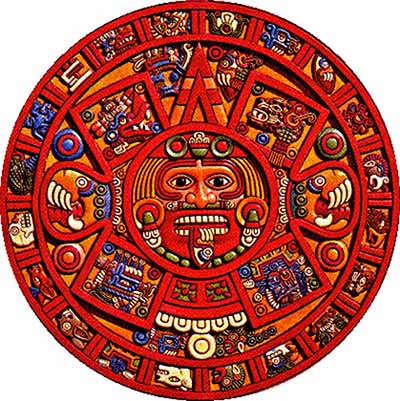
Aztec Calendar
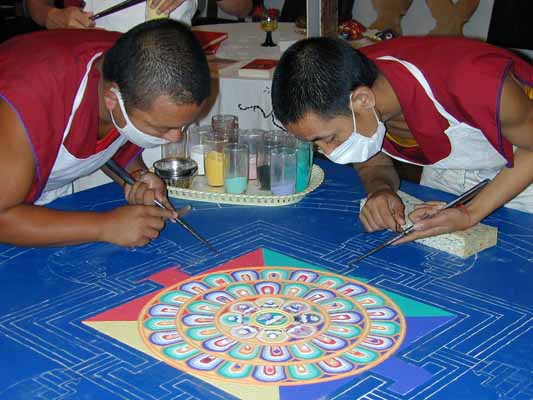
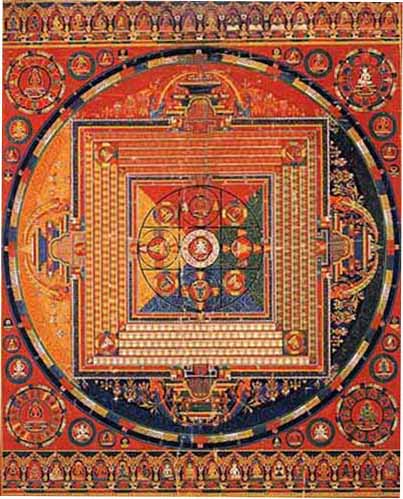
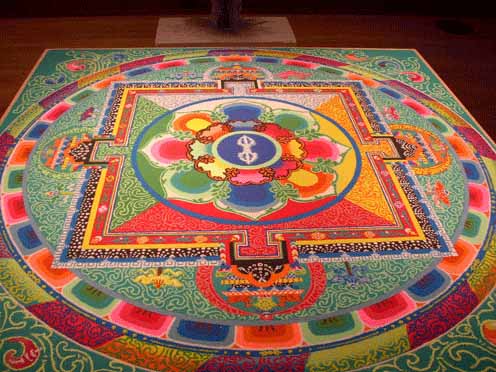
Tibetan Sand Mandala
To symbolize impermanence (a central teaching of Buddhism), after days or weeks of creating the intricate pattern, the sand is brushed together and is usually placed in a body of running water to spread the blessings of the Mandala.
The visualization and concretization of the mandala concept is one of the most significant contributions of Buddhism to religious psychology. Mandalas are seen as sacred places which, by their very presence in the world, remind a viewer of the immanence of sanctity in the universe and its potential in himself. In the context of the Buddhist path the purpose of a mandala is to put an end to human suffering, to attain enlightenment and to attain a correct view of Reality. It is a means to discover divinity by the realization that it resides within one's own self.
The mandala is usually a symbolic representation which depicts the qualities of the enlightened mind in harmonious relationship with one another. A mandala may also be used to represent the path of spiritual development. On another level a mandala can be a symbolic representation of the universe, as in one of the four foundation practices of the Vajrayana, in which a mandala representing the universe is offered to the Buddha.
One important type is the mandala of the "Five Buddhas," archetypal Buddha forms embodying various aspects of enlightenment, the Buddhas depicted depending on the school of Buddhism and even the specific purpose of the mandala. A common mandala of this type is that of the Five Wisdom Buddhas (aka Five Jinas), the Buddhas Vairocana, Aksobhya, Ratnasambhava, Amitabha, and Amoghasiddhi. When paired with another mandala depicting the Five Wisdom Kings, this forms the Mandala of the Two Realms.
The mandala in Nichiren Buddhism is called a moji-mandala and is a hanging paper scroll or wooden tablet whose inscription consists of Chinese characters and medieval-Sanskrit script representing elements of the Buddha's enlightenment, protective Buddhist deities, and certain Buddhist concepts. Called the Gohonzon, it was originally inscribed by Nichiren, the founder of this branch of Japanese Buddhism, during the late 13th century. The Gohonzon is the primary object of veneration in some Nichiren schools and the only one in others, which consider it to be the supreme object of worship as the embodiment of the supreme Dharma and Nichiren's inner enlightenment. The seven characters Nam Myoho Renge Kyo, considered to be the name of the supreme Dharma and the invocation that believers chant, are written down the center of all Nichiren-sect Gohonzons, whose appearance may otherwise vary depending on the particular school and other factors.
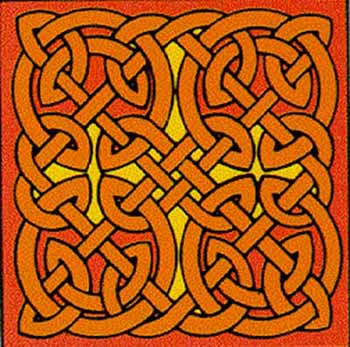
Knot designs are commonly seen in traditional Celticart. Like the mandala, Celtic knot designs are by definition rich in symmetries. Knots are commonly shown as a single cord woven in and out of itself to form a symmetrical design.