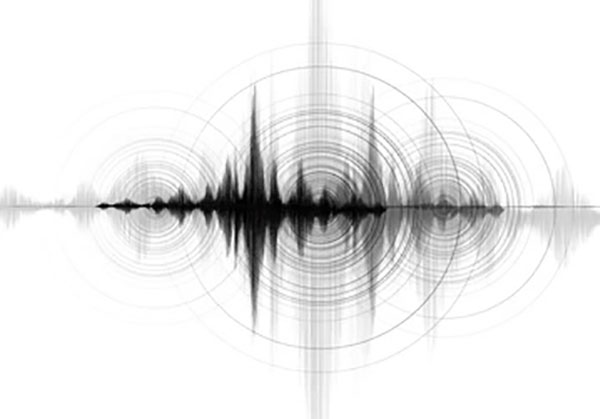
Earthqaukes are any sudden disturbance within the Earth manifested at the surface by a shaking of the ground. This shaking, which accounts for the destructiveness of an earthquake, is caused by the passage of elastic waves through the Earth's rocks. These seismic waves are produced when some form of stored energy, such as elastic strain, chemical energy, or gravitational energy, is released suddenly.

Few natural phenomena can wreak as much havoc as earthquakes. Over the centuries they have been responsible for millions of deaths and an incalculable amount of damage to property. While earthquakes have inspired dread and superstitious awe since ancient times, little was understood about them until the emergence of seismology at the beginning of the 20th century. Seismology, which involves the scientific study of all aspects of earthquakes, has yielded answers to such long-standing questions as why and how earthquakes occur. These matters are discussed in this article, as are the distribution, size, and effects of earthquakes.

General considerations

Principal types of seismic waves

Seismic waves generated by an earthquake source are commonly classified into three main types. The first two, the P and S waves, are propagated within the Earth, while the third, consisting of Love and Rayleigh waves, is propagated along its surface. The existence of these types of seismic waves was predicted during the 19th century, and modern investigators have found that there is a close correspondence between such theoretical calculations and seismographic measurements of the waves.

The P (or primary) waves travel through the body of the Earth at the highest speeds. They are longitudinal waves that can be transmitted by both solid and liquid materials in the Earth's interior. With P waves, the particles of the medium vibrate in a manner similar to sound waves, and the transmitting rocks are alternately compressed and expanded.

The other type of body wave, the S (or secondary) wave, travels only through solid material within the Earth. With S waves, the particle motion is transverse to the direction of travel and involves the shearing of the transmitting rock.

Because of their greater speed, the P waves are the first to reach any point on the Earth's surface. The first P-wave onset starts from the spot where an earthquake originates. This point, usually at some depth within the Earth, is called the focus, or hypocentre. The point immediately above the focus at the surface is known as the epicentre.

Love and Rayleigh waves are guided by the free surface of the Earth. They follow along after the P and S waves have passed through the body of the planet. Both Love and Rayleigh waves involve horizontal particle motion, but only the latter type has vertical ground displacements. As Love and Rayleigh waves travel, they disperse into long wave trains, and at substantial distances from the source they cause much of the shaking felt during earthquakes.

Properties of seismic waves

At all distances from the focus, the mechanical properties of the rocks, such as incompressibility, rigidity, and density, play a role in the speed with which the waves travel and the shape and duration of the wave trains. The layering of the rocks and the physical properties of surface soil also affect these characteristics of the waves. In most cases, elastic behaviour occurs in earthquakes, but the shaking of surface soils from the incident seismic waves sometimes results in nonelastic behaviour, including slumping (i.e., the downward and outward movement of unconsolidated material) and the liquefaction of sandy soil.

When a seismic wave encounters an interface or boundary that separates rocks of different elastic properties, it undergoes reflection and refraction. There is a special complication if a conversion between the wave types occurs at such a boundary: either an incident P or S wave can yield in general reflected P and S waves and refracted P and S waves. Boundaries between structural layers also give rise to diffracted and scattered waves. These additional waves are in part responsible for the complications observed in ground motion during earthquakes. Modern research is concerned with computing, from the theory of waves in complex structures, synthetic records of ground motion that are realistic in comparison with observed ground shaking.

The frequency range of seismic waves is large. Seismic waves may have frequencies from as high as the audible range (greater than 20 hertz [Hz]) to as low as the free oscillations of the whole Earth, with gravest period being 54 minutes (i.e., the Earth vibrates in various modes, and the mode with the lowest pitch takes 54 minutes to complete a single vibration; see below Long-period oscillations of the globe). Attenuation of the waves in rock imposes high-frequency limits, and in small to moderate earthquakes measured surface waves have frequencies extending from about one to 0.005 Hz.

The amplitude range of seismic waves is also great in most earthquakes. The displacements of the ground extend from 10-10 to 10-1 metres. In the greatest earthquakes, the ground amplitude of the predominant P waves may be several centimetres at periods of two to five seconds. Very close to the seismic sources of great earthquakes, investigators have measured large wave amplitudes with accelerations to the ground exceeding that of gravity at high frequencies and ground displacements of one metre at low frequencies.

Seismic instruments and systems

Ground motion in earthquakes and microseisms (small, often long-continuing oscillations of the ground that do not originate in earthquakes) are both recorded by seismographs. Most of these instruments are of the pendulum type. Still in use today are mechanical seismographs that have a pendulum of large mass (up to several tons) and that produce seismograms by scratching a line on smoked paper on a rotating drum. In more advanced instruments, seismograms are recorded by means of a ray of light from the mirror of a galvanometer through which passes an electric current generated by electromagnetic induction when the pendulum of the seismograph moves. Technological developments, notably in electronics, have given rise to high-precision pendulum seismometers and sensors of ground motion. In these instruments, the electric voltages produced by motions of the pendulum or the equivalent are passed through electronic circuitry to amplify the ground motion for more exact readings.

Generally speaking, seismographs are divided into three types: short period; long (or intermediate) period; and ultra-long period, or broad-band, instruments. Short-period instruments are used to record P- and S-body waves with high magnification of the ground motion. For this purpose, the seismograph response is shaped to peak at a period of about one second or less. The long- or intermediate-period instruments of the type used by the World-Wide Standard Seismographic Network (WWSSN; see below) have a response maximum at about 20 seconds. Again, in order to provide as much flexibility as possible for research work, the trend has been toward the operation of very-broad-band seismographs, often with digital representation of the signals. This is usually accomplished with very-long-period pendulums and electronic amplifiers that pass signals in the 0.005 to 50 Hz band.

When seismic waves close to their source are to be recorded, special design criteria are needed. Instrument sensitivity must ensure that the largest ground movements remain on scale. For most seismological and engineering purposes the wave frequency is high, and so the pendulum or its equivalent can be small. For comparison, displacement meters need a long free period and pendulum with consequent instability. Accelerometers that measure the rate at which the ground velocity is changing have an advantage for strong-motion recording, because they allow integration to be carried out to estimate ground velocity and displacement. The ground accelerations to be registered range up to twice gravity (2g). Recording such accelerations can be easily accomplished with short torsion suspensions or force-balance mass-spring systems.

Because many strong-motion instruments need to be placed at unattended sites in ordinary buildings for periods of months or years before a strong earthquake occurs, they usually record only when a trigger mechanism is actuated with the onset of motion. Solid-state memories are now used, particularly with digital recording instruments, making it possible to preserve the first few seconds before the trigger starts the permanent recording. In the past, recordings were usually made on film strips for up to a few minutes' duration. In present-day equipment, digitized signals are stored directly on magnetic cassette tape or on a memory chip. In most cases absolute timing has not been provided on strong-motion records but only accurate relative time marks; the present trend, however, is to provide Universal Time (the local mean time of the prime meridian) by means of special radio receivers or small crystal clocks.

The prediction of strong ground motion and response of engineered structures in earthquakes depends critically on measurements of the spatial variability of earthquake intensities near the seismic wave source. In an effort to secure such measurements, special arrays of strong-motion seismographs are being installed in areas of high seismicity around the world. Large-aperture seismic arrays (linear dimension on the order of one to 10 kilometres) of strong-motion accelerometers can now be used to improve estimations of speed, direction of propagation, and type of seismic wave components. Like an array of radio telescopes, a seismic array allows wave correlations for consecutive time and frequency intervals so that variations in shaking over small-to-moderate distances can be measured.

Finally, because 70 percent of the Earth's surface is covered by water, there is a need for ocean-bottom seismometers to augment the global land-based system of recording stations. Research is under way to determine the feasibility of extensive long-term recording by instruments on the seafloor. Japan already has a semipermanent seismograph system of this type. The system was placed on the seafloor off the Pacific coast of central Honshu in 1978 by means of a cable.

Because of the mechanical difficulties of maintaining permanent ocean-bottom instrumentation, different systems have been considered. These include instruments that are placed in an ocean-bottom package; signals from the instruments are either transmitted to the ocean surface for retransmission by auxiliary apparatus or transmitted via cable to a shore-based station. Another system is designed to release automatically its recording component, allowing it to float to the surface for later recovery.

The use of ocean-bottom seismographs should yield much improved global coverage of seismic waves and provide important information on the seismicity of oceanic regions. Ocean-bottom seismographs will enable investigators to determine the details of the crustal structure of the seafloor and, because of the relative thinness of the oceanic crust, should make it possible for them to collect clear seismic information about the upper mantle. Such systems are also expected to provide new data on focal mechanism, on the origin and propagation of microseisms, and on the nature of ocean-continent margins.

Effects of earthquakes

Primary effects

Earthquakes have varied effects, including changes in geologic features, damage to man-made structures, and impact on human and animal life.

Geomorphological changes are often caused by an earthquake: e.g., movements--either vertical or horizontal--along geological fault traces; the raising, lowering, and tilting of the ground surface with related effects on the flow of groundwater; liquefaction of sandy ground; landslides; and mudflows. The investigation of topographical changes is aided by geodetic measurements, which are made systematically in a number of countries seriously affected by earthquakes.

Earthquakes can do significant damage to buildings, bridges, pipelines, railways, embankments, and other man-made structures. The type and extent of damage inflicted are related to the strength of the ground motions and to the behaviour of the foundation soils.

In the most intensely damaged region, called the meizoseismal area, the effects of a severe earthquake are usually complicated and depend on the topography and the nature of the surface materials; they are often severer on soft alluvium and unconsolidated sediments than on hard rock. At distances of more than 100 kilometres (62 miles) from the source, the main damage is caused by surface waves. In mines there is frequently little damage below depths of a few hundred metres even though the surface immediately above is considerably affected.

Further effects of interest are the occurrence of earthquake sounds and lights. The sounds are generally low-pitched and have been likened to the noise of an underground train passing through a station. The occurrence of such sounds implies the existence of significant short periods in the P waves in the ground (a wave period is the length of time between the arrival of successive crests in a wave train). Occasionally luminous flashes, streamers, and balls are seen in the night sky during earthquakes. These lights have been attributed to electric induction in the air along the earthquake source.

Intensity scales

The level of violence of seismic shaking varies considerably over the affected area. This intensity is not capable of simple quantitative definition and, particularly before seismographs capable of accurate measurement of ground motion were developed, the shaking was estimated by reference to intensity scales that describe the effects in qualitative terms. Subsequently, the divisions in these scales have been associated with accelerations of the local ground shaking. Intensity depends, however, in a complicated way not only on ground accelerations but also on the periods and other features of seismic waves, the distance of the point from the source, and the local geological structure. Furthermore, it is distinct from magnitude, which is a measure of earthquake size specified by a seismograph reading (see below Earthquake magnitude).

A number of different intensity scales have been set up during the past century and applied to both current and ancient destructive earthquakes. For many years the most widely used was the 10-point scale devised by Michele Stefano de Rossi and François-Alphonse Forel in 1878. The scale now generally employed in North America is the Mercalli scale, as modified by Harry O. Wood and Frank Neumann in 1931, in which intensity is considered to be more uniformly graded. An abridged form of the modified Mercalli scale is provided below. Alternative scales have been developed in both Japan and Europe for local conditions. The European (MSK) scale of 12 grades is similar to the abridged version of the Mercalli.

Modified Mercalli Scale of Felt Intensity (1931; Abridged)

I. Not felt. Marginal and long-period effects of large earthquakes.

II. Felt by persons at rest, on upper floors, or otherwise favourably placed to sense tremors.

III. Felt indoors. Hanging objects swing. Vibrations like passing of light trucks. Duration can be estimated.

IV. Vibration like passing of heavy trucks (or sensation of a jolt like a heavy ball striking the walls). Standing motorcars rock. Windows, dishes, doors rattle. Glasses clink. Crockery clashes. In the upper range of IV, wooden walls and frames creak.

V. Felt outdoors; direction may be estimated. Sleepers wakened. Liquids disturbed, some spilled. Small objects displaced or upset. Doors swing, open, close. Pendulum clocks stop, start, change rate.

VI. Felt by all; many frightened and run outdoors. Persons walk unsteadily. Pictures fall off walls. Furniture moved or overturned. Weak plaster and masonry cracked. Small bells ring (church, school). Trees, bushes shaken.

VII. Difficult to stand. Noticed by drivers of motorcars. Hanging objects quiver. Furniture broken. Damage to weak masonry. Weak chimneys broken at roof line. Fall of plaster, loose bricks, stones, tiles, cornices. Waves on ponds; water turbid with mud. Small slides and caving along sand or gravel banks. Large bells ring. Concrete irrigation ditches damaged.

VIII. Steering of motorcars affected. Damage to masonry; partial collapse. Some damage to reinforced masonry; none to reinforced masonry designed to resist lateral forces. Fall of stucco and some masonry walls. Twisting, fall of chimneys, factory stacks, monuments, towers, elevated tanks. Frame houses moved on foundations if not bolted down; loose panel walls thrown out. Decayed piling broken off. Branches broken from trees. Changes in flow or temperature of springs and wells. Cracks in wet ground and on steep slopes.

IX. General panic. Weak masonry destroyed; ordinary masonry heavily damaged, sometimes with complete collapse; reinforced masonry seriously damaged. Serious damage to reservoirs. Underground pipes broken. Conspicuous cracks in ground. In alluvial areas, sand and mud ejected, earthquake fountains, sand craters.

X. Most masonry and frame structures destroyed with their foundations. Some well-built wooden structures and bridges destroyed. Serious damage to dams, dikes, embankments. Large landslides. Water thrown on banks of canals, rivers, lakes, etc. Sand and mud shifted horizontally on beaches and flat land. Railway rails bent slightly.

XI. Rails bent greatly. Underground pipelines completely out of service.

XII. Damage nearly total. Large rock masses displaced. Lines of sight and level distorted. Objects thrown into air.

With the use of an intensity scale, it is possible to summarize the macroseismic data for an earthquake by constructing isoseismal curves, which are the loci of points that demarcate areas of equal intensity. If there were complete symmetry about the vertical through the earthquake's focus, the isoseismals would be circles with the epicentre as centre. However, because of the many unsymmetrical factors influencing the intensity, the curves are often far from circular.

The most probable position of the epicentre based on macroseismic data will be at a point inside the area of highest intensity. In some cases, it is verified by instrumental data that the epicentre is satisfactorily determined in this way, but not infrequently the true epicentre lies outside the area of greatest intensity.


Tsunamis and seiches

Tsunamis

Very long water waves in oceans or seas, tsunamis (or seismic sea waves), sweep inshore following certain earthquakes. They sometimes reach great heights and may be extremely destructive. The immediate cause of a tsunami is a disturbance in an adjacent seabed sufficient to cause the sudden raising or lowering of a large body of water. This disturbance may be centred in the focal region of an earthquake or it may be a submarine landslide arising from an earthquake.

Following the initial disturbance to the sea surface, water waves spread out in all directions. Their speed of travel in deep water is given by (gh)1/2, where h is the sea depth and g is the acceleration of gravity. This speed may be considerable; e.g., 100 metres per second (224 miles per hour) when h is 1,000 metres (3,280 feet). The amplitude at the surface does not exceed a few metres in deep water, but the principal wavelength may be on the order of hundreds of kilometres; correspondingly, the principal wave period may be on the order of tens of minutes. Because of these features, the waves are not noticed by ships far out at sea.

When tsunamis approach shallow water, the wave amplitude increases. The waves may occasionally reach a height of 20 to 30 metres in U- and V-shaped harbours and inlets. They sometimes do a great deal of damage in low-lying ground around such inlets. Frequently the wave front in the inlet is nearly vertical, as, for example, in a tidal bore, and the speed of onrush may be on the order of 10 metres per second. In some cases there are several great waves separated by intervals of several minutes or more. The first of these waves is often preceded by an extraordinary recession of water from the shore, which may commence several minutes or even half an hour beforehand.

Organizations, notably in Japan, Siberia, Alaska, and Hawaii, have been set up to provide tsunami warnings. A key development is the Seismic Sea Wave Warning System (SSWWS), an internationally supported system designed to reduce loss of life in the Pacific Ocean. Centred in Honolulu, it issues alerts based on reports of earthquakes from circum-Pacific seismographic stations.

Seiches

These are rhythmic motions of water in nearly landlocked bays or lakes that are sometimes induced by earthquakes and by tsunamis (in the case of the former). Oscillations of this sort may last for hours or even for a day or two.

The great Lisbon earthquake of 1755 caused the waters of canals and lakes in areas as far away as Scotland and Sweden to go into observable oscillations. Seiche surges in Texas in the southwestern United States commenced between 30 and 40 minutes after the 1964 Alaska earthquake and were produced by seismic surface waves passing through the area.

Of course, P waves from an earthquake may pass through the sea following refraction through the seafloor. The speed of these waves is about 1.5 kilometres per second, the speed of sound in water. If such waves meet a ship with sufficient intensity, they give the impression that the ship has struck a submerged object. This phenomenon is called a seaquake.


Some great earthquakes

About 50,000 earthquakes large enough to be felt or noticed without the aid of instruments occur annually over the entire Earth. Of these, approximately 100 are of sufficient size to produce substantial damage if their centres are near areas of habitation. Very great earthquakes occur at an average rate of about one per year. Among the great earthquakes of the past are those of Lisbon in 1755; New Madrid, Mo., U.S., in December 1811 and January and February 1812; San Francisco in 1906; Tokyo-Yokohama in 1923; the coast of Chile in 1960; south-central Alaska in 1964; T'ang-shan, China, in 1976; and Mexico in 1985. Their devastating effects are briefly described below.

Lisbon

On Nov. 1, 1755, Lisbon was heavily damaged by a great earthquake that occurred at 9:40 AM. The source was situated some distance off the coast. The violent shaking demolished large public buildings and about 12,000 dwellings. As November 1 was All Saint's Day, a large part of the population was attending religious services; most of the churches were destroyed, resulting in many casualties. The total number of persons killed in Lisbon alone was estimated to be as high as 60,000, including those who perished by drowning and in the fire that burned for about six days following the shock. Damage was reported in Algiers, 1,100 kilometres to the east. The earthquake generated a tsunami that produced waves about six metres high at Lisbon and 20 metres high at Cádiz, Spain. The waves traveled on to Martinique, a distance of 6,100 kilometres in 10 hours, and there rose to a height of four metres.

New Madrid

Three large earthquakes occurred near New Madrid in southern Missouri on Dec. 16, 1811, and Jan. 23 and Feb. 7, 1812. There were numerous aftershocks, of which 1,874 were large enough to be felt in Louisville, Ky., some 300 kilometres away. The principal shock produced waves of sufficient amplitude to shake down chimneys in Cincinnati, Ohio, about 600 kilometres away. The waves were felt as far as Canada in the north and the Gulf Coast in the south. The area of greatest shaking was about 100,000 square kilometres, considerably greater than the area involved in the San Francisco earthquake in 1906. It has been discovered that in continental earthquakes such as the Missouri shocks, the area of strong shaking can be abnormally large compared with that in shocks along the Pacific coast of the United States. In one region 240 kilometres long by 60 kilometres wide, the ground sank from one to three metres and was covered by inflowing river water. Sand liquefaction effects were widespread. In certain locations, forests were overthrown or ruined by the loss of soil shaken from the roots of the trees.

San Francisco

On April 18, 1906, at about 5:12 AM, the San Andreas Fault slipped over a segment about 430 kilometres long, extending from San Juan Bautista in San Benito County to the upper Mattole River in Humboldt County and from there perhaps out under the sea to an unknown distance. The shaking was felt from Los Angeles in the south to Coos Bay, Ore., in the north. Damage was severe in San Francisco and in other towns situated near the fault--e.g., San Jose, Salinas, and Santa Rosa (30 kilometres from the fault). Approximately 700 people were killed. In San Francisco the earthquake started a fire, which destroyed the central business district.

Tokyo-Yokohama

A great earthquake struck the Tokyo-Yokohama metropolitan area near noon on Sept. 1, 1923. The death toll from this shock was estimated at more than 140,000. Fifty-four percent of the brick buildings and 10 percent of the reinforced concrete structures collapsed. Many hundreds of thousands of houses were either shaken down or burned. The shock started a tsunami that reached a height of 12 metres at Atami on Sagami-nada (Sagami Gulf), where it destroyed 155 houses and killed 60 persons.

Chile

The source of this earthquake in 1960 extended over a distance of about 1,100 kilometres along the southern Chilean coast. Casualties included about 5,700 killed and 3,000 injured, and property damage amounted to many millions of dollars. Seismic sea waves excited by the earthquake caused death and destruction in Hawaii, Japan, and the Pacific coast of the United States.

Alaska

On March 27, 1964, a great earthquake with a Richter magnitude 8.3-8.5 (see below) occurred in south central Alaska. It released at least twice as much energy as the 1906 San Francisco earthquake and was felt on land over an area of almost 1,300,000 square kilometres. The death toll was only 131 because of the low density of the state's population, but property damage was very high. The earthquake tilted an area of at least 120,000 square kilometres. Landmasses were thrust up locally as high as 25 metres to the east of a line extending northeastward from Kodiak Island through the western part of Prince William Sound. To the west, land sank as much as 2.5 metres. Extensive damage in coastal areas resulted from submarine landslides and tsunamis. Tsunami damage occurred as far away as Crescent City, Calif. The occurrence of tens of thousands of aftershocks indicates that the region of faulting extended about 1,000 kilometres.

T'ang-shan

The coal-mining and industrial city of T'ang-shan, located about 110 kilometres east of Peking, was almost razed in the tragic earthquake of July 28, 1976. The death toll exceeded 240,000 persons, and probably another 500,000 were injured. Most persons were killed from the collapse of unreinforced masonry homes, where they were asleep.

Mexico

The main shock occurred at 7:18 AM on Sept. 19, 1985. The cause was a fault slip along the Benioff zone (a band of intermediate- and deep-earthquake foci along a planar dipping zone) under the Pacific coast of Mexico. Although 400 kilometres from the epicentre, Mexico City suffered major building damage and more than 10,000 of its inhabitants were reported killed. The highest intensity was in the central city, which is founded on a former lake bed. The ground motion there measured five times that in the outlying districts, which have different soil foundations.

Causes of Earthquakes

Principal mechanisms in nature

Earthquakes are caused by the sudden release of energy within some limited region of the rocks of the Earth. The form of energy involved is produced by elastic strain, gravitational potential, chemical reactions, or motion of bodies. Of these, the release of elastic strain energy is the most important, since this form of energy is the only kind that is stored in sufficient quantity in the Earth to produce major earthquakes. Earthquakes associated with this type of energy release are called tectonic earthquakes.

Measurements of triangulation lines across the San Andreas Fault before and after its rupture in the 1906 San Francisco earthquake led to the so-called elastic rebound theory for tectonic earthquakes. As formulated by the American geologist Harry Fielding Reid, the theory explains that a tectonic earthquake occurs when stresses in rock masses have accumulated to a point where they exceed the strength of the rocks, leading to rapid fracture. These rock fractures usually tend in the same direction and may extend over many kilometres along the zone of weakness. In the 1906 earthquake the San Andreas Fault slipped for 430 kilometres, with a maximum horizontal fault offset of about six metres.

Another type of earthquake, that associated with volcanic activity, is called a volcanic earthquake. Yet, it is likely that even here the energy released may be the result of a relatively sudden slip of rock masses and the consequent release of elastic strain energy. The energy, however, may in part be of hydrodynamic origin due to the motion of magma in reservoirs beneath the volcano or to the release of gas under pressure.

The elastic rebound theory of an earthquake source envisages the flinging of rock masses in opposite directions on each side of the rupturing fault as the fault rupture progresses along the fault. In the rupture, the rock masses spring back to a position where the elastic strain is less.

This movement at any point may not take place at once but rather in irregular steps. These sudden stoppings and startings give rise to the vibrations that propagate as seismic waves. The irregular properties of fault rupture are now included in the modeling of earthquake sources, both physically and mathematically.

Roughnesses along the fault are referred to as asperities, and places where the rupture slows or stops are said to be fault barriers. Fault rupture starts at the earthquake focus and propagates unilaterally or bilaterally over the fault plane until stopped or slowed at a barrier. The result is a redistribution of elastic strain, which may or may not break the barrier. Sometimes the fault rupture is reinstated on the far side of the barrier; sometimes the stresses in the rocks eventually produce a breakage, and the rupture continues.

Earthquakes have different properties depending on the type of fault slip that causes them. The geological interpretation of a fault is given in terms of standard geometries . The usual fault model has a strike (direction from north of the horizontal line in the fault plane) and a dip (angle between direction of steepest slope and horizontal). The hanging wall lies over the footwall, the lower wall of an inclined fault.

Relative offsets parallel to the strike produce strike-slip faulting while those parallel to the dip generate dip-slip faulting. Strike-slip faults are right or left lateral, depending on whether the block on the opposite side of the fault from the observer moves to his right or left. Dip-slip faults are normal if the hanging-wall block moves downward relative to the footwall block; the opposite motion produces reverse or thrust faulting. A mixed offset results in oblique-slip faulting, which is measured either by the plunge or by the slip angle.

Observed faults are assumed to be the seat of one or more past earthquakes, though movements along faults are often slow, and most geologically ancient faults are now aseismic (i.e., cause no earthquakes). The actual faulting in an earthquake may be complex, and it is often not clear whether in a particular earthquake the total energy issues from a single fault plane.

Observed geological faults sometimes show overall relative displacements on the order of hundreds of kilometres, whereas the amplitudes of seismic waves reach only several centimetres. In the 1976 T'ang-shan earthquake, for example, a surface strike-slip of about one metre was observed along the causative fault.

An important research technique is to infer the character of faulting in an earthquake from observed distributions of the directions of the first onsets in waves arriving at the Earth's surface. Onsets have been called compressional or dilatational according to whether the direction is away from or toward the focus, respectively. A polarity pattern becomes recognizable when the directions of the P-wave onsets are plotted on a map: there are broad areas in which the first onsets are predominantly compressions, separated from predominantly dilatational areas by nodal curves near which the P-wave amplitudes are abnormally small.

In 1926 the American geophysicist Perry E. Byerly used patterns of P onsets over the entire globe to infer the orientation of the fault plane in a large earthquake. The polarity method yields two P-nodal curves at the Earth's surface. For a homogeneous Earth, one curve is in the plane containing the assumed fault, and the other is in the plane (called the auxiliary plane) that passes through the focus and is perpendicular to the forces of the plane. For the actual Earth, the nodal curves are displaced from these locations because of the curvature of the wave paths between focus and surface, but knowledge of Earth structure enables allowance to be made for this. Given an adequately well-determined pattern of first P-wave movements, it is possible to locate two planes, one of which is the plane containing the fault.

Artificial means of inducing earthquakes

Earthquakes are sometimes caused by human activities. Such activities include the injection of fluids into deep wells, the detonation of large underground nuclear explosions, the excavation of mines, and the filling of large reservoirs. In the case of deep mining, the removal of rock produces changes in the strain around the tunnels. Slip on preexisting faults or outward shattering of rock into the cavities may occur. In all other situations, the induction mechanism is thought to involve elastic strain release, as in the case of tectonic earthquakes. Here, earthquakes are triggered by small changes in the local strain field that produce rock fracture or fault slip. Local changes in strain around large underground explosions have been known to produce slip on already strained faults in the vicinity.

Reservoir induction

Of the various activities cited above, the filling of large reservoirs is among the most important. More than 20 cases have been documented in which local seismicity has increased following the impounding of water behind high dams. Other claims cannot be substantiated because the necessary observations that allow comparison of earthquake occurrence before and after filling do not exist. Reservoir-induction effects are most marked for reservoirs exceeding 100 metres in depth and one cubic kilometre in volume.

Three cases where such effects have very probably been involved are the Hoover Dam in the United States, the Aswan High Dam in Egypt, and the Kariba Dam on the border between Zimbabwe and Zambia. The most generally accepted explanation for the cause of the earthquake occurrence in such cases is that rocks near the reservoir are already strained from the regional tectonic forces to a point where nearby faults are almost ready to slip. Water in the reservoir adds a pressure perturbation that triggers the fault rupture. The pressure effect perhaps is enhanced by the fact that the rocks along the fault have lower strength due to increased water-pore pressure. These factors notwithstanding, it has been determined that most large reservoirs do not produce earthquakes.

The specific earthquake mechanisms associated with reservoir induction have been established in a few cases. For the main shock at the Koyna Dam and Reservoir in India, the evidence favours strike-slip motion, and at Hsin-feng-chiang Dam in China, the principal shock can also be attributed to the strike-slip mechanism. At both the Kremasta Dam in Greece and the Kariba Dam in Zimbabwe-Zambia, the mechanism was dip-slip on normal faults. By contrast, thrust mechanisms have been determined for earthquakes at the lake behind Nurek Dam in the Soviet Union. More than 1,800 earthquakes occurred during the first nine years after water was impounded in this 317-metre deep reservoir, a rate amounting to four times the average number of shocks in the region prior to filling.

Seismology and nuclear explosions

In 1958 representatives from several countries, including the United States and the Soviet Union, met to discuss the technical basis for a nuclear test ban treaty. Among the matters considered was the feasibility of developing effective means with which to detect underground nuclear explosions and to distinguish them seismically from earthquakes. Since that conference, much attention has been devoted to seismological research, leading to major advances in seismic signal detection and analysis in terms of both instrumentation and methodology.

Recent seismological work on test ban treaty verification has involved using high-resolution seismographs, estimating the yield of explosions, studying wave attenuation in the Earth, determining wave amplitude and frequency spectra discriminants, and applying seismic arrays (see above). The findings of such research have shown that underground nuclear explosions, compared with natural earthquakes, usually generate larger amplitude P waves relative to the surface waves. The extension of seismic explosion research (and the experimental controls that go with it) to seismological problems has yielded useful information on seismic wave propagation in general and on the Earth's structure.

Distribution of earthquakes

Earthquake observatories

During the late 1950s there existed worldwide only about 700 seismographic stations equipped with seismographs of various types and frequency responses. Few instruments were calibrated, so that actual ground motions could not be measured and timing errors of several seconds were common. The WWSSN, the aforementioned worldwide standardized seismographic network, was established to help remedy this situation. Each station of the WWSSN has six seismographs--three short-period and three long-period seismographs.

Timing and accuracy are maintained by crystal clocks, and a calibration pulse is placed daily on each record. By 1967 the WWSSN consisted of about 120 stations distributed over 60 countries. Other countries, such as Canada, which did not participate directly in the WWSSN, upgraded their own stations in order to make them compatible with the standardized network. The resulting data provided the basis for significant advances in research on earthquake mechanisms, global tectonics, and the structure of the Earth's interior.

By the 1980s a further upgrading of permanent seismographic stations had begun with the installation of digital equipment. Among the global networks of digital seismographic stations now in operation are the seismic research observatories in boreholes 100 metres deep; modified high-gain, long-period (surface) observatories; and digital worldwide standardized seismographic network (DWWSSN) stations. In addition, a number of gravimeters capable of digital recording and response to very long wavelengths have been installed throughout the world as part of the International Deployment of Accelerographs (IDA) network. The main aim is to equip global observatories with seismographs that can record seismic waves over a broad band of frequencies.

Locating earthquake epicentres

At some observatories it is customary to make provisional estimates of the epicentres of the more important earthquakes. These estimates provide preliminary information locally about particular earthquakes and serve as first approximations for the calculations subsequently made by large coordinating centres.

In the case of a single observatory, an earthquake's epicentre can often be estimated from the readings of three perpendicular component seismograms. For example, for a shallow earthquake the epicentral distance, if less than 105, is indicated by the interval between the arrival times of P and S waves; the azimuth and angle of emergence are indicated by a comparison of the sizes and directions of the first movements shown in the seismograms and by the relative sizes of later waves, particularly surface waves. It should be noted, however, that in certain regions the first wave movement at a station arrives from a direction differing from the azimuth toward the epicentre. The explanation is usually in terms of strong variations in geological structures.

When data from more than one observatory are available, an earthquake's epicentre may be estimated from the epicentral distances indicated by the times of travel of the P and S waves from source to recorder. Nowadays, in many seismically active regions, networks of seismographs with telemetry transmission and centralized timing and recording are common. Whether analog or digital recording is used, such integrated systems greatly simplify observatory work: multichannel signal displays make identification and timing of phase onsets easier and more reliable.

Moreover, modern on-line microprocessors can be programmed to pick automatically, with some degree of confidence, the onset of a significant common phase, such as P, by correlation of waveforms from parallel network channels. With the aid of specially designed computer programs, seismologists can then locate distant earthquakes to within about 10 kilometres and the epicentre of a local earthquake to within just a few kilometres.

Catalogs of felt earthquakes and earthquake observations have appeared intermittently for many centuries. The earliest known list of instrumentally recorded earthquakes with computed times of origin and epicentres is that for the period 1899-1903. In subsequent years, cataloging of earthquakes has become increasingly more uniform and complete. Especially valuable is the service provided by the International Seismological Centre (ISC) at Newbury, Eng. Each month it receives about 80,000 readings from about 1,200 stations worldwide and preliminary estimates of the locations of approximately 1,600 earthquakes from national and regional agencies and observatories. The ISC publishes monthly, with about a two-year delay, a bulletin that provides all available information on each of about 1,500 to 2,000 earthquakes.

Various national and regional centres control networks of stations and act as intermediaries between individual stations and the international organizations. Examples of long-standing national centres include the Japan Meteorological Agency and the Canadian Seismograph Network operated by the Department of Energy, Mines and Resources of Ottawa. These centres normally make estimates of the magnitudes, epicentres, origin times, and focal depths of local earthquakes. Of particular importance is the U.S. National Earthquake Information Service in Colorado, which can make rapid determinations of earthquake locations anywhere in the world.

Geographic concentrations of earthquakes

The Earth's major earthquakes occur mainly in belts coinciding with the margins of tectonic plates. This has long been apparent from early catalogs of felt earthquakes and is even more readily discernible in modern seismicity maps, which show instrumentally determined epicentres.

One major earthquake belt passes around the Pacific Ocean and affects coastlines bordering on it, as, for example, those of New Zealand, New Guinea, Japan, the Aleutian Islands, Alaska, and the western regions of North and South America. It is estimated that 80 percent of the energy presently released in earthquakes comes from those whose epicentres are in this belt. The seismic activity is by no means uniform throughout the belt, and there are a number of branches at various points.

A second belt passes through the Mediterranean region eastward through Asia and joins the first belt in the East Indies. The energy released in earthquakes from this belt is about 15 percent of the world total. There also are striking connected belts of seismic activity, mainly along mid-oceanic ridges--including those in the Arctic Ocean, the Atlantic Ocean, and the western Indian Ocean--and along the rift valleys of East Africa.

Most other parts of the world experience at least occasional shallow earthquakes--those that originate within 60 kilometres of the Earth's outer surface. The great majority of earthquakes are shallow. It should be noted that the geographic distribution of smaller earthquakes is less precisely determined, partly because the availability of relevant data is dependent on the geographical distribution of observatories.

A distinction is made between "intermediate" focal depths ranging from about 60 to 300 kilometres and greater focal depths. Of the total energy released in earthquakes, 12 percent comes from intermediate earthquakes and 3 percent from deeper ones. The frequency of occurrence falls off rapidly with increasing focal depth in the intermediate range, while below this the distribution in depth is fairly uniform until the greatest focal depths are approached.

Deep-focus earthquakes commonly occur in patterns called Benioff zones that dip into the Earth. Dip angles average about 45, with some shallower and others nearly vertical. Benioff zones are found under tectonically active island arcs, such as Japan, Vanuatu (formerly the New Hebrides), the Kingdom of Tonga (islands), and Alaska, and they are normally but not always (e.g., Romania and the Hindu Kush mountain system) associated with deep ocean trenches, such as those along the South American Andes. In most Benioff zones intermediate- and deep-earthquake foci lie in a narrow layer, although recent precise hypocentral locations in Japan and elsewhere show two distinct parallel bands of foci 20 kilometres apart. Careful estimation gives about 680 kilometres for the deepest depths globally.

Tectonic associations

There is a clear correspondence between the geographical distribution of volcanoes and major earthquakes, particularly in the circum-Pacific earthquake belts and along mid-oceanic ridges. Volcanic vents, however, are generally at a distance of some hundreds of kilometres from the majority of the epicentres of major shallow earthquakes, and many earthquake sources occur nowhere near active volcanoes. Earthquakes of intermediate focal depth frequently occur directly below structures marked by volcanic vents, but there is probably no immediate causal connection between these earthquakes and the volcanic activity, both most likely resulting from the same tectonic processes.

Seismicity patterns had no strong global theoretical explanation until a dynamical model called plate tectonics was developed during the late 1960s. This theory holds that the Earth's upper shell, or lithosphere, consists of nearly a dozen large, quasi-stable slabs called plates. The thickness of each of these plates extends to a depth of roughly 80 kilometres.

The plates move horizontally, relative to neighbouring plates, on a layer of softer rock. The rate of movement ranges from one to 10 centimetres per year over a shell of lesser strength called the asthenosphere. At the plate edges where there is contact with adjoining plates, boundary tectonic forces operate on the rocks, causing physical and chemical changes in them. New lithosphere is created at mid-oceanic ridges by the upwelling and cooling of magma from the Earth's mantle. The horizontally moving plates are believed to be absorbed at the ocean trenches, where a subduction process carries the lithosphere downward along the Benioff zones into the Earth's interior. The total amount of lithospheric material destroyed at these subduction zones equals that generated at the ridges.

Seismological evidence (e.g., location of major earthquake belts) is broadly in agreement with this kinematic model. Earthquake sources are concentrated along the midoceanic ridges, which correspond to divergent plate boundaries. At the subduction zones, which are associated with convergent plate boundaries, intermediate- and deep-focus earthquakes in the Benioff zone mark the location of the upper part of a dipping plate. The focal mechanisms indicate that the stresses are aligned with the dip of the lithosphere underneath the adjacent continent or island arc.

Some earthquakes associated with mid-oceanic ridges are confined to strike-slip faults that offset the ridge crests. The majority of the earthquakes occurring along such horizontal shear faults are characterized by slip motions. Also consistent with the plate tectonics theory is the high seismicity encountered along the edges of plates that slide past each other.

Examples of plate boundaries of this kind, which are sometimes called fracture zones, include the San Andreas Fault in California and the North Anatolian fault system in Turkey. Such plate boundaries are the site of interplate earthquakes of shallow focus.

One other point that correlates with the plate theory is the low seismicity within plates. Small to large earthquakes do occur in limited regions well within the boundaries of plates; however, such interplate seismic events must be explained by mechanisms other than plate motions and their associated phenomena.

Aftershocks, foreshocks, and swarms

Usually a major or even moderate earthquake of shallow focus is followed by many lesser earthquakes close to the original source region. This is to be expected because the fault rupture producing a major earthquake does not relieve all of the accumulated strain energy at once. Furthermore, this dislocation is liable to cause an increase in the stress and strain at a number of places in the vicinity of the focal region, bringing crustal rocks at certain points close to the stress at which fracture occurs. In some cases the frequency of aftershocks may be for a time as high as 1,000 or more a day.

Sometimes a large earthquake is followed by another at approximately the same focus within an hour or perhaps a day. An extreme case of this is multiple earthquakes. In most instances, however, the first principal earthquake of a series is much more energetic than the aftershocks. In general, the number of aftershocks per day decreases with increasing time. The aftershock frequency is roughly inversely proportional to the time since the occurrence of the largest earthquake of the series.

Most major earthquakes occur without detectable warning from less energetic precursor earthquakes, but some principal earthquakes are preceded by foreshocks. In another pattern of occurrence, large numbers of small earthquakes occur in a region over an interval of time that may extend to some months without a major earthquake occurring.

In the Matsushiro region of Japan, for instance, there occurred between August 1965 and 1967 a series of hundreds of thousands of earthquakes, some sufficiently strong (up to local magnitude 5) to cause property damage but no casualties. The maximum frequency was 6,780 small earthquakes on April 17, 1966. Such series of earthquakes are called earthquake swarms. Earthquakes associated with volcanic activity often occur in swarms, but swarms also have been observed in many nonvolcanic regions.

Extraterrestrial seismic phenomena

Space vehicles have carried equipment to the surface of the Moon and Mars with which to record seismic waves, and seismologists on Earth have received telemetered signals from seismic events in both cases.

By 1969 seismographs had been placed at six sites on the Moon during the U.S. Apollo missions. Recording of seismic data ceased in September 1977. The instruments detected between 600 and 3,000 moonquakes during each year of their operation, though most of these seismic events were very small. The ground noise on the lunar surface is low compared with that of the Earth so that the seismographs could be operated at very high magnifications. Because there was more than one station on the Moon, it was possible to use the arrival times of P and S waves at the lunar stations from the moonquakes to determine foci in the same way as is done on the Earth.

Moonquakes are of three types. First, there are the events caused by the impact of lunar modules, booster rockets, and meteorites. The lunar seismograph stations were able to detect meteorites hitting the Moon's surface more than 1,000 kilometres away. The two other types of moonquakes had natural sources in the Moon's interior: they presumably resulted from rock fracturing, as on Earth. The most common type of natural moonquake had deep foci, at depths of 600 to 1,000 kilometres; the less common variety had shallow focal depths.

Seismological research on Mars has been less successful. Only one of the seismometers carried to the Martian surface by the U.S. Viking landers during the mid-1970s remained operational. Perhaps only one marsquake was detected in 546 Martian days.

Size, energy, and frequency of earthquakes

As noted earlier, small ground motions known as microseisms are commonly recorded by seismographs. These weak wave motions are not generated by earthquakes, and they complicate accurate recording of the latter. They, however, are of scientific interest because their form is related to the Earth's surface structure.

Some microseisms have local causes, as, for example, those due either to traffic or machinery, or to local wind effects and storms. Another class of microseisms exhibits features that are very similar to those on records traced at earthquake observatories distributed over a wide area. The features include approximately simultaneous occurrence of maximum amplitudes and similar wave frequencies at all the observatories concerned.

These microseisms may persist for many hours and have more or less regular periods of about five to eight seconds. The largest amplitudes of such microseisms are on the order of 10-3 centimetres and occur in coastal regions. The amplitudes also depend to some extent on local geological structure. There is a fair correlation between the size of microseisms and the occurrence of stormy weather conditions in some adjacent region.

Some microseisms are generated by the action of rough surf against an extended steep coast, while others are produced when large standing water waves are formed at sea. The period of the latter type of microseism is half that of the standing wave.

Earthquake magnitude

Because the size of earthquakes varies enormously it is necessary for purposes of relative comparison to compress the range of wave amplitudes measured on seismograms by means of a mathematical device. In 1935 the American seismologist Charles F. Richter set up a "magnitude scale of earthquakes" as the logarithm to base 10 of the maximum seismic wave amplitude (in thousandths of a millimetre) recorded on a standard seismograph (the Wood-Anderson torsion pendulum seismograph) at a distance of 100 kilometres from the earthquake epicentre.

Reduction of amplitudes observed at various distances to the amplitudes expected at the standard distance of 100 kilometres is made on the basis of empirical tables. Richter magnitudes ML are computed on the assumption that the ratio of the maximum wave amplitudes at two given distances is the same for all earthquakes considered and is independent of azimuth.

Richter first applied his magnitude scale to shallow-focus earthquakes recorded within 600 kilometres of the epicentre in the southern California region. Later, additional empirical tables were set up, whereby observations made at distant stations and on seismographs other than the standard type could be used. Empirical tables were extended to cover earthquakes of all significant focal depths and to enable independent magnitude estimates to be made from body- and surface-wave observations.

At the present time, a number of different magnitude scales are used by scientists and engineers as a measure of the relative size of an earthquake. The P-wave magnitude (mb), for one, is defined in terms of the amplitude of the P wave recorded on a standard seismograph. Similarly, the surface-wave magnitude (Ms) is defined in terms of the logarithm of the maximum amplitude of the ground motion for surface waves with a wave period of 20 seconds.

Taken as such, a magnitude scale has no lower or upper limit. Sensitive seismographs can record earthquakes with magnitudes of negative value and have recorded magnitudes up to about 9.0. (The 1906 San Francisco earthquake, for example, had a Richter magnitude of 8.25.)

There is, in effect, no direct mechanical basis for magnitude. Rather, it is an empirical parameter analogous to stellar magnitude. In modern practice, a more soundly based mechanical measure of earthquake size is used--namely, the seismic moment (M0). Such a parameter is related to the angular leverage of the forces that produce the slip on the causative fault.

It can be calculated both from recorded seismic waves and from field measurements of the size of the fault rupture. Consequently, seismic moment provides a more uniform scale of earthquake size. Still another magnitude currently in use is called moment magnitude (Mw). It is proportional to the logarithm of the seismic moment. Given the above definitions, the great Alaska earthquake of 1964 had the values Ms = 8.4, M0 = 820 1027 dyne centimetres, Mw = 9.2.

Energy and frequency of occurrence

Energy in an earthquake passing a particular surface site can be calculated directly from the recordings of strong ground motion, which is given as ground velocity. Such recordings indicate an energy rate of 105 watts per square metre near a moderate-sized earthquake source. The total power output of a rupturing fault in a shallow earthquake is on the order of 1014 watts compared with the 105 watts generated in rocket motors.

The magnitude Ms has also been connected with the energy Es of an earthquake by empirical formulas. These give Es = 6.3 1011 and 1.4 1025 ergs for earthquakes of Ms = 0 and 8.9, respectively. A unit increase in Ms thus corresponds to a 32-fold increase in energy. Negative magnitudes correspond to the smallest instrumentally recorded earthquakes, a magnitude of 1.5 to the smallest felt earthquakes and one of 3 to any shock felt at a distance of up to 20 kilometres. Earthquakes of magnitude 5.0 cause light damage near the epicentre; those of 6 are destructive over a restricted area; and those of 7.5 are at the lower limit of major earthquakes.

The total annual energy released in all earthquakes is about 1025 ergs, corresponding to a rate of work between 10,000,000 and 100,000,000 kilowatts. This is on the order of 0.001 of the annual amount of heat escaping from the Earth's interior. Ninety percent of the total seismic energy comes from earthquakes of magnitude 7.0 and higher--i.e., those whose energy is on the order of 1023 ergs or more.

There also are empirical relations for the frequencies of earthquakes of various magnitudes. Suppose N to be the average number of shocks per year for which the magnitude lies in the range Ms +/- Ms. Then log10 N = a - bMs fits the data well both globally and for particular regions; e.g., for shallow earthquakes worldwide: a = 6.7, b = 0.9 when Ms > 6.0. The frequency for larger earthquakes therefore increases by a factor of about 10 when the magnitude is diminished by one unit. The increase in frequency with reduction in Ms falls short, however, of matching the decrease in the energy E. Thus larger earthquakes are overwhelmingly responsible for most of the total seismic energy release. The number of earthquakes per year with mb > 4.0 may reach 20,000.

Earthquake prediction

Observation and interpretation of precursory phenomena

The search for periodic cycles in earthquake occurrence is an old one. Generally, periodicities in time and space for major earthquakes have not been widely detected or accepted. One problem is that earthquake catalogs are not homogeneous in their selection and reporting. The most extensive catalog of this kind comes from China and begins about 700 BC. The catalog contains some information about 1,000 destructive earthquakes. The sizes of these earthquakes have been assessed from the reports of damage, intensity, and shaking.

Another approach to the statistical occurrence of earthquakes involves the postulation of trigger forces that initiate the rupture. Such forces have been attributed, for example, to severe weather conditions, volcanic activity, and tidal forces. Usually correlations are made between the physical phenomena assumed to provide the trigger and the repetition of earthquakes. Inquiry must always be made to discover whether a causative link is actually present. No trigger mechanism, at least for moderate to large earthquakes, has been found that satisfies the various criteria necessary to establish a clear physical connection.

Statistical methods also have been tried with populations of regional earthquakes. It has been suggested that the slope b of the regression line between the number of earthquakes and the magnitude, mentioned in the previous section, for a region may change characteristically with time. Specifically, the b value for the population of foreshocks of a major earthquake may be significantly smaller than the mean b value for the region averaged over a long interval of time.

For prediction of the time of earthquake occurrence, a proposal is that precursory changes in a region will cause the velocity of seismic waves through the region to change. Thus, if appropriate travel-time residuals are plotted as a function of time, fluctuations will provide a forewarning. The elastic rebound theory for the occurrence of earthquakes described earlier allows rough prediction of large shallow earthquakes. H.F. Reid gave, for example, a crude forecast of the next great earthquake near San Francisco. (The theory also predicted of course that the place would be along the San Andreas or an associated fault.) The geodetic data indicated that during an interval of 50 years relative displacements of 3.2 metres had occurred at distant points across the fault. The maximum elastic-rebound offset along the fault in the 1906 earthquake was 6.5 metres. Therefore, (6.5/3.2) 50, or about 100 years, would again elapse before sufficient strain accumulated for the occurrence of an earthquake comparable to that of 1906. The premises are that the regional strain will grow uniformly and that various constraints have not been altered by the great 1906 rupture itself (e.g., by the onset of slow fault slip).

For many years prediction research has been influenced by the basic argument that strain accumulates in the rock masses in the vicinity of a fault and results in crustal deformation. Deformations have been measured in the horizontal direction along active faults (by trilateration and triangulation) and in the vertical direction by precise leveling and tiltmeters. Some investigators believe that changes in groundwater level occur prior to earthquakes; variations of this sort have been reported mainly from China. It should be noted that water levels in wells respond to a complex array of factors such as rainfall; thus, if changes in water level are to be studied in relation to earthquakes, such factors need to be removed.

The theory of dilatancy of rock prior to rupture occupies a central position in recent discussions of premonitory phenomena of earthquakes. It is based on the observation that many solids exhibit dilatancy (i.e., an increase in volume) during deformation. For earthquake prediction, the significance of dilatancy is its effects on various measurable quantities of the Earth's crust, such as seismic velocities, electric resistivity, and ground and water levels.

The consequences of dilatancy for earthquake prediction are summarized in the Table . The best studied consequence is the effect on the seismic velocities. The influence of internal cracks and pores on the elastic properties of rocks can be clearly demonstrated in laboratory measurements of those properties as a function of hydrostatic pressure. In the case of saturated rocks, experiments predict--for shallow earthquakes--that dilatancy occurs as a portion of the crust is stressed to failure, causing a decrease in the velocities of seismic waves. Recovery of velocity is brought about by subsequent rise of pore pressure of water. The rise of pore pressure also has the effect of weakening the rock and enhancing fault slip.

Strain buildup in the focal region may have significant effects on other observable properties, including electrical conductivity and gas concentration. Because the electrical conductivity of rocks depends largely on interconnected water channels within the rocks, resistivity may increase before the cracks become saturated. As pore fluid is expelled from the closing cracks, the local water table would rise and concentrations of gases such as radioactive radon would increase.

Geological methods of extending the seismicity record back from the present also are being explored. Field studies indicate that the sequence of surface ruptures along major active faults associated with large earthquakes can sometimes be constructed. Liquefaction effects preserved in beds of sand and peat may provide evidence--when radiometric dating methods are used--for large "paleoearthquakes" extending back for more than 1,000 years.

Less well-grounded precursory phenomena, particularly earthquake lights and animal behaviour, sometimes draw more public attention than those discussed above. Many reports of unusual lights in the sky and abnormal animal behaviour preceding earthquakes are known to seismologists, mostly in anecdotal form. Both these phenomena are usually explained in terms of a release of gases prior to earthquakes and electric and acoustic stimuli of various types. At present there is no definitive experimental evidence to support claims that animals sometimes sense the coming of an earthquake.

Methods of reducing earthquake hazards

Considerable work has been done in seismology to explain the characteristics of the recorded ground motions in earthquakes. Such knowledge is needed to predict ground motions in future earthquakes so that earthquake-resistant structures can be designed. Although earthquakes cause death and destruction through such secondary effects as landslides, tsunamis, fires, and fault rupture, the greatest losses--both in lives and property--result from the collapse of man-made surface and subsurface structures during the violent shaking of the ground. Accordingly, the most effective way to mitigate the destructiveness of earthquakes from an engineering standpoint is to design and construct structures capable of withstanding strong ground motions.

Most elastic waves recorded close to an extended fault source are complicated and difficult to interpret uniquely. Understanding such near-source motion can be viewed as a three-part problem. The first part stems from the generation of elastic waves by the slipping fault as the moving rupture sweeps out an area of slip along the fault plane within a given time. The pattern of waves produced is dependent on a finite number of parameters, such as fault dimension and rupture velocity. Elastic waves of various types radiate from the vicinity of the moving rupture in all directions. The geometry and frictional properties of the fault critically affect the pattern of radiation from it.

The second part of the problem concerns the passage of the waves through the intervening rocks to the site and the effect of geological studies. The third part involves the conditions at the recording site itself, such as topography and highly attenuating soils. All these questions must be considered when an evaluation is being made of likely earthquake effects at a site of any proposed structure.

Experience has shown that accelerograms have a variable pattern in detail, but most have regular shapes in general (except in the case of strongly multiple earthquakes). In a strong horizontal shaking of the ground (acceleration, velocity, and displacement), there is an initial segment of motion made up mainly of P waves, which frequently manifest themselves strongly in the vertical motion. This is followed by the onset of S waves, often associated with a longer period pulse related to the near-site fault slip or fling.

After the S onset there is enhanced shaking that consists of a mixture of S and P waves, but the S motions become dominant as the duration increases. Later, in the horizontal component, surface waves dominate, mixed with some S-body waves. Depending on the distance of the site from the fault and the structure of the intervening rocks and soils, surface waves are spread out into long trains.

In many areas seismic expectancy maps or risk maps are now available for planning purposes. The anticipated intensity of ground shaking is represented by a number called the effective peak acceleration (EPA).

In order to avoid weaknesses found in earlier earthquake risk maps, the following general principles are usually adopted today: (1) the map should take into account not only the size but also the frequency of earthquakes; (2) the broad regionalization pattern should use as a data base historical seismicity, major tectonic trends, acceleration attenuation curves, and intensity reports; (3) regionalization should be defined by means of contour lines with design parameters referred to ordered numbers on neighbouring contour lines (this procedure minimizes sensitivity concerning the exact location of boundary lines between separate zones); (4) the map should be simple and not attempt to microzone the region; and (5) the mapped contoured surface should not contain discontinuities, so that the level of hazard progresses gradually and in order across any profile drawn on the map.

Developing structural designs that are able to resist the forces generated by seismic waves can be achieved either by following building codes based on risk maps or by appropriate methods of analysis. Many countries reserve theoretical structural analyses for the larger, more costly or critical buildings to be constructed in seismically active regions, while simply requiring that ordinary structures conform to local building codes.

Economic realities usually determine the goal, not of preventing all damage in all earthquakes, but of minimizing damage in moderate, more common earthquakes and ensuring no major collapse at the strongest intensities. An essential part of what goes into engineering decisions on design and into the development and revision of earthquake-resistant design codes is therefore seismological, involving measurement of strong seismic waves, field studies of intensity and damage, and the probability of earthquake occurrence.

Exploration of the Earth's interior with seismic waves

Seismological methods and earthquake tomography

Seismological data on the Earth's deep structure come from several sources. These include P and S waves in earthquakes and nuclear explosions, the dispersion of surface waves from distant earthquakes, and vibrations of the whole Earth from large earthquakes.

One of the major aims of seismology is to infer the minimum set of properties of the Earth's interior that will explain recorded wave trains in detail. Notwithstanding the tremendous progress made in the exploration of the Earth's deep structure during the first half of the 20th century, realization of this goal was severely limited until the 1960s because of the laborious effort required to evaluate theoretical models and to process the large amounts of seismological data recorded. The application of high-speed computers with their enormous storage and rapid retrieval capabilities opened the way for major advances in both theoretical work and data handling.

Since the mid-1970s researchers have studied realistic models of the Earth's structure that include continental and oceanic boundaries, mountains, and alluvial valleys rather than simple structures such as those involving variation only with depth. They also have resorted to statistical analyses that entail the simultaneous analyses of worldwide recordings of earthquake waves. In addition, various developments have benefited observational seismology.

For example, the implications of seismic exploratory techniques developed by the petroleum industry (e.g., seismic reflection) have been recognized and the procedures adopted. (For a discussion of these techniques, see exploration: Exploration of the Earth's surface and interior.) Equally significant has been the application of graphical methods to the exploration of the Earth's deep structure. This has been made possible by the development of minicomputers and microprocessors with peripheral display equipment.

The major method for determining the structure of the Earth's deep interior is the detailed analysis of seismograms of seismic waves. (It is of interest that such earthquake readings also provide close estimates of wave velocities, density, and elastic and inelastic parameters in the Earth.) The primary procedure is to measure the travel times of various wave types, such as P and S, from their source to the recording seismograph. First, however, identification of each wave type with its ray path through the Earth must be made.

In Figure 2 seismic rays for many paths of P and S waves leaving the earthquake focus F are shown. Rays corresponding to waves that have suffered reflection at the Earth's outer surface (or possibly at one of the interior discontinuity surfaces) are denoted as PP, PPP, SS, SSS, PS, SP, PPS, etc. For example, PS corresponds to a wave that is of P type before surface reflection and of S type afterward. In addition, there are rays such as pPP, sPP, and sPS, the symbols p and s corresponding to an initial ascent to the outer surface as P or S waves, respectively. PdP is the P wave reflected from a discontinuity depth d kilometres in the upper part of the Earth.

An especially important class of rays is associated with a discontinuity surface that occurs at a depth of about 2,900 kilometres below the outer surface separating the central core of the Earth from the mantle. The symbol c is used to indicate an upward reflection at this discontinuity.

Thus if a P wave travels down from a focus to the discontinuity surface in question, the upward reflection into an S wave is recorded at an observing station as the ray PcS and similarly with PcP, ScS, and ScP. The symbol K is used to denote the part (of P type) of the path of a wave that passes through the central core.

Thus, the ray SKS corresponds to a wave that starts as an S wave, is refracted into the central core as a P wave, and is refracted back into the mantle wherein it finally emerges as an S wave. Such rays as PKKP correspond to waves that have suffered an internal reflection at the boundary of the central core.

The discovery of the existence of an inner core in 1936 by the Danish seismologist Inge Lehmann made it necessary to introduce additional basic symbols. For paths of waves inside the central core, the symbols i and I are used analogously to c and K for the whole Earth; therefore i indicates reflection upward at the boundary between the outer and inner portions of the central core, and I corresponds to the part (of P type) of the path of a wave that lies inside the inner portion. Thus, for instance, discrimination needs to be made between the rays PKP, PKiKP, and PKIKP.

The first of these corresponds to a wave that has entered the outer portion of the central core but has not reached the inner portion; the second to one that has been reflected upward at the boundary between the two portions; and the third to one that has penetrated into the inner portion.

By combining the symbols p, s, P, S, c, K, i, I, and d in various ways, notation is developed for all the main rays associated with body earthquake waves. The symbol J has been introduced to correspond to S waves in the inner core, should evidence be found for such waves.

Finally, the use of times of travel along rays to infer hidden structure is analogous to the use of X rays in medical tomography. The method involves reconstructing an image of internal anomalies from measurements made at the outer surface. Nowadays, hundreds of thousands of travel times of P and S waves are available in earthquake catalogs for the tomographic imaging of the Earth's interior and the mapping of internal structure.


Structure of the Earth's interior

Studies with earthquake recordings have given a picture inside the Earth of, on average, a solid but layered mantle about 2,900 kilometres thick, which in places lies within 10 kilometres of the surface under the oceans. The thin rock layer surrounding the mantle is the crust, whose lower boundary is called the Mohorovicic Discontinuity.

In normal continental regions of 30- to 40-kilometre thickness, there is usually a superficial low-velocity sedimentary layer underlain by a zone in which seismic velocity increases with depth. This may be followed by a layer in which P-wave velocities in some places fall from 6 to 5.6 kilometres per second. The middle part of the crust is characterized by a heterogeneous zone with P velocities of nearly 6 to 6.3 kilometres per second. The lowest layer of the crust (about 10 kilometres thick) has significantly higher P velocities ranging up to nearly 7 kilometres per second.

In the deep ocean, under a sedimentary layer of about one-kilometre thickness, the lower layer of the thin oceanic crust is inferred to consist of basalt, which formed where extrusions of basaltic magma at mid-ocean ridges have been added to the upper part of lithospheric plates as they spread away from the ridge crests. This crustal layer cools as it moves away from the ridge crest, and its seismic velocities increase correspondingly.

Below the mantle lies a 2,255-kilometre-thick shell, which seismic waves show to have the properties of a liquid. At the very centre of the planet is a separate solid core, with a radius of 1,216 kilometres. Recent work with observed seismic waves has revealed fine structural details within the main shells inside the Earth, especially the crust and lithosphere. These regional variations are important in explaining the dynamic history of the planet.

Long-period oscillations of the globe

Sometimes earthquakes are large enough to cause the whole Earth to ring like a bell. The deepest tone of vibration of the planet is one of 54 minutes. Knowledge of these vibrations has come from a remarkable extension in the range of periods of ground movements that can be recorded by very long-period seismographs, thus allowing the interval in earthquake wave periods to be filled in: from ordinary P waves with periods of a few seconds to vibrations with periods on the order of 12 and 24 hours such as those that occur in Earth tidal movements.

The measurements of the vibrations of the whole Earth provide important additional data on the properties of the interior of the planet. It should be emphasized that these free vibrations are set up by the energy release of the earthquake source but continue for many hours and sometimes even days. For an elastic sphere like the Earth two types of vibrations are known to be possible.

In one type, called S modes or spheroidal vibrations, the motions of the elements of the sphere have components along the radius as well as along the tangent. In the second type, which are designated as T modes or torsional vibrations, there are shear but no radial displacements. The nomenclature is nS and nT, where the letters n and are related to the surfaces in the vibration at which there is zero motion. The suffix n gives a count of the number of internal zero-motion (nodal) surfaces and the suffix indicates the number of surface nodal lines.

Several hundred types of S and T vibrations have been identified and the associated periods measured. In a smaller number of cases, the amplitude of the ground motion in the vibrations has been determined for particular earthquakes, and, more importantly, the attenuation of each component vibration has been measured. The measure of this decay constant is called the quality factor Q. The greater the value of Q, the less is the wave or vibration damping. Typically, for oS10 and oT10, the Q values are about 250.

The rate of decay of the vibrations of the whole Earth with the passage of time can be seen in Figure 3, where they appear superimposed for 20 hours of the 12-hour tidal deformations of the Earth. At the bottom of Figure 3, these vibrations have been split up into a series of peaks, each with a definite frequency, like the spectrum of light. Such a spectrum indicates the relative amplitude of each harmonic present in the free oscillations. If the physical properties of the Earth's interior were known, all these individual peaks could be calculated directly. Instead, the internal structure must be estimated from the observed peaks.

Recent research has shown that observations of long-period oscillations of the Earth discriminate fairly finely between different Earth models. In applying the observations to improve the resolution and precision of such representations of the planet's internal structure, a considerable number of Earth models are set up and all the periods of their free oscillations are computed and checked against the observations. Models can then be steadily eliminated until only a small range remains. In practice, the work starts with existing models; efforts are made to amend them by successive steps until full compatibility with the observations is achieved within the uncertainties of the observations. Even so, the resulting computed Earth structure is not a unique solution to the problem.


Earthquake  Wikipedia


Earthquakes in the News ...


IRIS Seismic Monitor USGS Ongoing Updates and Links


EARTH


PLATE TECTONICS


POLE SHIFTS


CRUSTAL DISPLACEMENT


CONTINENTAL DRIFT


EARTH'S ENERGY GRIDS


GEOLOGY


PACIFIC RING OF FIRE


VOLCANOES


EARTHQUAKES


PROPHECIES


PLANET EARTH INDEX


PHYSICAL SCIENCES INDEX


ALPHABETICAL INDEX OF ALL FILES


CRYSTALINKS HOME PAGE


PSYCHIC READING WITH ELLIE


2012 THE ALCHEMY OF TIME


Google