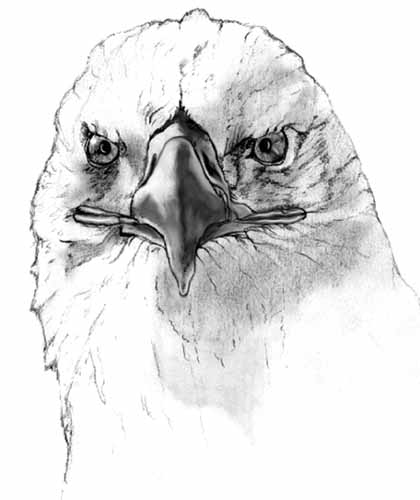
Birds (class Aves) are bipedal, warm-blooded, egg-laying vertebrate animals. Birds evolved from theropod dinosaurs during the Jurassic period and the earliest known bird is the Late Jurassic Archaeopteryx. Ranging in size from tiny hummingbirds to the huge Ostrich and Emu, there are around 10,000 known living bird species in the world, making them the most diverse class of terrestrial vertebrates.
Modern birds are characterised by feathers, a beak with no teeth, the laying of hard-shelled eggs, a high metabolic rate, a four-chambered heart, and a lightweight but strong skeleton. All birds have forelimbs modified as wings and most can fly, though the ratites and several others, particularly endemic island species, have lost the ability to fly. Birds also have unique digestive and respiratory systems that are highly adapted for flight.
Many species of bird undertake long distance annual migrations, and many more perform shorter irregular movements. Birds are social and communicate using visual signals and through calls and song, and participate in social behaviours including cooperative hunting, cooperative breeding, flocking and mobbing of predators. Birds are primarily socially monogamous, with engagement in extra-pair copulations being common in some species‹other species have polygamous or polyandrous breeding systems. Eggs are usually laid in a nest and incubated and most birds have an extended period of parental care after hatching.
Birds are economically important to humans: many are important sources of food, acquired either through hunting or farming, and they provide other products. Some species, particularly songbirds and parrots, are popular as pets. Birds figure prominently in all aspects of human culture from religion to poetry and popular music. About 120130 species have become extinct as a result of human activity since 1600, and hundreds more before this. Currently around 1,200 species of birds are threatened with extinction by human activities and efforts are underway to protect them.
Birds Wikipedia
10 things you didnąt know about birds MSNBC - June 27, 2008
Huge Genome-scale Phylogenetic Study Of Birds Rewrites Evolutionary Tree-of-life Science Daily - June 27, 2008
Birds can 'see' the Earth's magnetic field New Scientist - May 1, 2008
Bird Brains Swap Regions for Baby Babbling, Adult Song National Geographic - May 2, 2008
Modern Birds Existed Before Dinosaur Die-Off National Geographic - February 10, 2008
Secrets of bird flight revealed BBC - January 24, 2008
Wing Angle May Be Key to Bird Flight Origins National Geographic - January 23, 2008
Video: Rare Cranes Taught to Migrate National Geographic - November 6, 2007
New Clues to How Birds First Flew Live Science - November 6, 2007
Tiny "Crow-Cams" Capture Tool Use in Wild Birds National Geographic - October 5, 2007
Clever crows are caught on camera BBC - October 5, 2007

Miniature cameras have given scientists a rare glimpse into how New Caledonian crows behave in the wild. The birds are renowned for their sophisticated tool-using ability, but until now, observing them in their natural habitat has proven difficult. But specially designed "crow-cams" fitted to the birds' tails have shed light on the creatures, recording some tool-use never seen before.
Alex The Parrot Dies Guardian - September 13, 2007

Alex: Brainy Parrot Dies, Emotive to the End NY Times- September 18, 2007
Alaska Bird Makes Longest Nonstop Flight Ever Measured National Geographic - September 15, 2007

A female shorebird was recently found to have flown 7,145 miles (11,500 kilometers)
nonstop from Alaska to New Zealand, without taking a break for food or drink.
A Magellanic penguin whose natural habitat is the cool climes of southern Chile has strayed thousands of miles from his home, arriving in Peru BBC - May 11, 2007
New Bird Species Found In Idaho, Demonstrates Co-evolutionary Arms Race Science Daily - March 19, 2007
How Homing Pigeons Find Home Live Science - November 14, 2006
The Secret to Hummingbirds' Amazing Energy Live Science - October 9, 2006
New Bird Discovered in Colombia National Geographic - October 11, 2006
Early Bird Used Four Wings to Fly Live Science - September 26, 2006
New Bird Discovered in India National Geographic - September 13, 2006
Pigeons find their way home by smell News in Science - August 18, 2006
Rare ibis tagged in race to save bird of pharaohs BBC - July 25, 2006

Ibis Wikipedia

Thoth - Ibis Headed Egyptian God Crystalinks
Dodo skeleton find in Mauritius BBC - June 25, 2006
Scientists say they have discovered part of the skeleton of a dodo,
the large, flightless bird which became extinct more than 300 years ago.
The Mauritius Dodo Wikipedia
High-Tech Pictures Reveal How Hummingbirds Hover Scientific American - June 23, 2005
Bird song sheds light on learning BBC - May 15, 2005
'Extinct' since 1920 spectacular ivory-billed woodpecker found alive in Arkansas BBC - April 2005
Birds' Brains Reveal Source Of Songs Science Daily - April 2005
How a white feather can outfox a falcon Guardian - April 2005
Texas Hummingbirds Provide Nature's Greatest Show On Earth Science Daily - April 2005
Huge eagles 'dominated NZ skies' 5 centuries ago BBC - January 2005

CRYSTALINKS MAILING LIST, NEWSLETTER, UPDATES