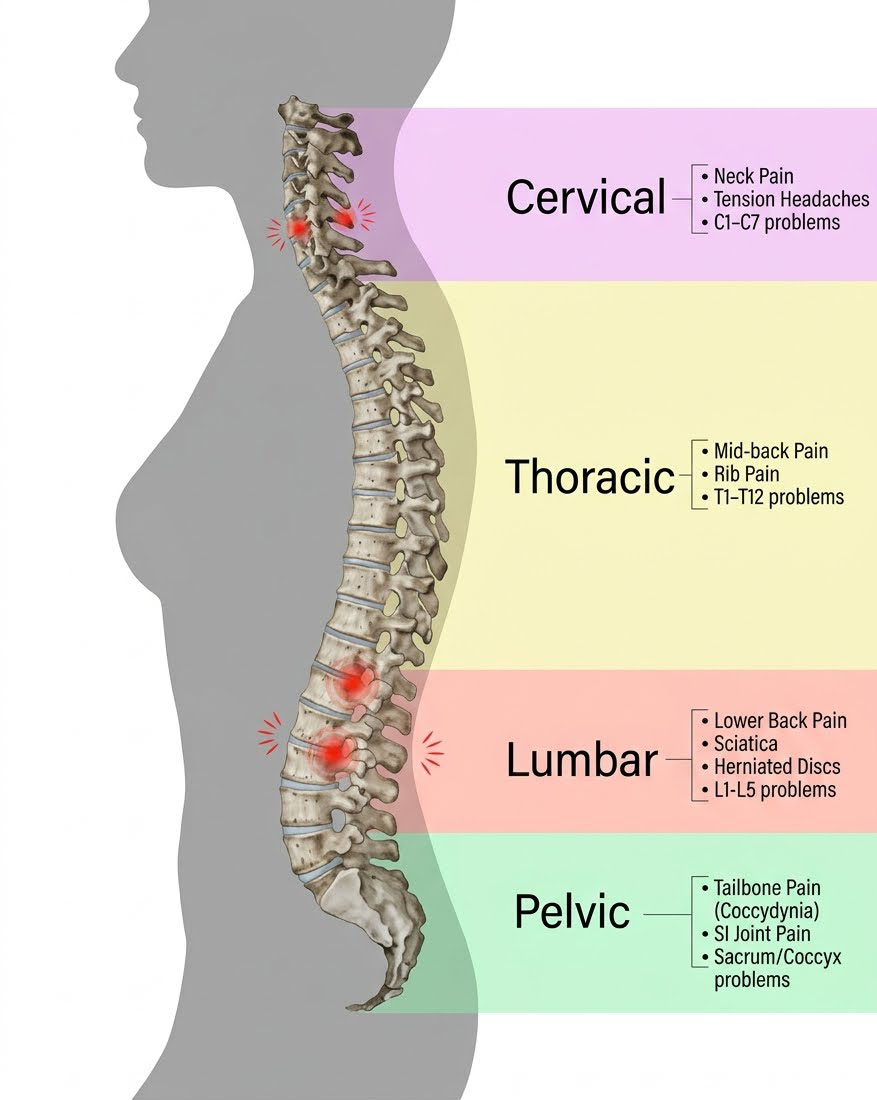
Do you suffer from back problems? Most people have back problems at some point in their lives, sending them on a healing journey. Back pain can or originate from a physical source or something emotional that put strain on both aspects of the person. Back problems go to muscles, nerves, bones, joints, discs and cartilage - up and down the body. The quest for relief, and possible cure - is endless - from medical professionals to holistic practitioners. Chiropractic medicine mixed with other holistic venues can have a positive or negative effect - so be careful with practitioner you choose.
Psychology: Back pain refers to an emotional burden the person is carrying around with them - which leads to physical problems. It's about letting go of something or someone from their past which can immobilizes them. These is often associated with fear and depression. Stress management can help. Finding the cause of pain on all levels - physical, emotional and spiritual, is the way to go. You can't move forward until you stop looking 'back'.
Back pain (also known as dorsalgia) is pain felt in the back that usually originates from the muscles, nerves, bones, joints or other structures in the spine.
The pain can often be divided into neck pain, upper back pain, lower back pain or tailbone pain. It may have a sudden onset or can be a chronic pain; it can be constant or intermittent, stay in one place or radiate to other areas. It may be a dull ache, or a sharp or piercing or burning sensation. The pain may radiate into the arm and hand), in the upper back, or in the low back, (and might radiate into the leg or foot), and may include symptoms other than pain, such as weakness, numbness or tingling.
Back pain is one of humanity's most frequent complaints. In the U.S., acute low back pain (also called lumbago) is the fifth most common reason for physician visits. About nine out of ten adults experience back pain at some point in their life, and five out of ten working adults have back pain every year.
The spine is a complex interconnecting network of nerves, joints, muscles, tendons and ligaments, and all are capable of producing pain. Large nerves that originate in the spine and go to the legs and arms can make pain radiate to the extremities.
Back injuries result from damage, wear, or trauma to the bones, muscles, or other tissues of the back. Common back injuries include sprains and strains, herniated disks, and fractured vertebrae. The lumbar is often the site of back pain. The area is susceptible because of its flexibility and the amount of body weight it regularly bears. It is estimated that low-back pain may affect as much as 50 to 70 percent of the general population in the United States.
Low-back pain is often the result of incorrect lifting methods and posture. Repetitive lifting, bending, and twisting motions of the torso affect both the degree of severity and frequency of low-back pain. In addition, low-back pain may also be the result of bad lifting habits. Sedentary lifestyles most often lead to weak abdominal muscles and hamstrings. This causes the stronger muscles which have remained strong to pull the body away from its optimal anatomical form. The imbalanced muscles cause people to continue to perform these repetitive actions. This results in misplaced force application within the spine, often resulting in hemorrhage of disks within the spinal column.
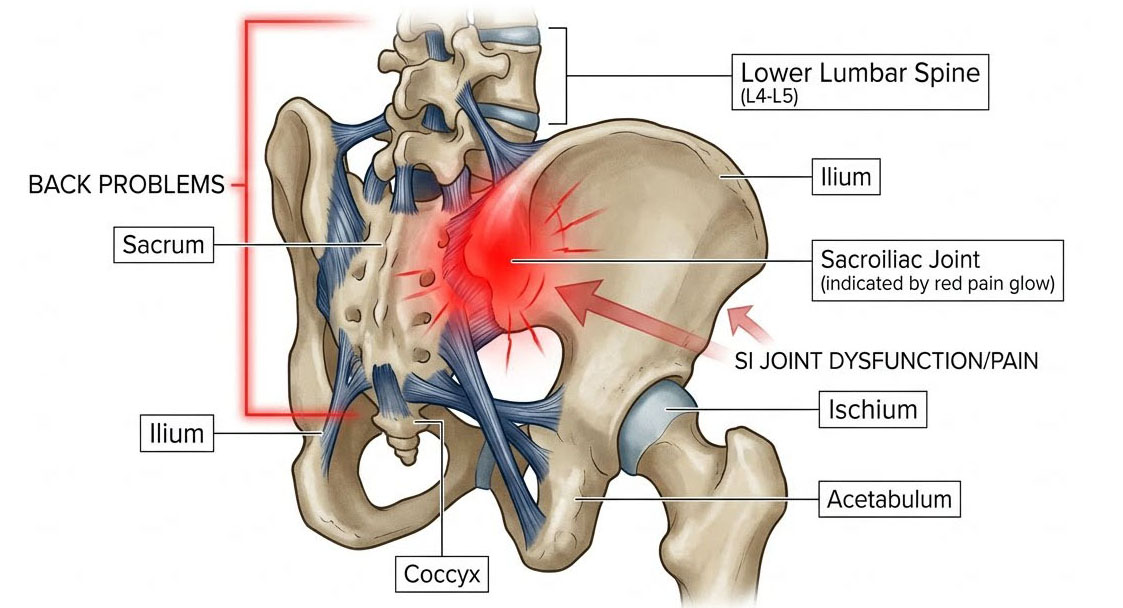
The sacroiliac joint or SI joint is the joint in the bony pelvis between the sacrum and the ilium of the pelvis, which are joined by strong ligaments. In humans, the sacrum supports the spine and is supported in turn by an ilium on each side. The joint is a strong, weight bearing synovial joint with irregular elevations and depressions that produce interlocking of the two bones. The human body has two sacroiliac joints, one on the left and one on the right, that often match each other but are highly variable from person to person.
Studies have found that 20 to 25% of all chronic lower back pain comes not from the spine but from the sacroliac, or SI Joint, which bears and transfers weight and movement from your upper body to your legs. When the ligaments wear out and the SI joint becomes unstable, it can generate a similar kind of sharp back pain - or sciatica-like pain down your leg - as a ruptured disc.
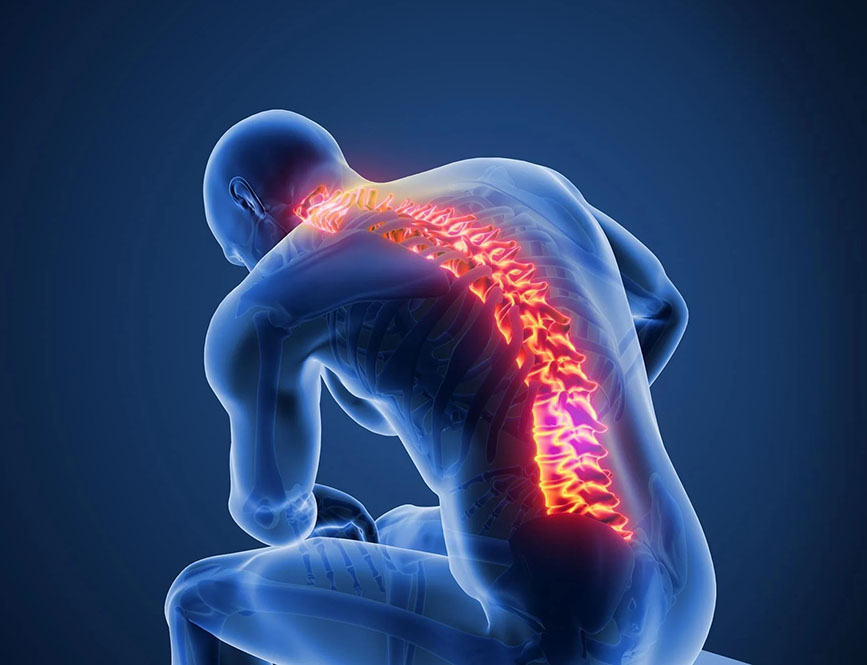
Scientists Discover Chronic Back Pain Can Change How Your Brain Sees You Science Daily - October 23, 2026
A chronic back pain flare may switch on a brain network tied to identity, linking physical pain with how you see yourself. Researchers at UC San Diego School of Medicine found that movement-triggered flares in people with chronic low back pain activated a brain network associated with identity and inward reflection. Painful heat produced the opposite response, suggesting that a familiar back pain flare engages the brain differently from a new external threat.
Also popular are self-help methods such as stretching, or alternative therapies such as acupuncture, chakra balancing, yoga, pain management are often effective.


relax, and focus on your back. How does it feel?