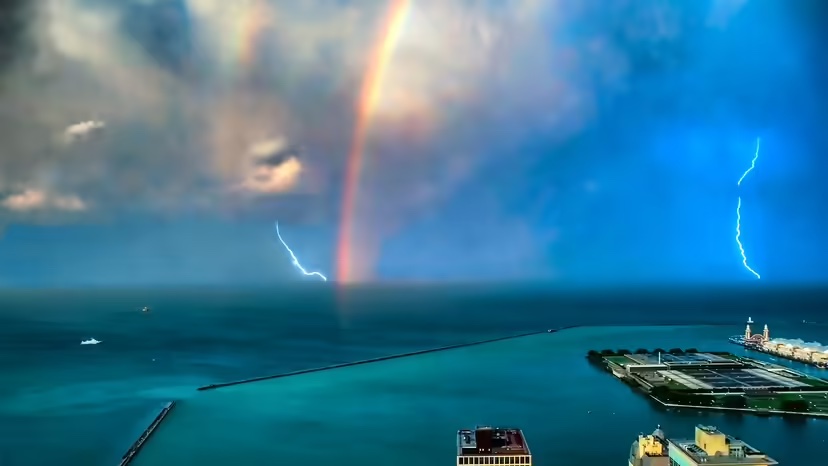
When lightning and rainbows occur at the same time, it represents a magnificent clash of atmospheric physics, blending a violent electrical discharge with peaceful optical refraction. Culturally, it is as if nature is writing poetry in the sky - juxtaposing a classic symbol of hope and calm against raw, terrifying power.
This breathtaking phenomenon, often called "rainbow lightning," requires a highly specific, fleeting alignment of weather conditions to exist
How "Rainbow Lightning" Works
A Fragmented Storm: The storm core must be highly localized or starting to break apart, allowing a dark, active thundercloud to coexist right next to clearing skies.
Low-Angle Sunlight: The sun must break through the clouds behind the observer at a low angle, typically during the early morning or late afternoon.
The Perfect Rain Curtain: Direct sunlight must strike a dense, falling wall of raindrops or sea spray positioned directly opposite the sun to refract, reflect, and scatter light into a brilliant rainbow spectrum.
An Active Core: While the sun illuminates the front of the rain curtain, the turbulent ice crystals inside the nearby storm cloud must simultaneously generate a massive electrical imbalance, sending a jagged bolt of lightning down to the ground.
Because rainbows exist closer to the ground where rain falls and lightning originates higher up in the clouds, the breathtaking photos captured by storm chasers - like Greg McCown's famous "Lucky Strike" photograph - are actually masterpieces of perfect timing and visual perspective.
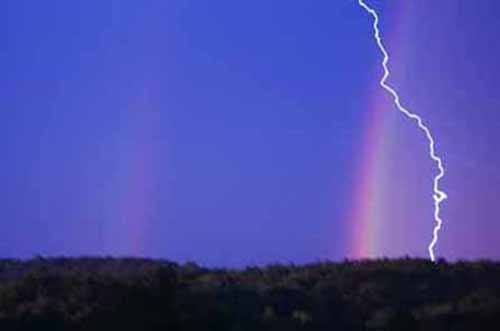
From Spaceweather.com
On June 28, 2006, Julie Juratic took the picture as a thunderstorm was winding down over the Cuyahoga Valley National Park in Ohio. A peaceful rainbow split is down the middle by a bolt of lightning. Although we seldom see them together, rainbows and lightning are related. Both are created by rain. Raindrops make rainbows by catching the rays of the sun and spreading them into their underlying colors. Raindrops make lightning by rubbing against ice crystals in thunderclouds. Like socks rubbing against carpet, raindrops rubbing against ice crystals create an electrical charge and - zap- lightning.
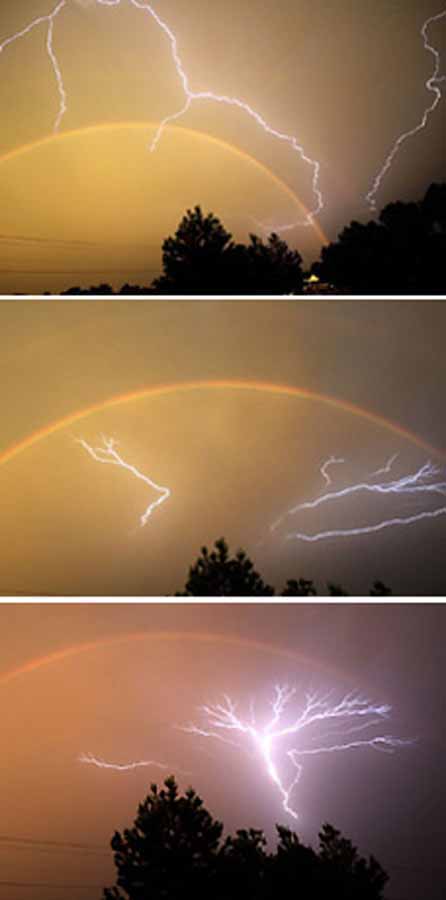
June 2006 -- When a rainbow formed in the sky people stopped and stared at the natural wonder. But then lightning sparked across the evening panorama as two of nature's most spectacular phenomenon created an unusual alliance. The clash of weather was seen above the affluent city of Fort Smith, in Arkansas. The intracloud lightning, known as an anvil crawler, is the most common form of lightning, with the electrical charge contained within a single cumulonimbus cloud.
Lightning often occurs during heavy storms while rainbows are generally formed after the rain has stopped, making an appearance of both simultaneously relatively rare. The actual electric charge in a flash of lightning comes from particles from the sun sent out in the solar wind which gather in the outer atmospheric layers before creating a strike. Scientists are still divided by what actually causes lightning, with one theory suggesting falling droplets of ice and rain become electrically polarized as they fall through the natural electric field in the Earth's atmosphere. This would explain why lightning often accompanies storms and heavy rain. The same droplets also cause the rainbow, when light from the sun is refracted by the water to cause a spectrum.