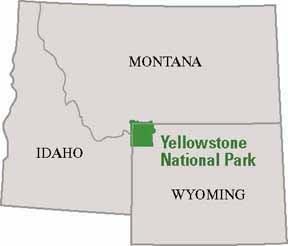
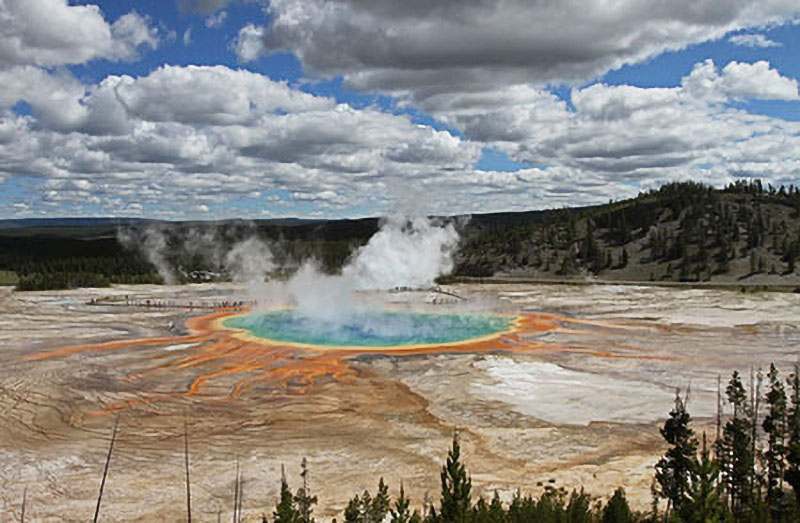
The Yellowstone Caldera is a volcanic caldera and supervolcano in Yellowstone National Park in the Western United States, sometimes referred to as the Yellowstone Supervolcano. The caldera and most of the park are located in the northwest corner of Wyoming. The major features of the caldera measure about 34 by 45 miles (55 by 72 km).
The caldera formed during the last of three supereruptions over the past 2.1 million years. Volcanic and tectonic actions in the region cause between 1,000 and 2,000 measurable earthquakes annually. Most are relatively minor, measuring a magnitude of 3 or weaker. Occasionally, numerous earthquakes are detected in a relatively short period of time, an event known as an earthquake swarm.
The last full-scale eruption happened approximately 640,000 years ago, ejecting approximately 240 cubic miles of rock, dust and volcanic ash into the sky. Geologists are closely monitoring the rise and fall of the Yellowstone Plateau, which has been rising as fast as 0.6 inches (1.5 cm) per year, as an indication of changes in magma chamber pressure. The upward movement of the Yellowstone caldera floor between 2004 and 2008 was almost 3 inches (7.6 cm) each year more than three times greater than ever observed since such measurements began in 1923. Read more...
The end of humanity? What would happen if the Yellowstone supervolcano erupted now Science Daily - September 24, 2026

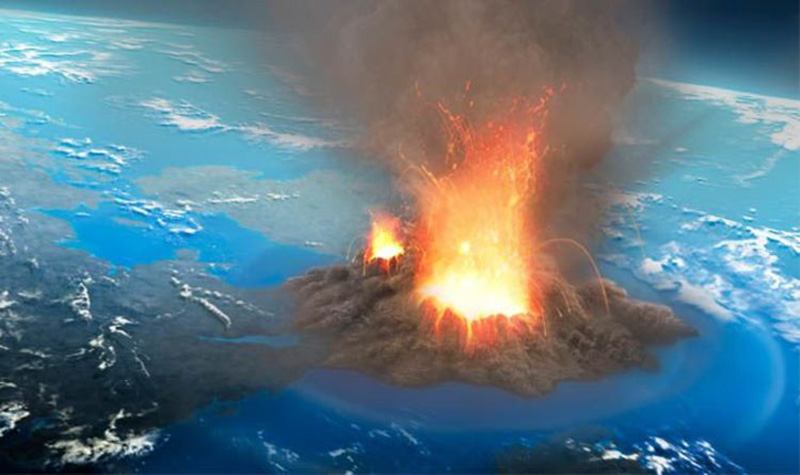
A Yellowstone super-eruption would begin not with a sudden surprise, but with weeks of increasingly alarming warning signs such as migrating earthquake swarms, rapid ground uplift, changing geysers, and rising volcanic gases. In a worst-case scenario, those signals could culminate in a VEI 8 eruption that blasts ash tens of kilometers into the atmosphere, unleashes deadly pyroclastic flows, buries parts of the western United States in ash, and cripples transportation, electricity, water systems, agriculture, and communications across much of North America.
Scientists Uncover Hidden Force Powering Yellowstone's Supervolcano SciTech Daily - April 14, 2026
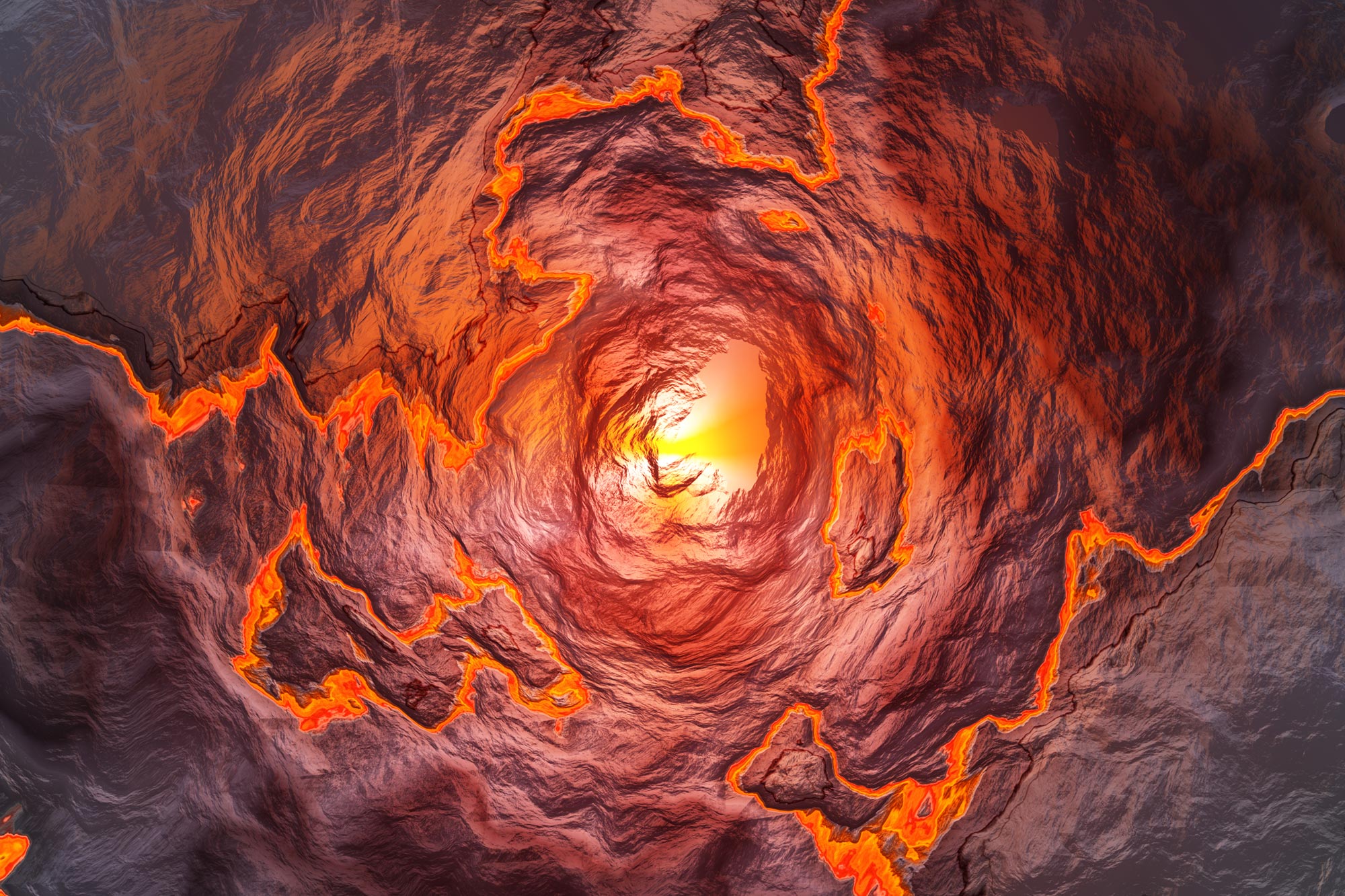
new study suggests that the inner workings of supervolcanoes may differ fundamentally from long-standing assumptions, pointing to diffuse, deep-sourced magma systems shaped by large-scale mantle flow. A new geodynamic model is reshaping how scientists understand supervolcanoes, revealing that their magma systems may be far more diffuse and dynamic than previously believed.
A Gaping Hole Full of Milky Blue Water Has Appeared at Yellowstone Science Alert - July 18, 2025

In April, when Yellowstone National Park geologists made their first visit this year to the Norris Geyser Basin, they encountered a new feature they hadn't seen before. They were checking the area's temperature logging stations, a routine maintenance job Ð but since their last visit, something was different. Where previously there had been a rather featureless patch of ground at the northwestern tip of a landmark known informally as 'Tree Island', there was now a gaping hole about 4 meters (13 feet) wide, filled with milky, light blue water.
Video: If you live in Yellowstone National Park, you pretty much know what you signed up for, but this woman got delightful video of a bison herd marching through her town. Weather.com - May 2, 2025

Scientists Found The 'Lid' Keeping The Yellowstone Supervolcano From Erupting Science Alert - April 29, 2025

A team of geologists and Earth scientists now claims to have finally found the deep magma 'cap' that keeps the volcanic system's high pressures and temperatures locked up underground. The magma cap works sort of like a CPAP machine, keeping internal pressures relatively stable, allowing the supervolcano to sleep somewhat soundly.
Yellowstone holds potentially untapped cache of 'carbon-free' helium for rockets, reactors and superconductors Live Science - April 29, 2025

Conventional helium production comes with enormous carbon emissions, so scientists are looking for alternatives in places like Yellowstone, Tanzania's Rukwa Rift and India's Bakreswar-Tantloi province.
Yellowstone's iconic bison herds have merged into a single entity after 100 years of wandering the park Live Science - March 21, 2025

Bison in Yellowstone National Park spent over 100 years as two genetically distinct herds. But now they're roaming as one interbreeding population, a new study suggests. Herds of wild bison have meandered through Yellowstone's vibrant landscape since prehistoric times. Grazing freely in the expansive grasslands of the park, these are the last free-range bison in the United States.
Ellie's Blog: Yellowstone Explosion July 23, 2024 and it's significance
Methane-Producing Microbes Unlike Any Seen Before Found In Yellowstone's Hot Springs IFL Science - July 26, 2024
Hydrothermal explosion leads to closure of parts of Yellowstone National Park CNN - July 23, 2024
The Biscuit Basin area of Yellowstone National Park in Wyoming is closed following a hydrothermal explosion Tuesday morning, park officials said in a news release and post on X. Biscuit Basin, its parking lot and boardwalks - about 2 miles northwest of the Old Faithful geyser - are temporarily closed for safety reasons, officials added in the post. No injuries were reported after the incident, which occurred near the Sapphire Pool around 10 a.m. local time. Investigators have yet to determine how much damage has occurred.
A series of hidden geological hazards has been uncovered in the northern reaches of Yellowstone National Park, including active faults that could pose earthquake threats to communities in the area NBC - November 29, 2023
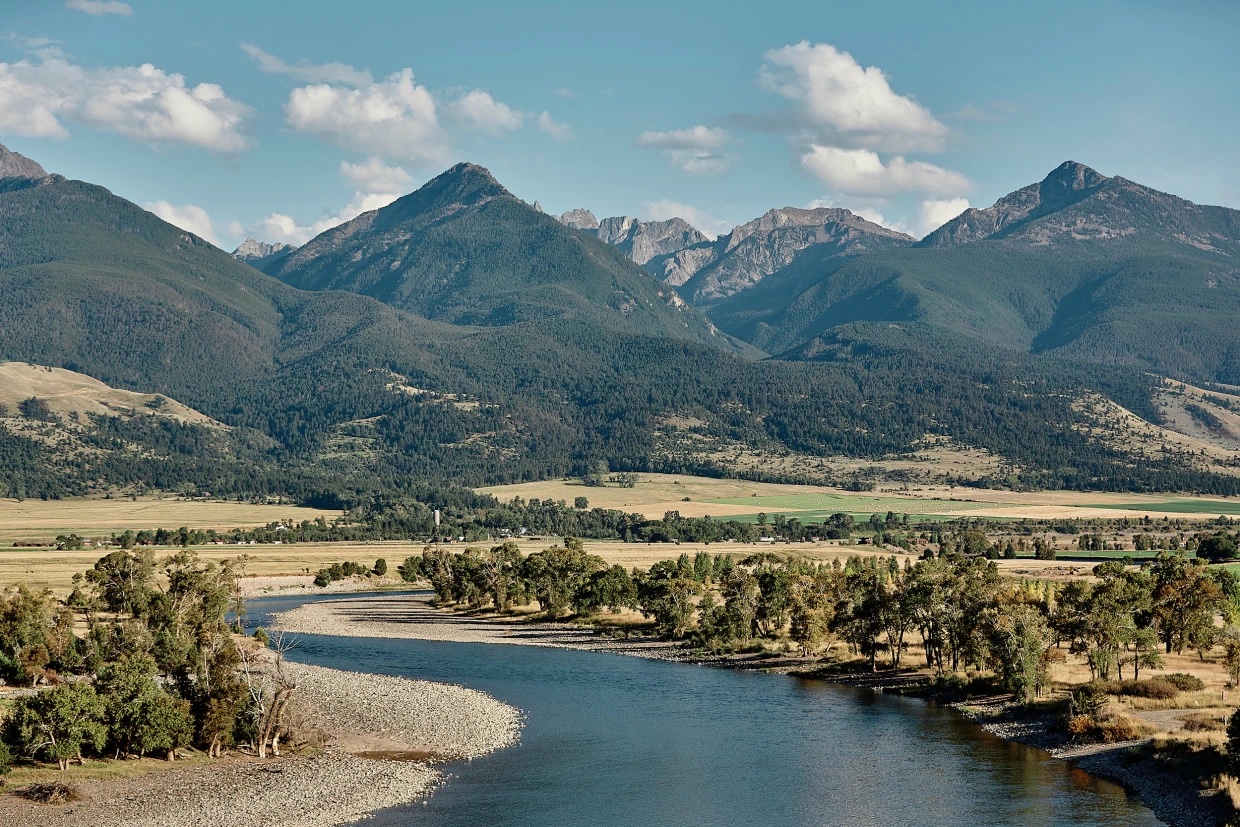
The faults were revealed with what's known as light detection and ranging, or lidar, a type of remote sensing that can pierce through dense foliage and detect concealed features on the ground in detail. The technology has found wide use across a range of scientific fields, from archaeology to geology, as a way to study landscapes that are normally obscured or inaccessible to humans.
Yellowstone's geysers at risk of extinction from climate change, tree skeletons reveal Live Science - July 28, 2023
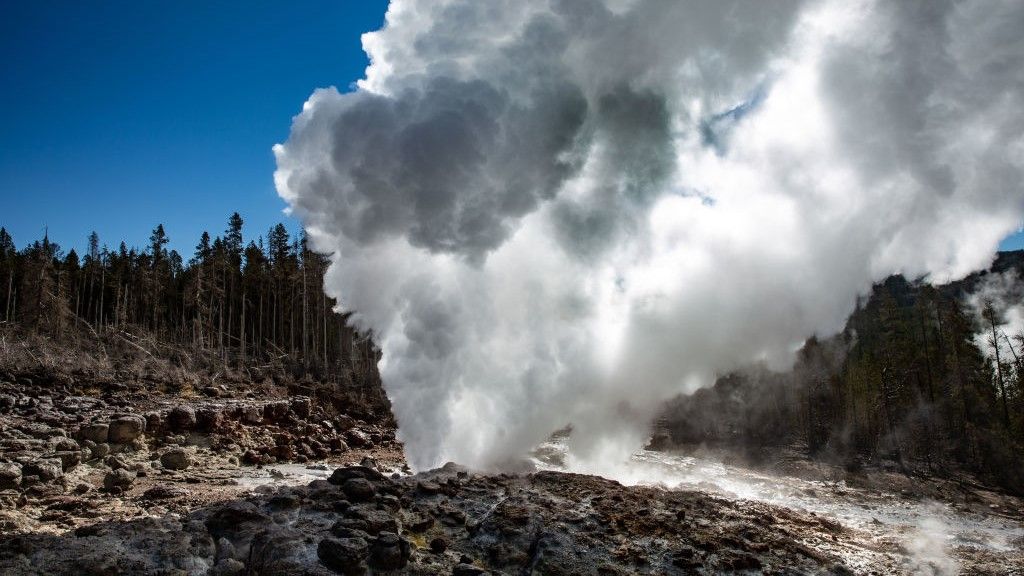
In a warmer and drier climate, the groundwater that fuels Yellowstone's tallest active geyser could dwindle, resulting in less frequent eruptions and even extinction.
What Lies Beneath Yellowstone's Volcano? Twice As Much Magma As Thought SciTech Daily - December 4, 2022
Previous images showed that Yellowstone's volcano had a low concentration of magma - only 10% - surrounded by a solid crystalline framework. As a result of these new images, with key contributions from Chen, Maguire and his team were able to see that, in fact, twice that amount of magma exists within Yellowstone's magmatic system.
Secrets of 'mystery sandwich' beneath Yellowstone revealed in new map Live Science - March 23, 2022
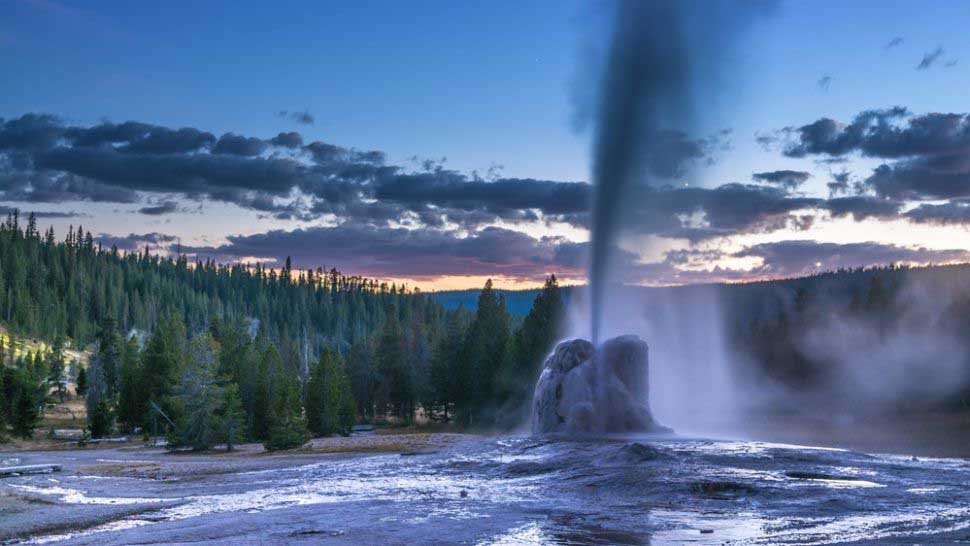
The subterranean "plumbing system" of superheated water that feeds Yellowstone National Park's geysers and other hydrological features has been mapped out in stunning detail - and the findings could fill a major knowledge gap that experts have described as a "mystery sandwich." Yellowstone is home to the world's largest hydrothermal system, which contains around 10,000 hydrothermal features, including geysers, hot springs, mud pots and steam vents, according to the National Park Service. These aboveground features are fed by a network of underground water pathways that get superheated by underground magma, causing the water to rise to the surface. However, researchers know very little about this underground network, or plumbing system.
Over 1,000 earthquakes rattle Yellowstone in July in doozy of month, geologists say Idaho Statesman - August 3, 2021
More than 1,008 earthquakes shook the Yellowstone region in July, U.S. Geological Survey Volcanoes said Monday. That number could still increase as experts count smaller earthquakes they may have missed.
Yellowstone rattled by swarm of more than 140 earthquakes in past day, geologists say PhysOrg - July 19, 2021
In the past day, there have been 10 earthquakes with a 2.5 magnitude or greater, according to USGS. The largest was a 3.1-magnitude quake that shook beneath Yellowstone Lake at 8:12 a.m. Mountain Time. The earthquake swarm is nothing to worry about, geologists said. Earthquake sequences like these are common and account for roughly 50% of the total seismicity in the Yellowstone region. This swarm is similar to one that occurred in about the same place during December 2020. Some people, however, still worry earthquakes in Yellowstone are a sign that the supervolcano that lies beneath the park will soon erupt, which could have regional and global consequences.
Whispering Waters: Curious Sounds Have Been Reported at Yellowstone for More Than a Century Mysterious Universe - July 22, 2021
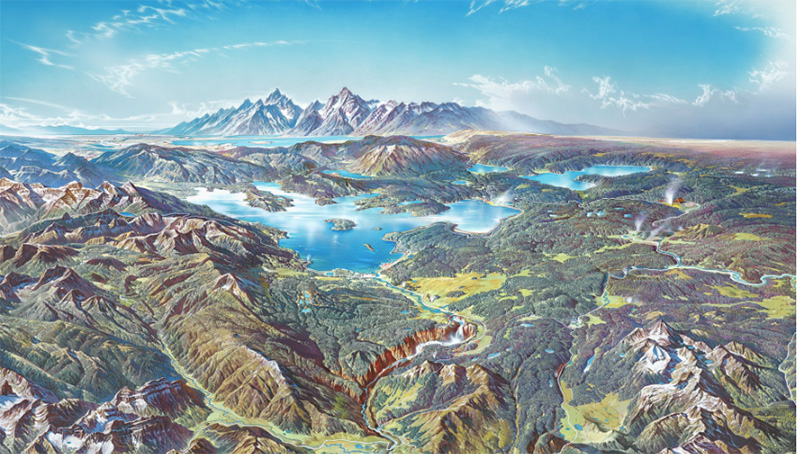
Yellowstone National Park is regarded as both the oldest, and one of the most iconic American parks. With its history extending back to well prior to the establishment of the National Park Service, it remains one of the most beloved protected wilderness areas in the United States. Yellowstone is also home to its own brand of mysterious natural phenomena. For more than a century, visitors have described hearing unusual sounds, particularly around the vicinity of the park's lakes Yellowstone and Shoshone. These odd noises have been variously described as sounding like metallic beams or cables knocking together, or at times being similar to ducks in flight, or even ethereal organ music.
Why is Yellowstone's tallest geyser erupting after being dormant 34 years? Mystery Wire - January 15, 2021
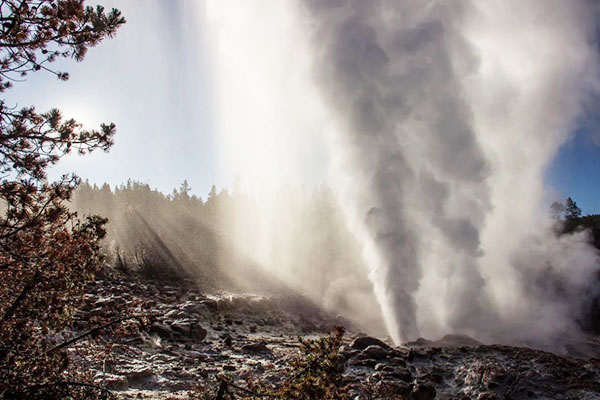
Steamboat Geyser in Yellowstone National Park is the world's tallest active geyser, known to rocket hot water and steam nearly 400 feet into the sky. The geyser, which laid largely dormant for 34 years, has been erupting prolifically since 2018. From March 2018 to to the present, a whopping 129 eruptions have been recorded, dazzling and stumping scientists. While the scientists remain altogether stumped by what's causing the new active phase, they were able to rule out earthquakes, snowfall and precipitation, and they've yet to dismiss internal hydrothermal processes. Ultimately, knowledge about geysers and how they work remains nebulous.
Newly discovered Yellowstone eruption is one of 'top 5 eruptions of all time' Live Science - June 7, 2020
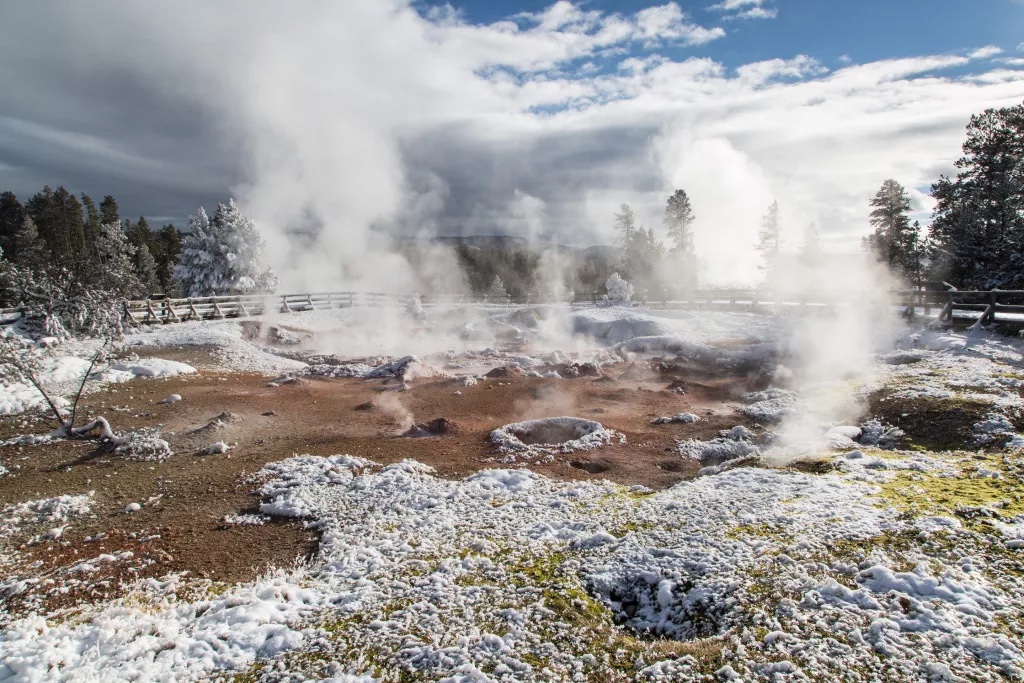
It's one of two newly detected 'supereruptions' that rocked North America (and the world) 9 million years ago. Below the picturesque geysers and rainbow-tinted hot springs of Yellowstone National Park lurks one of the most destructive volcanoes on Earth. The gargantuan Yellowstone hotspot (also known as the Yellowstone supervolcano) has erupted at least 10 times over the past 16 million years, permanently altering the geography of North America, periodically warping Earth's climate and throwing flakes of airborne ash to every corner of the world. Now, the discovery of two ancient supereruptions - including the single largest in the hotspot's history - reveals an unexpected trend: The Yellowstone hotspot's activity may finally be waning.
Mantle rock behind Yellowstone's supereruptions extends to Northern California PhysOrg - August 6, 2019
The mantle source rock that rises upward from beneath Yellowstone National Park to feed its periodic supereruptions also spreads out west all the way to Northern California and Oregon. On its westward journey, it acts as the catalyst for fairly young - meaning less than 2 million years old - volcanic eruptions at places such as Craters of the Moon National Monument and Preserve in Idaho, before reaching Medicine Lake Volcano in the northeastern tip of California, close to the Oregon border. The mantle rock spreads laterally through narrow flow-line channels well below the earth's crust for over 500 miles, bifurcating twice: once as it leaves Yellowstone and again as it reaches the California-Oregon border. These lines end at Medicine Lake, an active volcano near Mount Shasta, and at Newberry Volcano, an active volcano about 20 miles south of Bend, Ore.
Yellowstone's Steamboat Geyser Is Incredibly Active Right Now, and We Don't Know Why Live Science - June 26, 2019
Yellowstone National Park's Steamboat Geyser blasted steam and water into the air at 12:52 p.m. local time on June 12. Then, three days, it blasted steam and water into the air again. That's a new record for the geyser - the shortest time ever recorded between eruptions. But don't worry. Increased activity at a single geyser doesn't indicate any new threat from the Yellowstone caldera - the "supervolcano" hiding under the park
Yellowstone super-volcano has a different history than previously thought Science Daily - July 26, 2018
Scientists have long thought that Yellowstone Caldera, part of the Rocky Mountains and located mostly in Wyoming, is powered by heat from the Earth's core, similar to most volcanoes such as the recently active Kilauea volcano in Hawaii. However, new research shows a different past. In this research, there was no evidence of heat coming directly up from the Earth's core to power the surface volcano at Yellowstone. Instead, the underground images we captured suggest that Yellowstone volcanoes were produced by a gigantic ancient oceanic plate that dove under the Western United States about 30 million years ago. This ancient oceanic plate broke into pieces, resulting in perturbations of unusual rocks in the mantle which led to volcanic eruptions in the past 16 million years. The eruptions were very explosive. A theoretical seismologist discovered an anomalous underground structure at a depth of about 250 to 400 miles right beneath the line of volcanoes.
Does Yellowstone hold the key to revealing how life began on Earth? New type of microbe living in acidic geothermal features could be 'extremely relevant' to origin of life Daily Mail - May 15, 2018
Scientists have discovered a lineage of archaeal microbes living in the hot, acidic waters of Yellowstone National Park's geothermal features, hinting at the conditions that allowed early lifeforms to thrive on Earth.The microbes, named after Mars due to the iron-rich environments in which they flourish, were found in water as hot as 176 degrees, and as acidic as grapefruit juice.The remarkable discovery has unlocked new clues on the origins of life on Earth, revealing just how important iron may have been to early organisms' survival.
Underwater 'fountain' of magma is found beneath Yellowstone supervolcano sparking fears a deadly eruption is on the way Daily Mail - March 21, 2018
Researchers found a column of hot volcanic ash known as a magma 'plume' beneath the volcano, and they believe it stretches all the way from Mexico. Experts suggest the plume could be the source of the heat that drives so much of the volcano's surface activity, such as its world-famous bubbling springs. The news follows a spate of four mini-tremors in the area last week that raised fears Yellowstone's supervolcano is about to blow.
Swarm of 200 Earthquakes Hits Yellowstone - Here's What That Means Live Science - February 20, 2018
A swarm of more than 200 earthquakes struck Yellowstone National Park over the past two weeks, but that probably doesn't mean the "big one" is coming anytime soon, according to geologists from the park. The 200 temblors began on Feb. 8 and ramped up on Feb. 15 in an area about 8 miles (13 kilometers) northeast of West Yellowstone, Montana, according to the U.S. Geological Survey (USGS). In reality, many more tiny quakes hit the region but were simply too small for seismometers to pick them up, according to the USGS. But while the swarm is bigger than the everyday seismicity in the park, it's not a sign of a major quake, said Michael Poland, scientist-in-charge of the USGS Yellowstone Volcano Observatory in Vancouver, Washington.
Heat from below Pacific Ocean fuels Yellowstone, study finds Science Daily - December 20, 2017
Recent stories in the national media are magnifying fears of a catastrophic eruption of the Yellowstone volcanic area, but scientists remain uncertain about the likelihood of such an event. To better understand the region's subsurface geology, geologists have rewound and played back a portion of its geologic history, finding that Yellowstone volcanism is more far more complex and dynamic than previously thought.
Yellowstone spawned twin super-eruptions that altered global climate PhysOrg - October 26, 2017
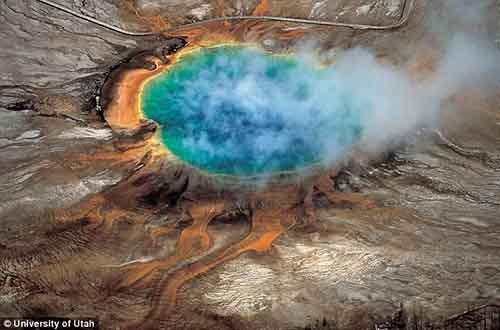
A new geological record of the Yellowstone supervolcano's last catastrophic eruption is rewriting the story of what happened 630,000 years ago and how it affected Earth's climate. This eruption formed the vast Yellowstone caldera observed today, the second largest on Earth. Two layers of volcanic ash bearing the unique chemical fingerprint of Yellowstone's most recent super-eruption have been found in seafloor sediments in the Santa Barbara Basin, off the coast of Southern California. These layers of ash, or tephra, are sandwiched among sediments that contain a remarkably detailed record of ocean and climate change. Together, both the ash and sediments reveal that the last eruption was not a single event, but two closely spaced eruptions that tapped the brakes on a natural global-warming trend that eventually led the planet out of a major ice age.
Build-up to an eruption at Yellowstone supervolcano that will plunge Earth into darkness could take just decades Daily Mail - October 11, 2017
While the supervolcano hasn't erupted for 631,000 years, scientists have been working to understand what caused the last eruption. Their findings suggest that the forces that lead to an eruption move much more rapidly than previously believed. They claim new magma moves beneath Yellowstone only decades before a devastating eruption. Previous estimates suggested that the geological process that leads to such an event takes millenniums to occur. The researchers hope their findings will help to spot future supereruptions in the making.
Yellowstone has now been hit by a record breaking 'megaswarm' of 1,200 earthquakes in just a month Daily Mail - July 21, 2017
In the most recent update on the ongoing earthquake storm, which scientists have been monitoring since June 12, the researchers say there have been 1,284 events so far, with the largest being a magnitude 4.4. While the activity has spurred fears that the supervolcano could be gearing up to an eruption, the experts say the risk of such an event is low, and the alert level remains at Ônormal.'
Scientists isolate, culture elusive Yellowstone microbe PhysOrg - July 5, 2016
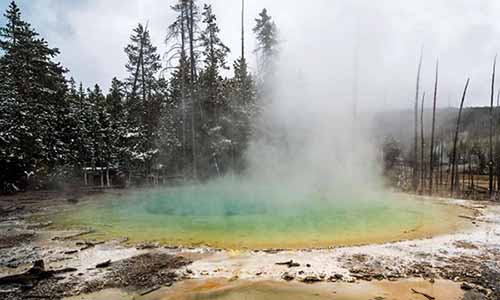
A microbial partnership thriving in an acidic hot spring in Yellowstone National Park has surrendered some of its lifestyle secrets to researchers. The team isolated the archaeon Nanopusillus acidilobi, cultured - tiny microbes - just 100 to 300 billionths of a meter in size - and can now study how they interact with their host, another archaeon (Acidilobus). The relationships between these two organisms can serve as a valuable model to study the evolution and mechanisms of more complex systems.
Milky Way over Yellowstone NASA - August 27, 2014
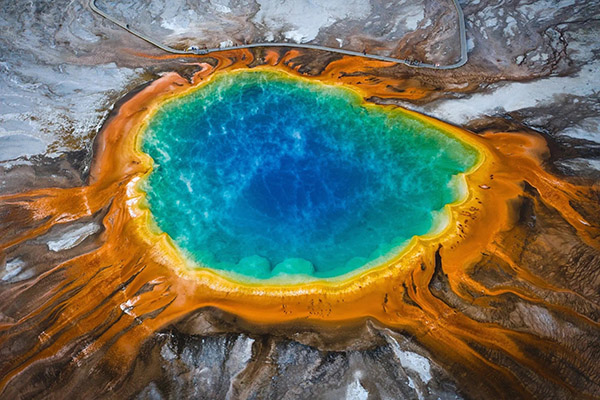
The Milky Way was not created by an evaporating lake. The colorful pool of water, about 10 meters across, is known as Silex Spring and is located in Yellowstone National Park in Wyoming, USA. Illuminated artificially, the colors are caused by layers of bacteria that grow in the hot spring. Steam rises off the spring, heated by a magma chamber deep underneath known as the Yellowstone hotspot. Unrelated and far in the distance, the central band of our Milky Way Galaxy arches high overhead, a band lit by billions of stars. The above picture is a 16-image panorama taken late last month. If the Yellowstone hotspot causes another supervolcanic eruption as it did 640,000 years ago, a large part of North America would be affected.
Road Melts from Yellowstone Volcano's Heat Live Science - July 12, 2014
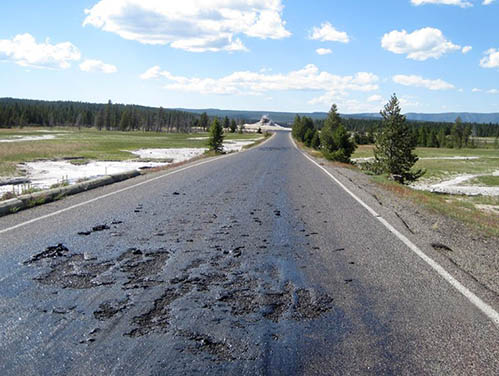
Yellowstone National Park closed a popular road Thursday (July 10) after geothermal heat cooked the asphalt. Part of Firehole Lake Drive, a scenic one-way road off of Yellowstone's main loop, was shut down for repairs when oil bubbled to the surface, damaging the blacktop, the Park Service said in a statement. The closure doesn't affect the Grand Loop Road, which sees 20,000 visitors per day during the summer. Park spokesman Dan Hottle told Live Science that Firehole Lake Drive's surface hit 160 degrees Fahrenheit (70 degrees Celsius) on Thursday, about 30 degrees to 40 degrees F (17 to 22 degrees C) hotter than usual.
Earthquake Shakes Yellowstone But No Volcano Threat Looms, Scientists Say Live Science - March 31, 2014
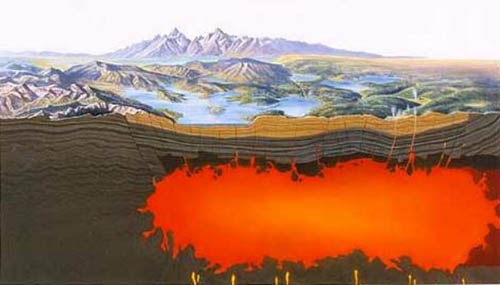
An earthquake of magnitude 4.8 shook Yellowstone National Park early Sunday (March 30). The tremor was the largest to hit the famed reserve in 34 years, but that doesn't mean Yellowstone's sleeping supervolcano is getting ready to spew, or even belch, scientists say. The epicenter of the quake was located 4 miles (6.4 kilometers) north-northeast of Norris Geyser Basin in the northwest corner of Wyoming. The tremor struck at 6:34 a.m. local time and was followed by at least 25 aftershocks in less than two hours, with the largest of magnitude 3.1, according to the U.S. Geological Survey.
Ancient Helium Escaping from Yellowstone Live Science - February 19, 2014
The giant magma blob beneath Yellowstone National Park unleashed tons of ancient helium gas when it torched North America, according to a new study. "The amount of crustal helium coming out is way more than anyone would have expected," said Jacob Lowenstern, lead study author and scientist-in-charge at the U.S. Geological Survey's Yellowstone Volcano Observatory. Yellowstone National Park's famous geysers burble within the remains of a supervolcano that first exploded 2.1 million years ago. Both the volcano and the geysers owe their existence to a hotspot, a massive plume of molten rock rising from within Earth's mantle toward the surface.
Yellowstone's Volcano Bigger Than Thought Live Science - April 17, 2013
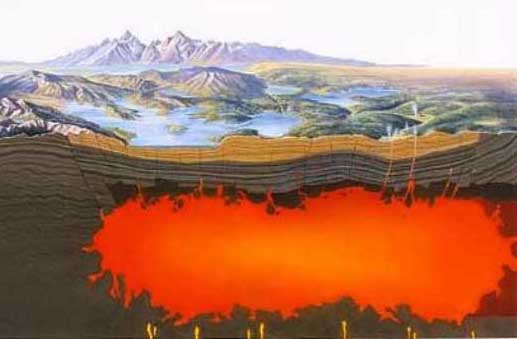
Yellowstone's underground volcanic plumbing is bigger and better connected than scientists thought, researchers reported here today (April 17) at the Seismological Society of America's annual meeting. "We are getting a much better understanding of the volcanic system of Yellowstone," said Jamie Farrell, a seismology graduate student at the University of Utah. "The magma reservoir is at least 50 percent larger than previously imaged." Knowing the volume of molten magma beneath Yellowstone is important for estimating the size of future eruptions, Farrell told OurAmazingPlanet.
Yellowstone supervolcano fed by bigger plume BBC - April 14, 2011
The underground volcanic plume at Yellowstone in the US may be bigger than previously thought, according to a new study by geologists. The volcanic hotspot below Yellowstone feeds the hot springs, mud pots and geysers that bring millions of visitors to the US national park each year. But the Yellowstone "supervolcano" has erupted violently in the distant past and could do so again at some point.
Electric Yellowstone: Conductivity image hints volcano plume is bigger than thought PhysOrg - April 11, 2011
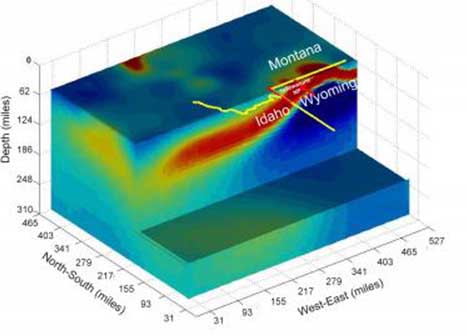
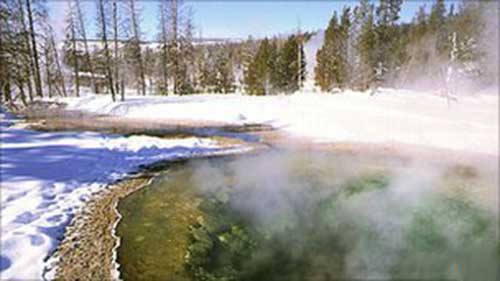
University of Utah geophysicists made the first large-scale picture of the electrical conductivity of the gigantic underground plume of hot and partly molten rock that feeds the Yellowstone supervolcano. The image suggests the plume is even bigger than it appears in earlier images made with earthquake waves.
Yellowstone Microbes Hint at Earth's Early Life Live Science - March 1, 2010
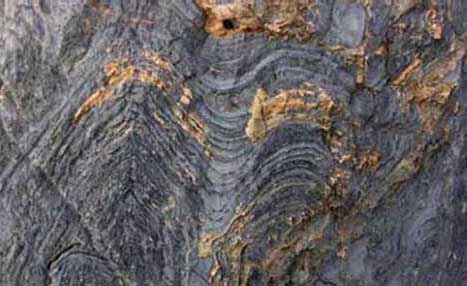
In Glacier National Park, one can find rocks that are layered like cabbage leaves. These "stromatolites" are the work of microbes that lived more than a billion years ago. Stromatolites consist of multiple rock layers (or "stone blankets," as the Greek name implies) that formed in shallow, intertidal and sub-tidal environments. Most, if not all, of these rock formations are the remnants of ancient microbial mats that grew on top of each other in successive generations. Because stromatolites are found in the geologic record as far back 3.5 billion years ago, scientists would like to know exactly who lived in these microbial "high-rise buildings." The answer may be literally just down the road.