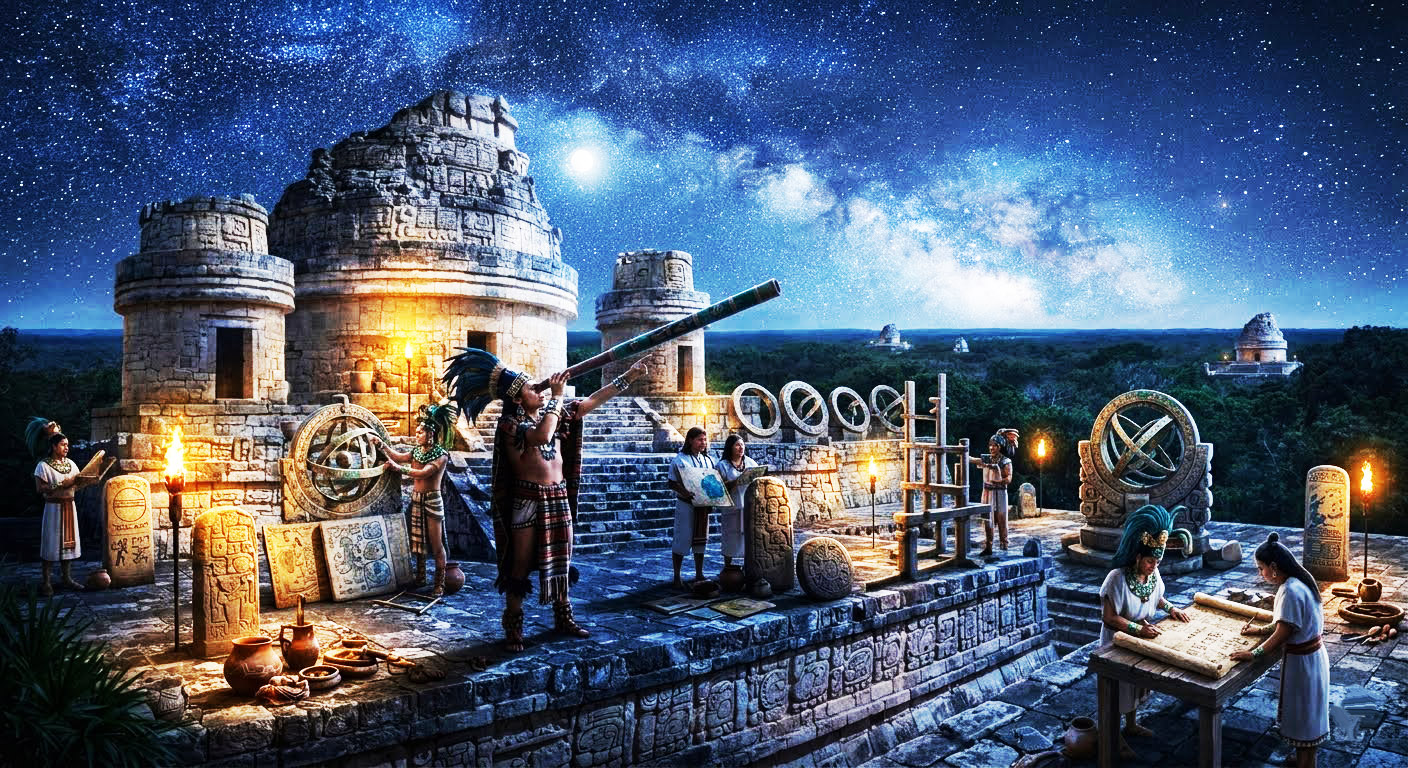
Maya astronomy is the study of the Moon, planets, Milky Way, Sun, and astronomical phenomena by the Precolumbian Maya civilization of Mesoamerica. The Classic Maya in particular developed some of the most accurate pre-telescope astronomy in the world, aided by their fully developed writing system and their positional numeral system, both of which are fully indigenous to Mesoamerica.
The Classic Maya understood many astronomical phenomena: for example, their estimate of the length of the synodic month was more accurate than Ptolemy's, and their calculation of the length of the tropical solar year was more accurate than that of the Spanish when the latter first arrived.
One of the purpose Maya priest-astronomers observed the celestial movement is to discover the pattern that supports the agricultural schedule. Many temples from the Maya architecture have features oriented to celestial events.
Maya astronomy was naked-eye astronomy based on the observations of the azimuths of the rising and setting of heavenly bodies.
City planning and alignment was often arranged in line with astronomical paths and events.
The Maya also believed that the will and actions of gods could be interpreted in the alignment of the planets and stars.
Many wells located in Mayan ruins were also observatories of the zenithal passage of the sun.
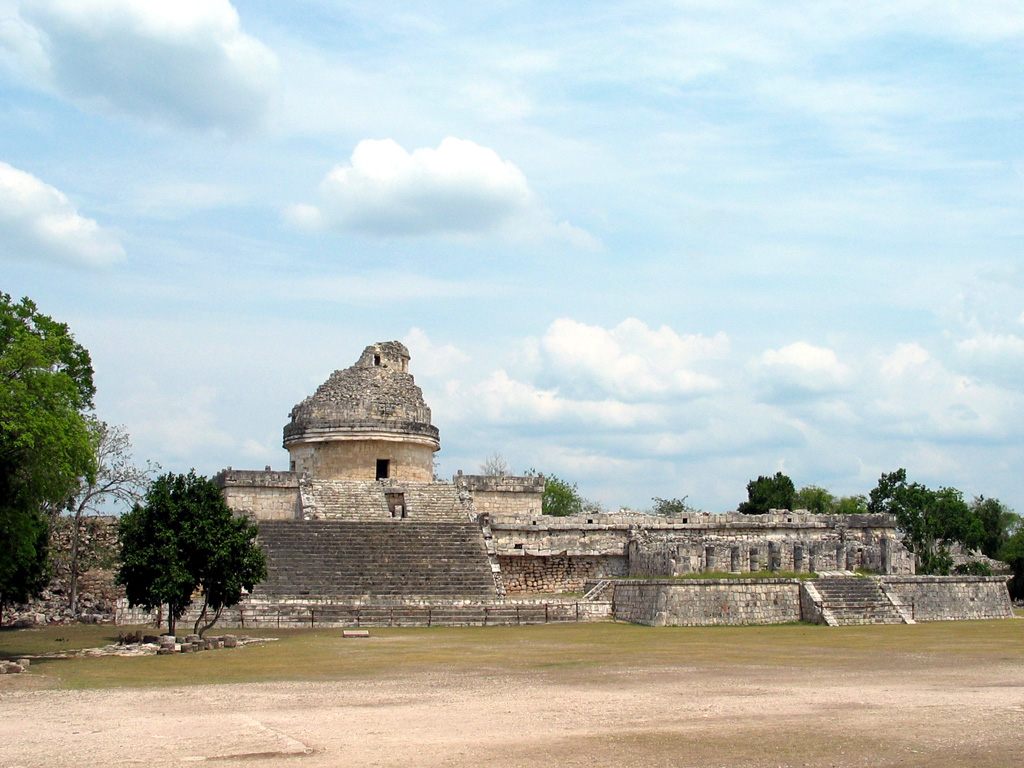
One of the most studied sites for the topic of Mayan astronomy is the El Caracol at Chichen Itza. The Caracol is an observatory aligned to follow the path of Venus through the year.
The grand staircase leading to the once cylindrical structure deviates 27.5 degrees from the alignment of the surrounding buildings to align with the northern extreme of Venus; the northeast-southwest diagonal of the site aligns with the sunrise of the summer solstice and the sunset of the winter solstice.
The Mayans primary interest, in contrast to "western" astronomers, were Zenial Passages when the Sun crossed over the Maya latitudes. On an annual basis the sun travels to its summer solstice point, or the latitude of 23-1/3 degrees north.
Most of the Maya cities were located south of this latitude, meaning that they could observe the sun directly overhead during the time that the sun was passing over their latitude. This happened twice a year, evenly spaced around the day of solstice.
The Maya could easily determine these dates, because at local noon, they cast no shadow. Zenial passage observations are possible only in the Tropics and were quite unknown to the Spanish conquistadors who descended upon the Yucatan peninsula in the 16th century. The Maya had a god to represented this position of the Sun called the Diving God.
The Maya were aware of the solstices and equinoxes. This is demonstrated in building alignments. More important to them were zenithal passage days. In the tropics the Sun passes directly overhead twice each year.
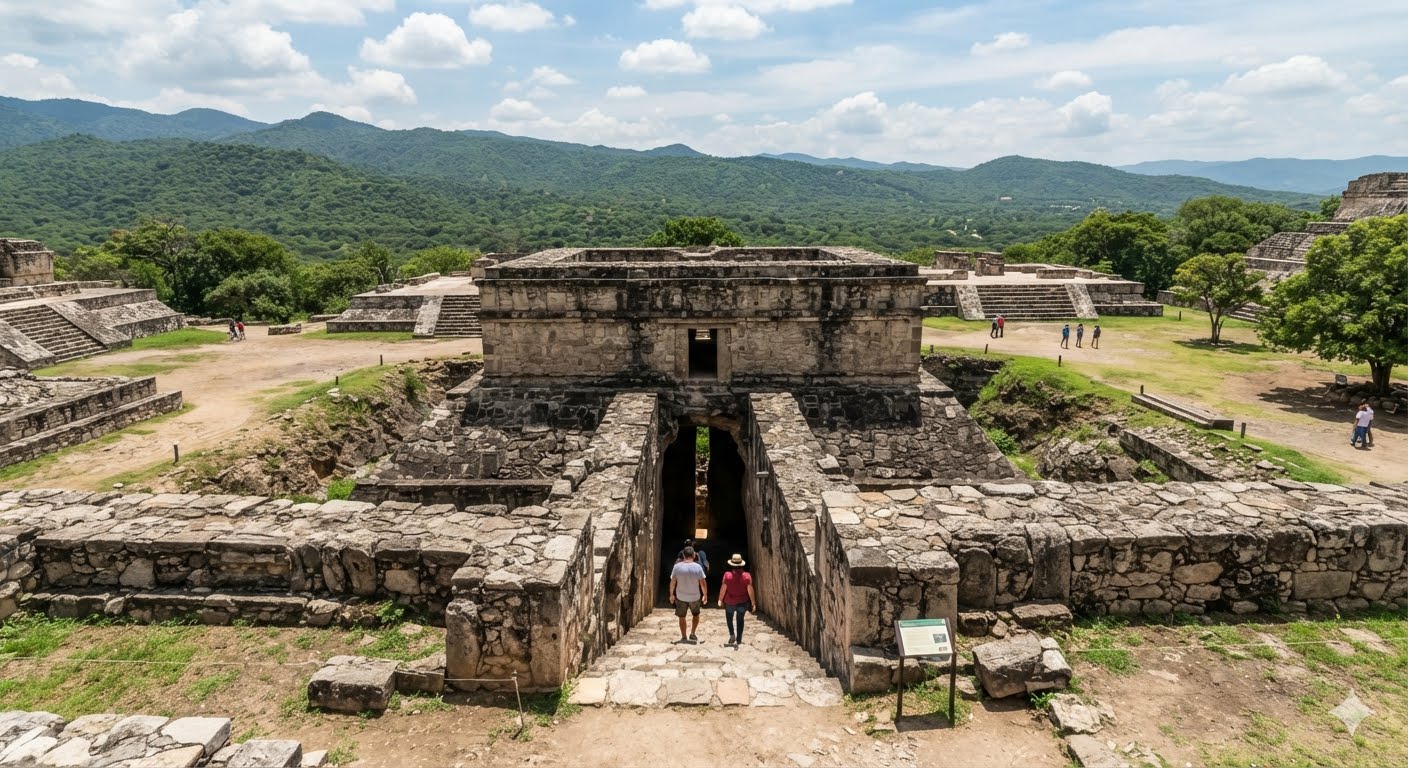
Many known structures in Mayan temples were built to observe this. An example of such temples is the observatory at Xochicalco. The observatory is an underground chamber with a hole in the ceiling. Two days of the year on May 15 and July 29, the sun would directly illuminate an illustration of the sun on the floor.
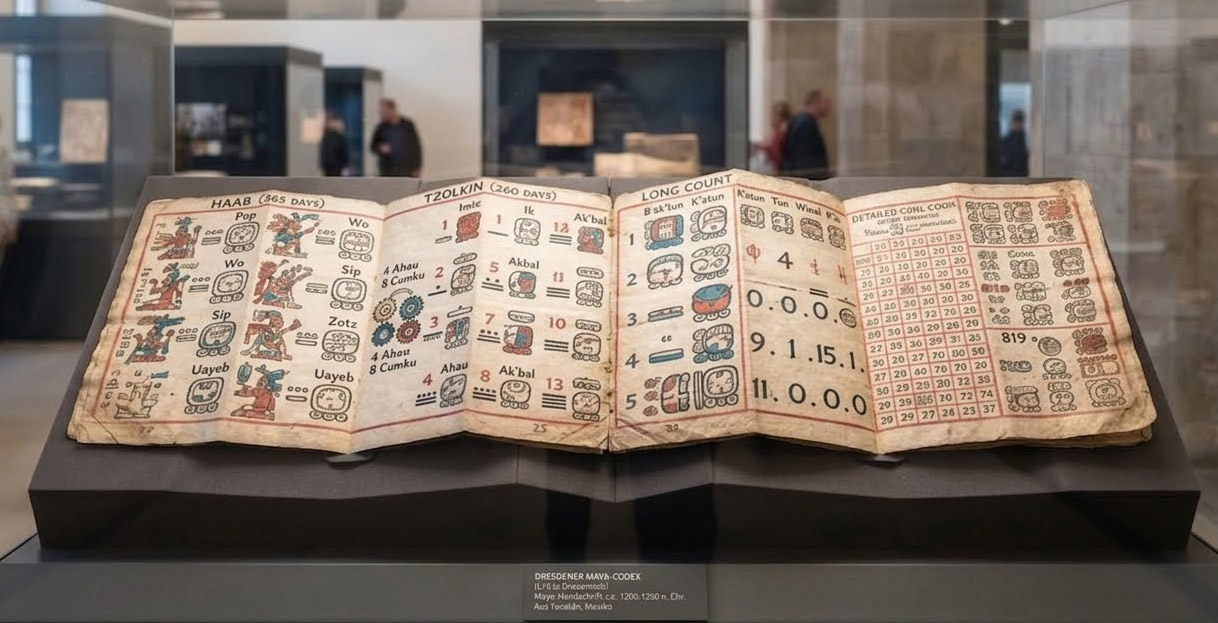
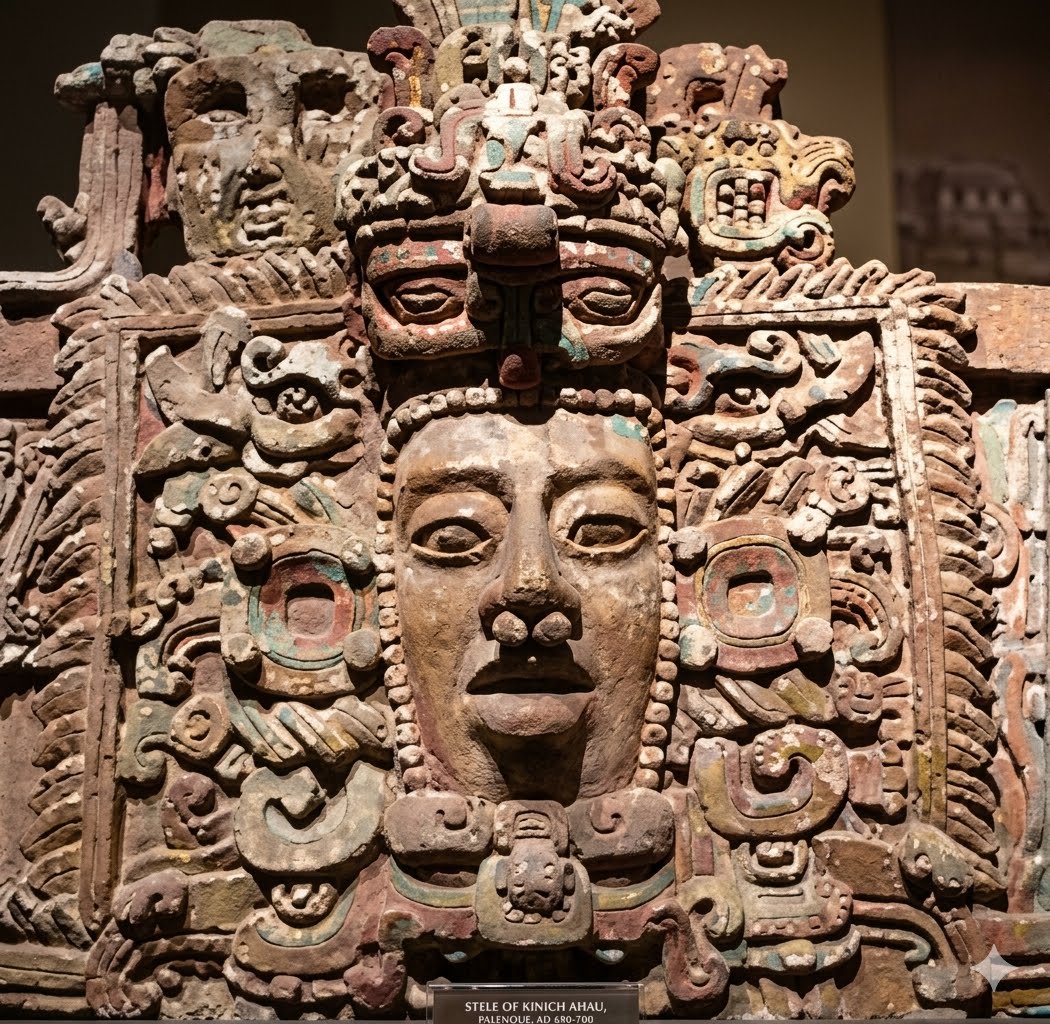
Munro S. Edmonson studied 60 mesoamerican calendars and found remarkable consistency in the calendars, except for a number of different year bearer systems. He thought that these different year bearers were based on the solar years in which they were initiated. The sun was very important in the Mayan culture. The Mayan sun god was Kinich Ahau, one of the Mayan creator gods. Kinich Ahau would shine in the sky all day before being believed to transform himself into a jaguar at night to pass through Xibalba, the Mayan underworld. The Maya were aware of the fact that the 365-day Haab' differs from the Tropical year by about 0.25 days per year. A number of different intervals are given on Maya monuments that can be used to approximate the tropical year.
The most accurate of these is that the tropical year exceeds the length of the 365 day Haab' by one day every 1,508 days. The occurrence of a particular solstice on a given date in the Haab' will repeat after the passage of 1,508 365-day Haab' years. The Haab' will lose one day every 1,508 days and it will take 1,508 Haab' years to lose one Haab' year. So 365 x 1,508 = 365.2422 x 1,507 or 1,508 Haab' years = 1,507 Tropical years of 365.2422 days.
The Maya believed the Earth was flat with four corners. Each corner represented a cardinal direction. Each direction had a color: east-red; north-white; west-black; south-yellow. Green was the center. At each corner, there was a jaguar of a different color that supported the sky. The jaguars were called bacabs. Mayans believed that four jaguars held up the sky.

The Milky Way itself was much venerated by the Maya. They called it the World Tree, which was represented by a tall and majestic flowering tree, the Ceiba. The Milky Way was also called the Wakah Chan. Wak means "Six" o "Erect". Chan or K'an means "Four", "Serpent" or "Sky". The World Tree was erect when Sagittarius was well over the horizon. At this time the Milky Way rose up from the horizon and climbed overhead into the North. The star came from.
Near Sagittarius, the center of our galaxy, where the World Tree meets the Ecliptic was given special attention by the Maya. A major element of the World Tree include the Kawak Monster, a giant head with a kin in its forehead.
This monster was also a mountain or witz monster. A sacrificial bowlon its head contains a flint blade representing sacrifice, and the Kimi glyph that represents death.
The Ecliptic is sometimes represented as a bar crossing the major axis of the world tree, making a form that is similar to the Christian Cross. On top of the World Tree we find a bird that has been called, the Principal Bird deity, or Itzam Ye. There is also evidence that shows the Sun on the World Tree as it appeared to the Maya at Winter Solstice.
During the months of winter, when the so-called "Winter" Milky Way dominates the sky, it was called the "White Boned Serpent." This part of the Milky Way passed overhead at night during the dry season.
It is not brilliant like the star clouds that dominate the sky North of the equator during the months of Summer, but observers at dark locations will easily see the glow. Here the Ecliptic crosses the Milky Way again, near the constellation of Gemini which was the approximate location of the Sun during Summer Solstice. It is possible that the jaws of the White-Boned Serpent were represented by the Kawak monster head.
The Maya portrayed the Ecliptic in their artwork as a Double-Headed Serpent. The ecliptic is the path of the sun in the sky which is marked by the constellations of fixed stars. Here the moon and the planets can be found because they are bound, like the Earth, to the sun.
The constellations on the ecliptic are also called the zodiac. We don't know exactly how fixed constellations on the ecliptic were seen by the Maya, but we have some idea of the order in some parts of the sky. We know there is a scorpion, which we equate with our own constellation of Scorpius.
It has also been found that Gemini appeared to the Maya as a pig or peccary, (a nocturnal animal in the pig family.) Some other constellations on the ecliptic are identified as a jaguar, at least one serpent, a bat, a turtle, a xoc monster--that is, shark, or a sea monster.
The Pleiades were seen as the tail of the rattlesnake. they called it "Tz'ab."
Spiritually, Mayans seem to have thought of the Milky Way as the mystic road along which souls walk into the Underworld. Crossing the Milky Way at the constellation Scorpio is the ecliptic, the apparent path of the sun, moon, and planets as they move against the background of stars.
Mayans tracked their creation stories in relation to the movement of the stars across the heavens. They believed that the point at which the Milky way appeared as a vertical band in the night sky represented the moment of creation.
Mayans used their astronomical knowledge to predict future human events. In one of the ancient Mayan books, Mars is represented by a series of pictures of a long-nosed beast shown descending to varying depths from a sky band.
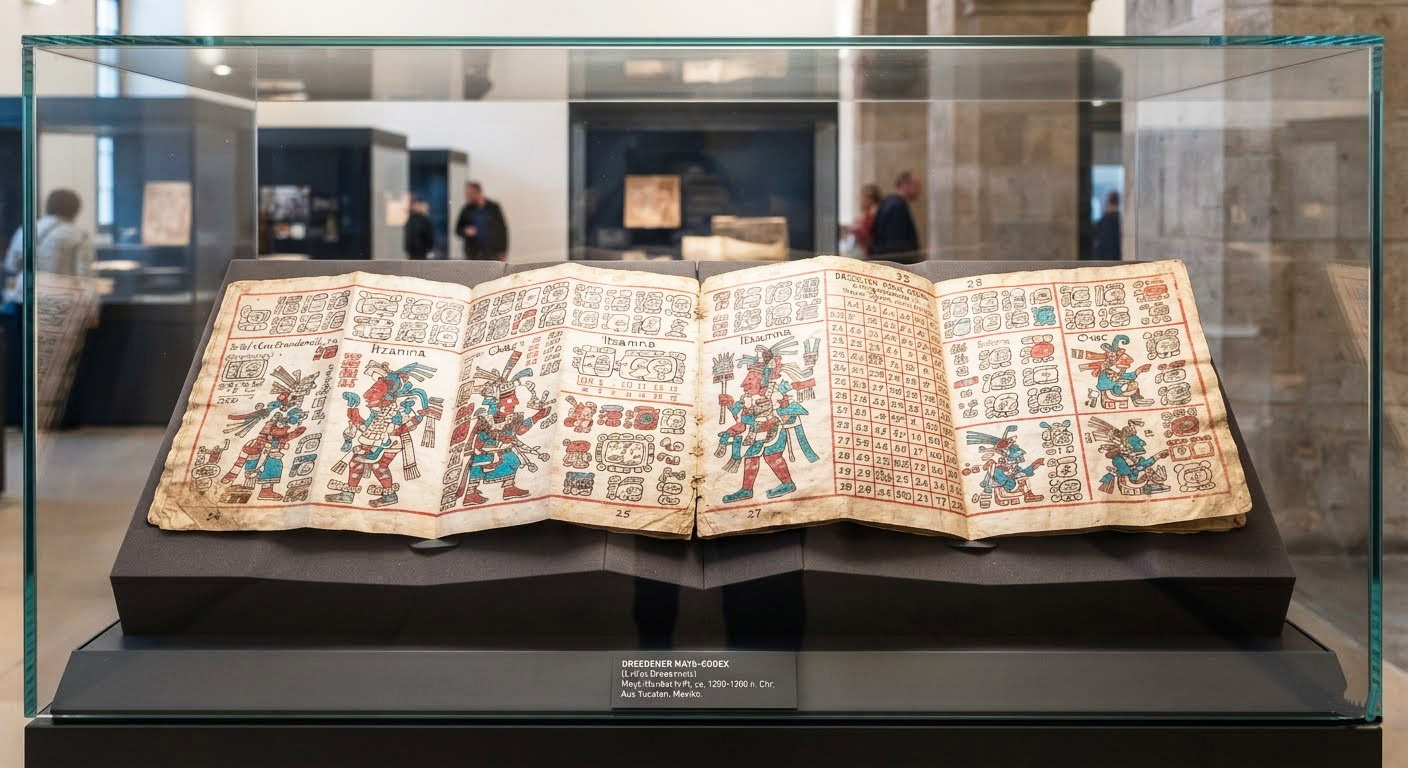
Mayan Codices - The Dresden Codex
We Finally Know The Name of a Revered Maya Astronomer-Mathematician: Sak Tahn Waax Science Alert - July 14, 2026
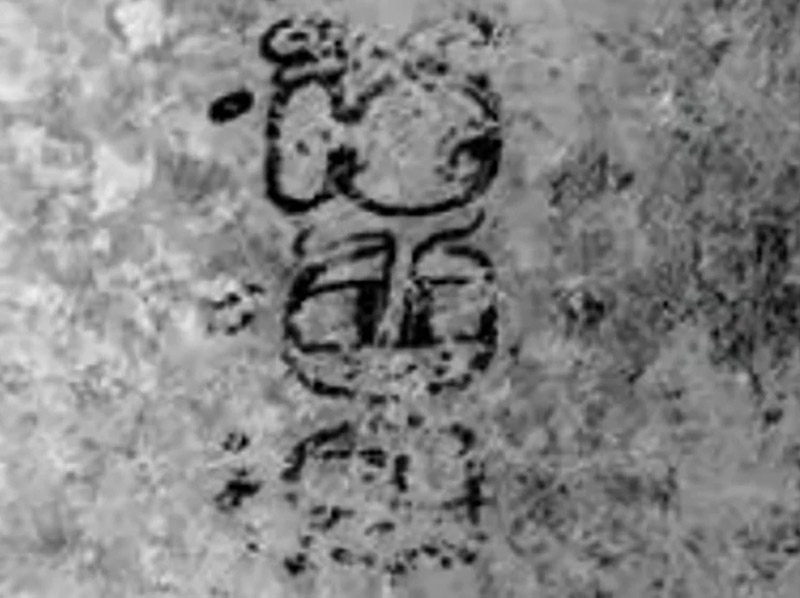
The Classic Maya period, from around 250-900 CE, is seen as something of a golden age for the civilization. During that time, the Maya people made huge leaps forward in terms of architecture, city-building, art, writing, mathematics, and astronomy. However, in those last two disciplines, scientists have been unable to identify individual scholars who made a difference during this time - until now.
A team of researchers from the US, writing in the journal Antiquity, has identified someone called Sak Tahn Waax, which translates as 'White-chested Fox'. The name of this Indigenous mathematician-astronomer was left alongside a rather impressive mathematical formula.
Approximately one millennium before Archbishop Usher of Armagh concluded that creation occurred at 4004 B.C., the Mayans had calculated the cosmos was 90 million years old. Fox News - April 5, 2001
Like other pre-Columbian civilizations, the Maya had a profound knowledge of the sky. Their priests recorded astronomical observations and passed them down from generation to generation. The result was an extremely accurate calendar that predicted the coming of eclipses and the revolutions of Venus to an error of one day in 6,000 years.
Only a handful of the parchments that chronicle this knowledge survived the zealous bonfires of the missionaries; those that did are now called codices. In one, for example, Venus is represented as a figure with two masks, symbolizing its appearance in the early morning and evening.
The calendar itself was divided into cycles 3 million years long, subdivided into units of 20 years, 400, 8,000 and 158,000 years. There were also subunits for marking the death and rebirth of the sun and fire. Rituals punctuated the cycles and acted like the needles of a clock, marking the passage of time.
It is difficult to talk of Mayan astronomy itself because it was truly part of a greater discipline: religion. The Mayan ball game is the perfect embodiment of this fact. Transmitted from previous local civilizations as far back as 3,000 B.C., it consisted in using hips, legs and the head to get a ball across a line or through a hoop.
Different symbols are brought together in the ball game. Archaeologists think the ball symbolized the sun and the game re-enacted its apparent orbit around the Earth. The sun was worshipped as a god and by playing the game, one became somewhat akin to the Sun-God. But the game might also have signaled a changing season, so that it served a purpose as well. Since agrarian societies require a timekeeper to regulate agricultural tasks, these rituals were vital to the Mayan society's survival.
Pre-Columbian ball courts and other buildings functioned both as religious temples and observatories. The architecture was used to define orientations and mark the passage of time. When Orion appeared through a designated hole or the sun shone directly on a specific spot, it meant spring was near. The pyramid of El Tajin in Mexico, for example, is made up of 365 niches, one for each day of the year. A niche here is the equivalent of a box in one of our calendars.
Smaller calendars were sculpted into stone and gold. It is no wonder then that artists were highly regarded and given special status in Mayan society. Without artists there would be no calendars, no way to tell time, bad crops and eventually famine. For the Maya, astronomy was enmeshed into one thick fabric with art, agriculture and religion.