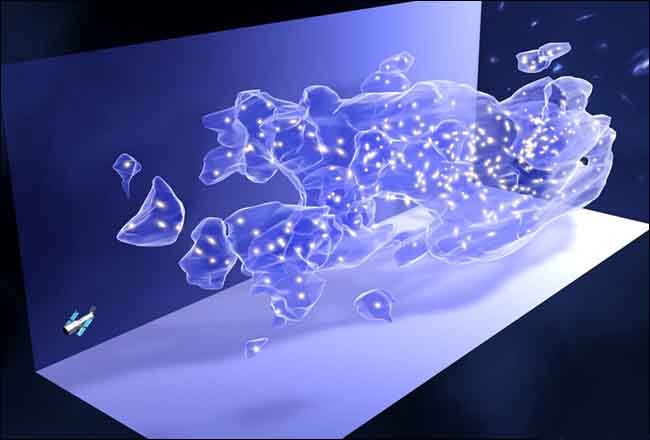
Dark Matter should not to be confused with Dark Energy, Dark Fluid (is an alternative theory to both Dark Matter and Dark Energy and attempts to explain both phenomena in a single framework), or Dark Flow (astrophysical term describing a peculiar velocity of galaxy clusters).
In astronomy and cosmology, dark matter is matter that is inferred to exist from gravitational effects on visible matter and background radiation, but is undetectable by emitted or scattered electromagnetic radiation.
Its existence was hypothesized to account for discrepancies between measurements of the mass of galaxies, clusters of galaxies and the entire universe made through dynamical and general relativistic means, and measurements based on the mass of the visible "luminous" matter these objects contain: stars and the gas and dust of the interstellar and intergalactic medium. It is probably cold and if so, probably comprised of weakly interacting massive particles or many primordial intermediate mass black holes between 30 and 300,000 solar masses, or both.
According to observations of structures larger than galaxies, as well as Big Bang cosmology interpreted under the Friedmann equations and the FLRW metric, dark matter accounts for 23% of the mass-energy density of the observable universe. In comparison, ordinary matter accounts for only 4.6% of the mass-energy density of the observable universe, with the remainder being attributable to dark energy. From these figures, dark matter constitutes 83% of the matter in the universe, while ordinary matter makes up only 17%.
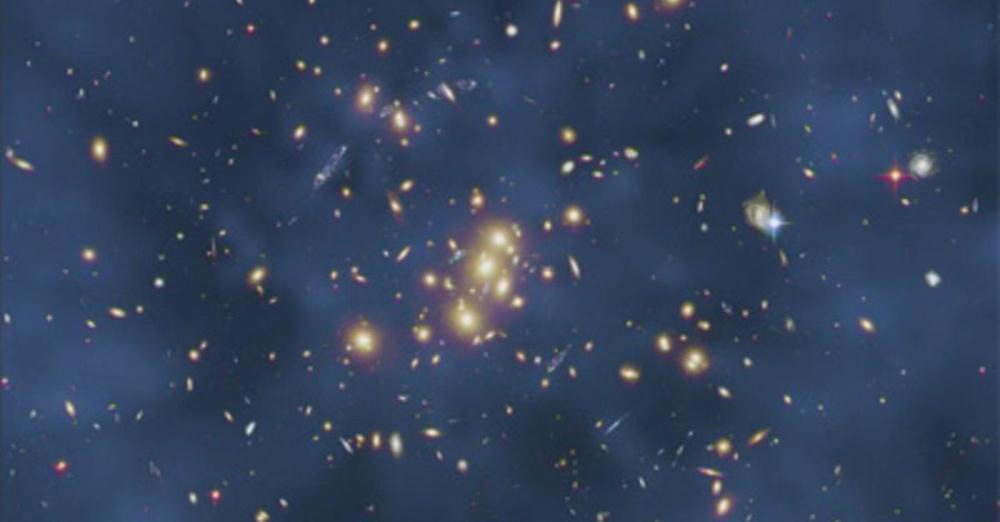
Dark matter was postulated by Fritz Zwicky in 1934 to account for evidence of "missing mass" in the orbital velocities of galaxies in clusters. Subsequently, other observations have indicated the presence of dark matter in the universe; these observations include the rotational speeds of galaxies, gravitational lensing of background objects by galaxy clusters such as the Bullet Cluster, and the temperature distribution of hot gas in galaxies and clusters of galaxies.
Dark matter plays a central role in state-of-the-art modeling of structure formation and galaxy evolution, and has measurable effects on the anisotropies observed in the cosmic microwave background. All these lines of evidence suggest that galaxies, clusters of galaxies, and the universe as a whole contain far more matter than that which interacts with electromagnetic radiation. The largest part of dark matter, which does not interact with electromagnetic radiation, is not only "dark" but also, by definition, utterly transparent.
As important as dark matter is believed to be in the cosmos, direct evidence of its existence and a concrete understanding of its nature have remained elusive. Though the theory of dark matter remains the most widely accepted theory to explain the anomalies in observed galactic rotation, some alternative theoretical approaches have been developed which broadly fall into the categories of modified gravitational laws, and quantum gravitational laws. Read more ...

I believe that dark matter is everywhere
we just don't have the ability or technology to recognize it yet. ~ Ellie
Dark Matter's Secret Force Could Reshape Our Understanding of the Universe SciTech Daily - July 28, 2026
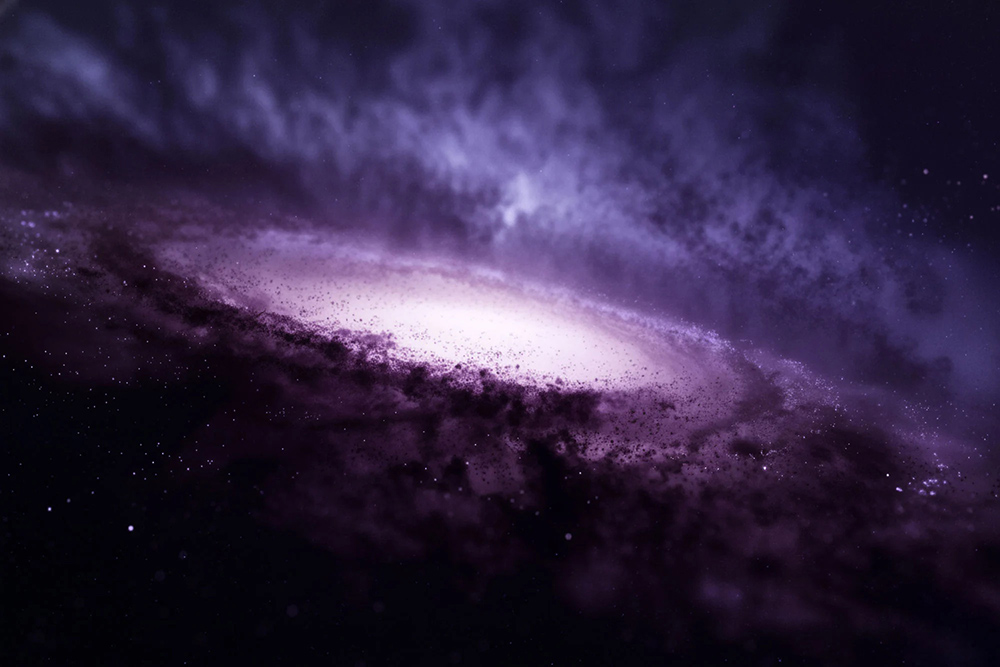
Dark matter shapes galaxies and the large structure of the Universe through gravity, yet no one knows whether gravity is its only influence. Dark matter particles might also pull on one another through a hidden force that ordinary matter cannot feel. Researchers explored that possibility and reached a counterintuitive conclusion. An additional attractive force can bring dark matter particles closer together without accelerating the overall growth of cosmic structure. Under most conditions examined, it actually suppresses that growth.
Could Dark Matter Be Hiding in a Hidden Fifth Dimension? SciTech Daily - July 16, 2026
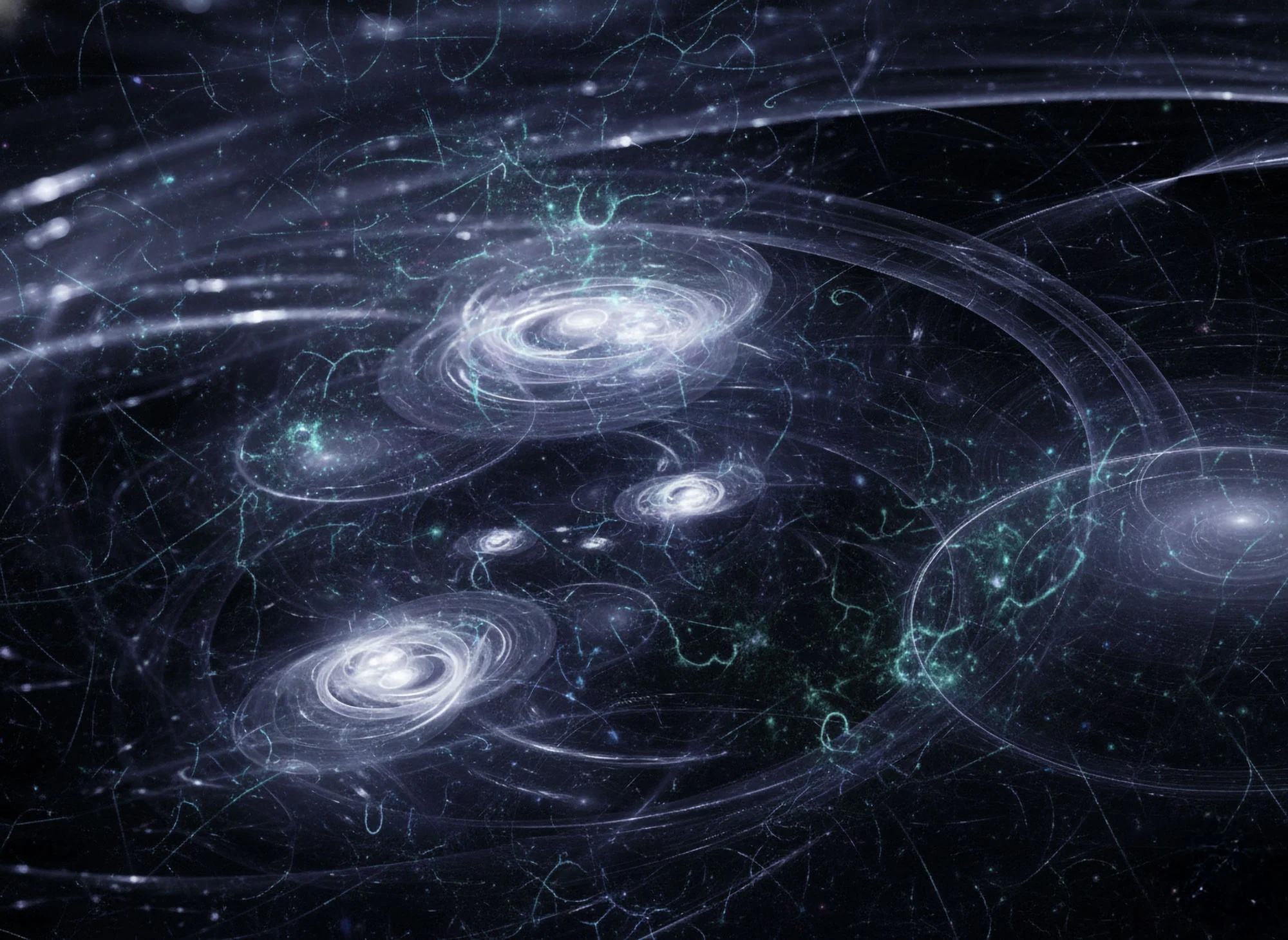
Dark matter has occupied both physics and science fiction for decades. In cosmology, it remains one of physics' deepest unresolved questions. Researchers infer its existence from its powerful gravitational influence, which helps hold galaxies together, but no experiment has directly detected it or established what it is made of.
Scientists Have Found Evidence That Dark Matter May Not Be Playing by the Rules SciTech Daily - July 11, 2026
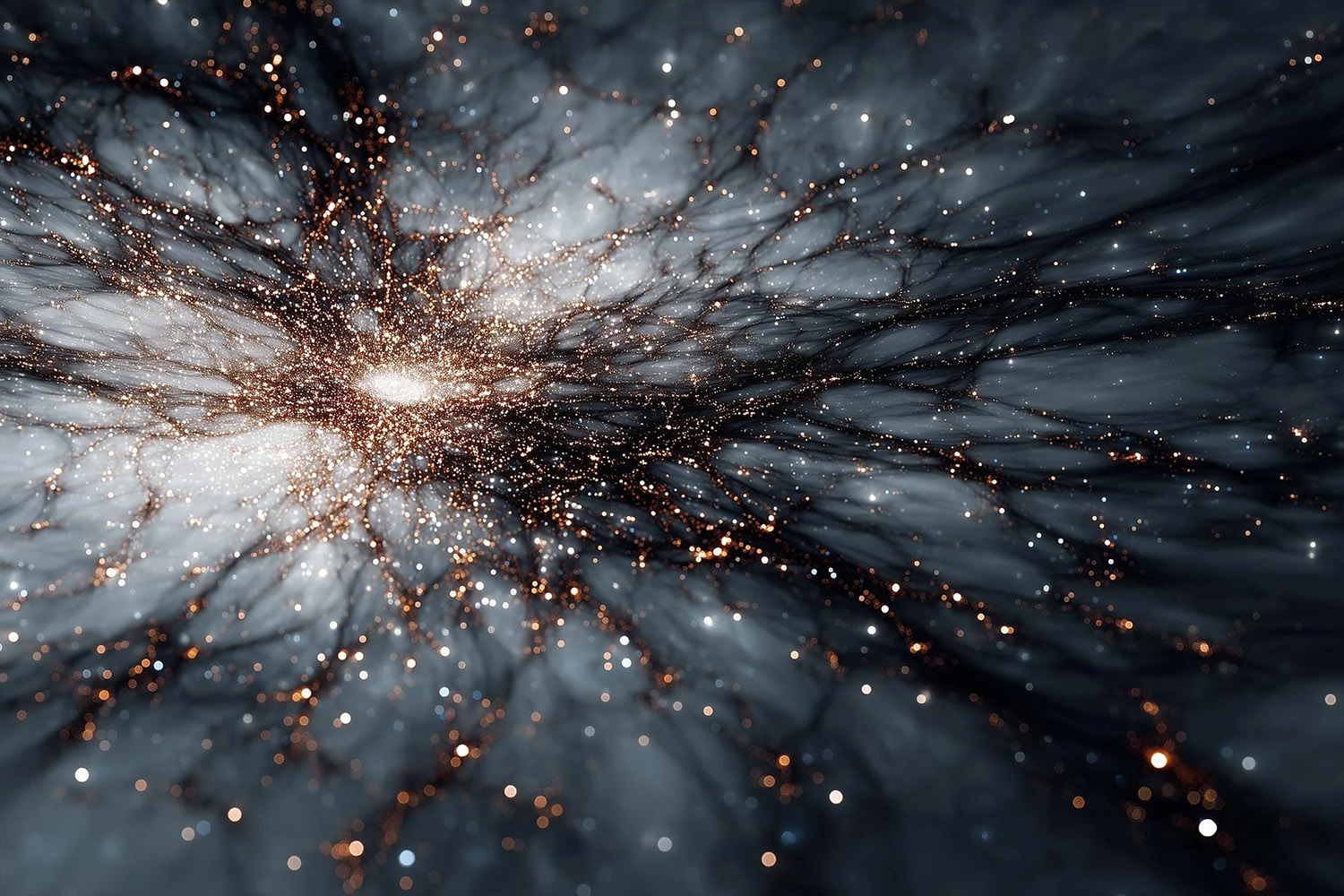
Most of the cosmos is dominated by dark matter and other invisible ingredients that scientists are still trying to understand. Now, researchers have found evidence that two of these hidden components, dark matter and neutrinos, may interact with one another, pointing to new physics beyond the standard cosmological model.
What if Dark Matter Is Actually Black Holes From Another Universe? Science Alert - April 15, 2026

New research suggests that relic black holes from before the Big Bang may still shape galaxies today. These black holes could explain dark matter, one of the biggest unsolved questions in cosmology. Generally speaking, black holes are regions of spacetime where matter is compressed into a tiny space. Dark matter, meanwhile, is matter that does not reflect or absorb light. We know it exists because of its gravitational influence on galaxies and other cosmic structures. It can be viewed as the "glue" that holds galaxies together, but we do not know what it is made of at a fundamental level. Most physicists think dark matter is composed of an as-yet-undiscovered sub-atomic particle.
What if Dark Matter Has Two Forms? Bold New Hypothesis Could Explain a Cosmic Mystery SciTech Daily - April 14, 2026

A new study suggests that failing to detect dark matter signals in some galaxies may not contradict evidence seen in our own. The absence of a signal may itself carry meaning. That is the central idea of a new study proposes a different way to search for dark matter. The research suggests scientists may not need to find identical clues everywhere in the universe to understand its nature.
Dark matter, not a black hole, could power Milky Way's heart PhysOrg - February 5, 2026
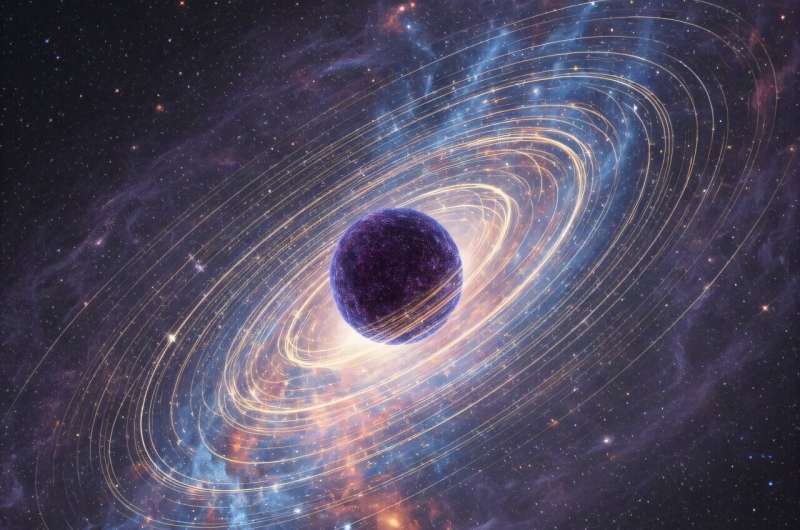
Our Milky Way galaxy may not have a supermassive black hole at its center but rather an enormous clump of mysterious dark matter exerting the same gravitational influence, astronomers say. They believe this invisible substance which makes up most of the universe's mass can explain both the violent dance of stars just light-hours (often used to measure distances within our own solar system) away from the galactic center and the gentle, large-scale rotation of the entire matter in the outskirts of the Milky Way.
First Neanderthal Footprints Found on Portugal's Coast Rewrite What We Know About Early Humans SciTech Daily - November 5, 2025

Does dark matter obey the same physical laws as the matter we can see? Scientists are still trying to answer this question about one of the Universe's greatest mysteries. Dark matter, an invisible and theoretical form of matter that neither emits nor reflects light, continues to puzzle researchers.
Dark matter does not defy gravity, study suggests PhysOrg - November 3, 2025

Does dark matter follow the same laws as ordinary matter? The mystery of this invisible and hypothetical component of our universe - which neither emits nor reflects light - remains unsolved.
Record-breaking clump of dark matter found hiding within a warped 'Einstein ring' 10 billion light-years away Live Science - October 16, 2025
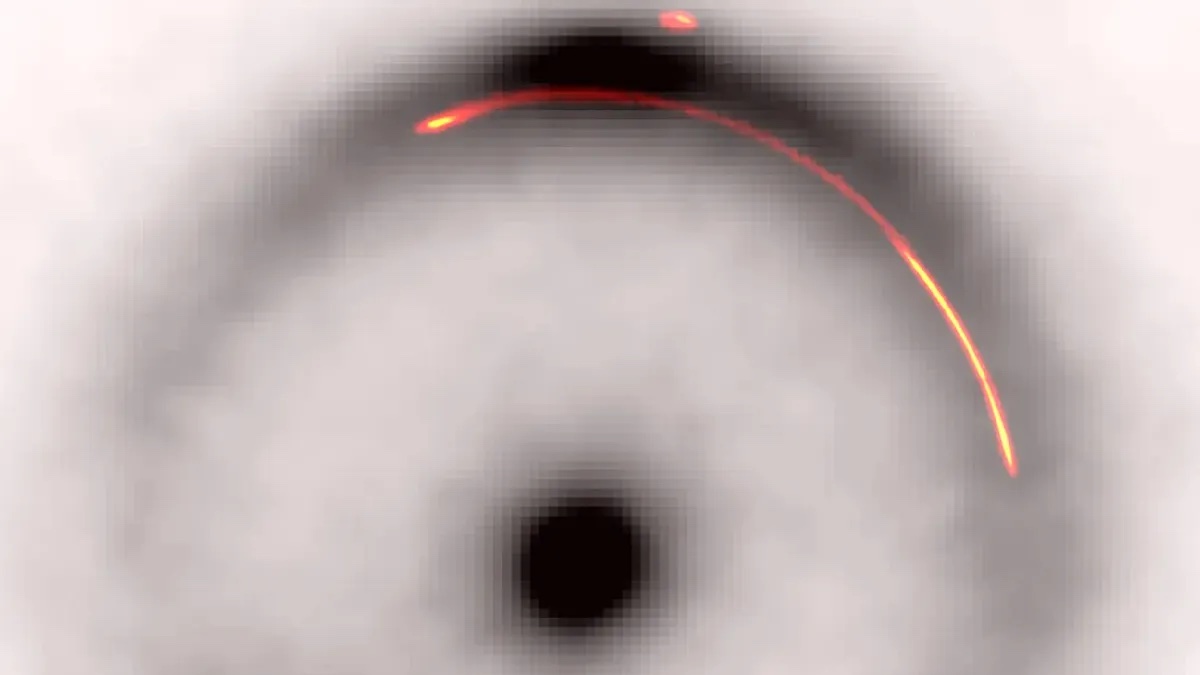
Researchers have found a suspected clump of dark matter lurking within the luminous halo of a well-known "Einstein ring." The mysterious object, the smallest of its kind ever seen, could help shed light on the universe's missing matter.
JWST may have found the Universe's first stars powered by dark matter Science Daily - October 14, 2025
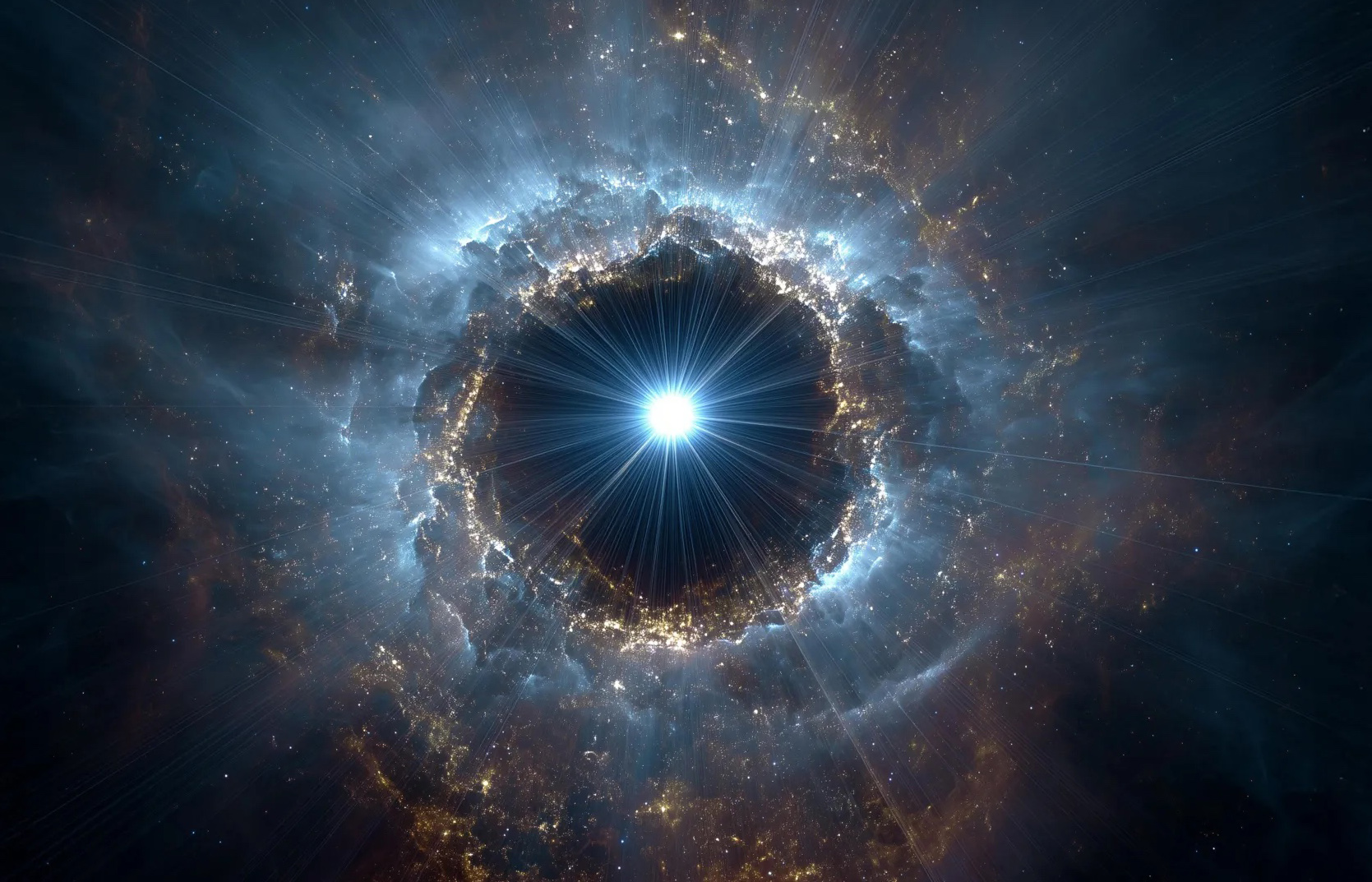
New observations from the James Webb Space Telescope hint that the universe's first stars might not have been ordinary fusion-powered suns, but enormous supermassive dark stars powered by dark matter annihilation. These colossal, luminous hydrogen-and-helium spheres may explain both the existence of unexpectedly bright early galaxies and the origin of the first supermassive black holes.
Theories on dark matter's origins point to 'mirror world' and universe's edge PhysOrg - August 4, 2025

Science has produced overwhelming evidence that the mysterious substance - dark matter - that allegedly accounts for 80% of all matter in the universe, actually exists. Dark matter's presence explains what binds galaxies together and makes them rotate. Findings such as the large-scale structure of the universe and measurements of the cosmic microwave background also prove that something as-yet undetermined permeates all that darkness.
An Astrophysicist Reveals What Space and Outer Space Are Actually Made of Science Alert - September 3, 2024

Scientists predict that an as-yet unseen form of matter that does not emit light or energy, called dark matter, makes up a significant portion of the universe's mass. Researchers guess that it exists because they can see its gravitational pull on other visible matter. Imagine the universe as a balloon. Dark matter is like the balloon's material, affecting its shape, while dark energy is like the air being pumped into it. It doesn't change the balloon's material, but it influences how quickly the balloon expands.
Gravity Without Mass Is A New Explanation For The Failure To Find Dark Matter IFL Science - June 16, 2024
A new explanation for why we have not found dark matter proposes that it doesn't exist. Instead, the author thinks we have been misunderstanding gravity. He's not the first to suggest that, but the new proposal, of gravity without mass created by topological defects in space-time, is particularly novel.
Euclid space telescope: The groundbreaking mission to study dark matter and energy Live Science - July 6, 2023
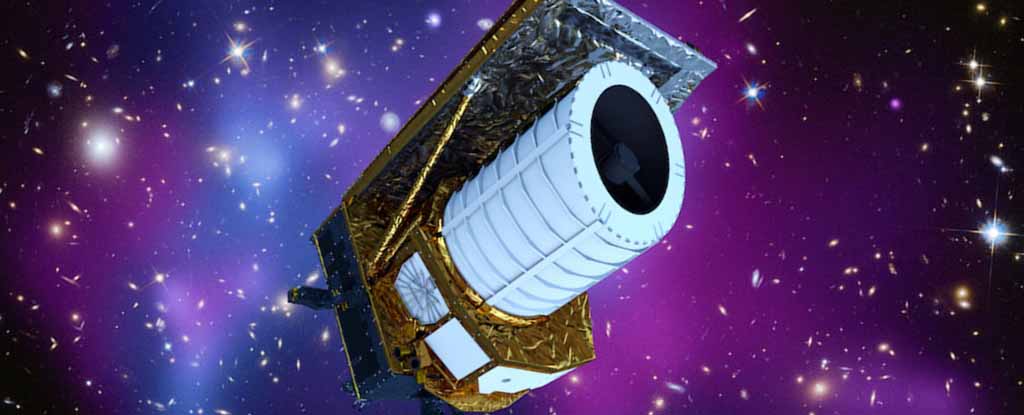
The Euclid space telescope uses its incredibly wide field of view to hunt for two of the universe's most mysterious components: dark matter and dark energy.
Strange star system may hold first evidence of an ultra-rare 'dark matter star' Live Science - May 24, 2023
Astronomers long thought that a peculiar star system observed by the European Space Agency's Gaia satellite was a simple case of a star orbiting a black hole. But now, two astronomers are challenging that claim, finding that the evidence suggests something far stranger: possibly, a never-before-seen type of star made of invisible dark matter.
The first light in the universe helps build a dark matter map PhysOrg - April 23, 2023
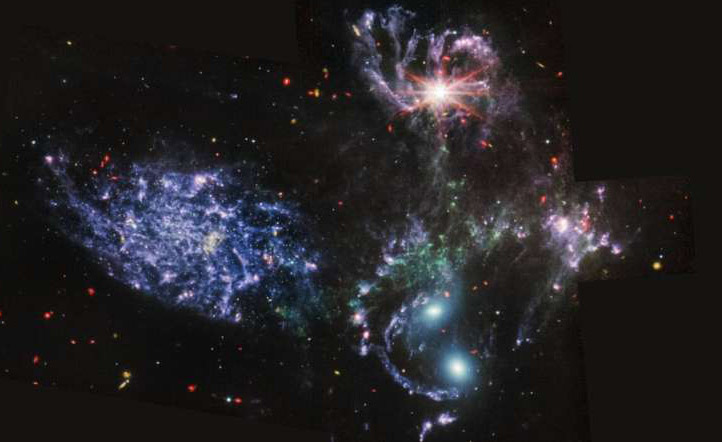
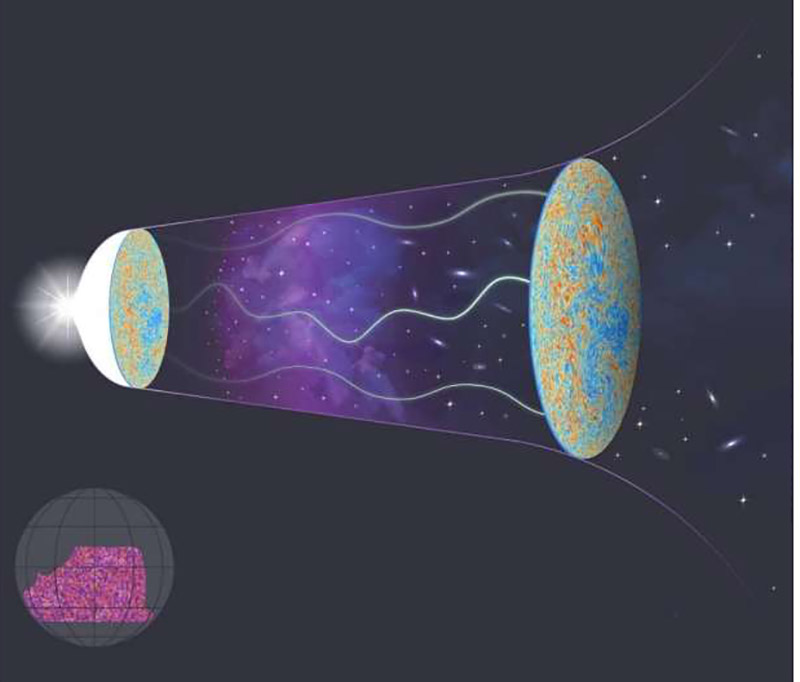
This latest map has taken that research a step further by using it to measure how the structure of matter has evolved since, 85% of which is Dark Matter.
Entire Planets Made of Dark Matter May Exist. Here's How We Can Find Them. Science Alert - March 25, 2023
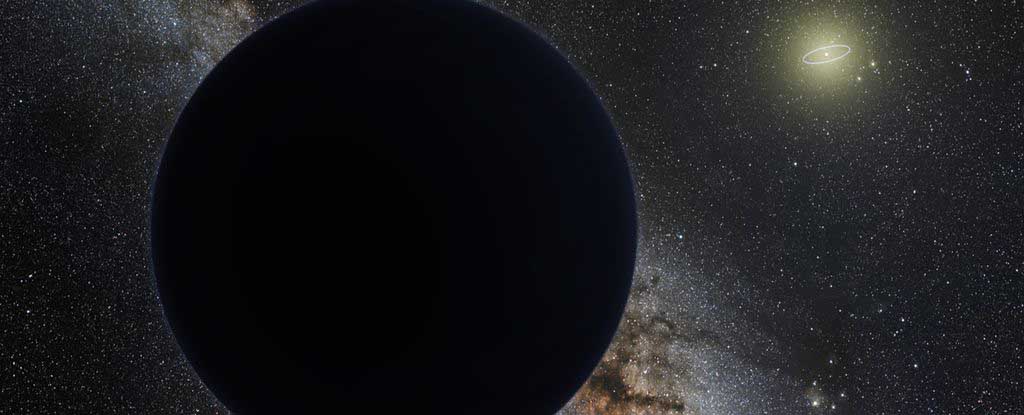
We may not have found many planetary systems like our own Solar System. Still, there's one thing they do seem to have in common: They appear to be made out of good ol' ordinary baryonic matter - you know, the stuff our planetary system is made of.
The Origin Of Dark Matter? Maybe It Came From A Dark Big Bang IFL - March 13, 2023

According to the leading model of the Universe, there is an invisible substance that outweighs regular matter, which makes us, by five-to-one. This is known as dark matter because it doesn't interact with light. The properties of this substance are still uncertain with no experimental evidence showing it exists. And researchers have considered some pretty outlandish explanations for dark matter, including the possibility of a 'Dark Big Bang'.
New measurements of galaxy rotation lean toward modified gravity as an explanation for dark matter PhysOrg - December 30, 2022
Although dark matter is a central part of the standard cosmological model, it's not without its issues. There continue to be nagging mysteries about the stuff, not the least of which is the fact that scientists have found no direct particle evidence of it.
Supernova Explosions Reveal Precise Details of Dark Energy and Dark Matter SciTech Daily - October 26, 2022
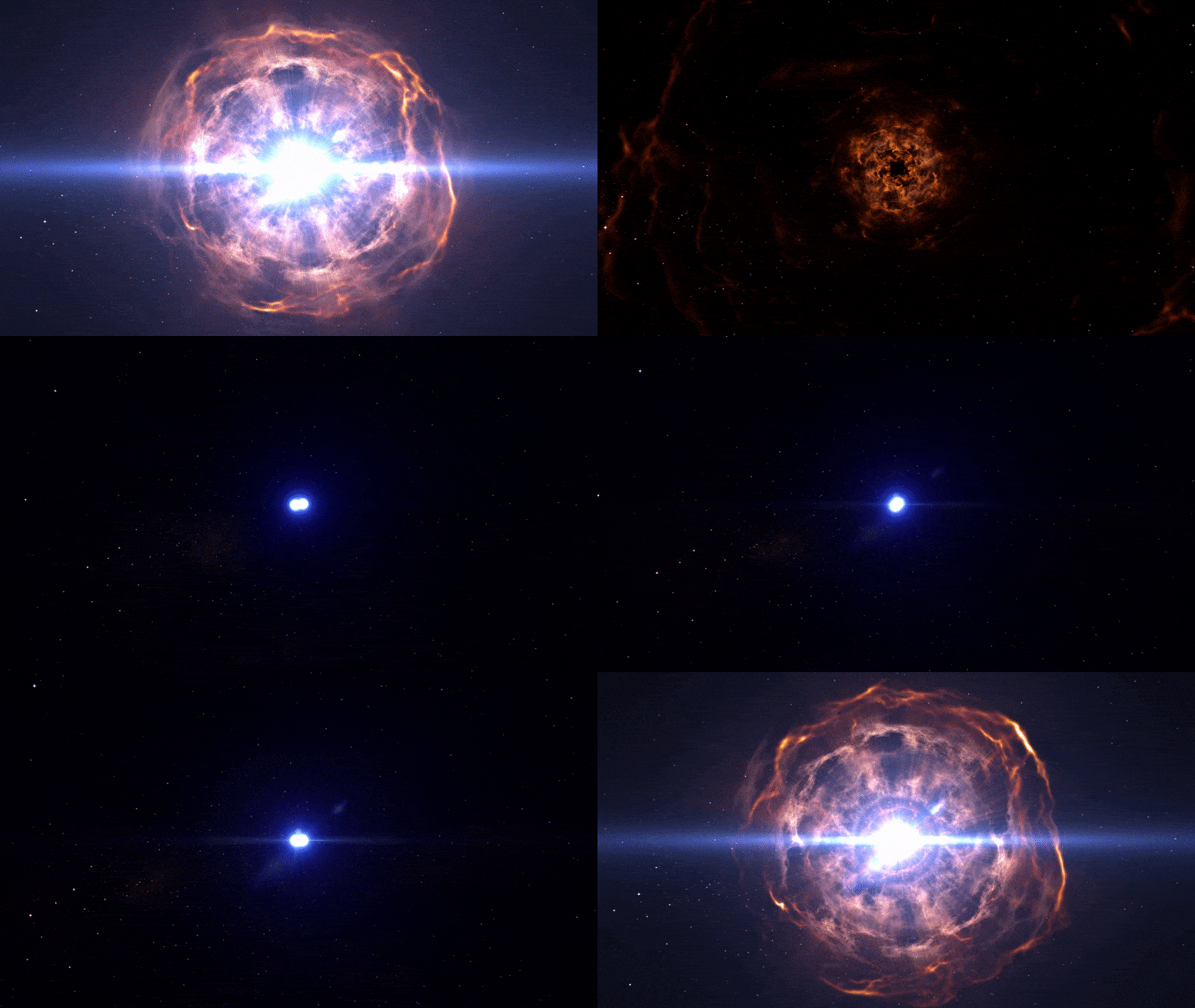
An analysis of more than two decades' worth of supernova explosions convincingly boosts modern cosmological theories and reinvigorates efforts to answer fundamental questions. A powerful new analysis has been performed by astrophysicists that places the most precise limits ever on the composition and evolution of the universe. With this analysis, dubbed Pantheon+, cosmologists find themselves at a crossroads.
Scientists Glimpse The Earliest Dark Matter Ever Observed in The Universe Science Alert - August 4, 2022
A collaboration between astronomers has found a different way to shine a light on the distant darkness, by studying the way shadowy masses of dark matter distort the background glow of the cosmos. Like photos dropped from a moving car, our Universe's entire history is smeared across the vastness of space. To see a succession of milestone moments, all we need to do is keep looking further down the highway.
Dark matter from 12 billion years ago detected for the 1st time Space.com - August 3, 2022
Scientists have discovered dark matter around galaxies that existed about 12 billion years ago, the earliest detection yet of this mysterious substance that dominates the universe. The findings suggest that dark matter in the early universe is less clumpy than predicted by many current cosmological models. If further work confirms this theory, it could change scientists' understanding of how galaxies evolve and suggest that the fundamental rules governing the cosmos could have been different when the 13.7 billion-year-old universe was just 1.7 billion years old. The key to mapping dark matter in the very early universe the cosmic microwave background (CMB), a sort of fossil radiation left over from the Big Bang that is distributed throughout the entire cosmos.
Searching for Dark Matter - July 2022
Large Hadron Collider switches on at highest ever power level to look for dark matter Live Science - July 6, 2022
Could the LHC discover dark matter? Space.com - July 9, 2022
The Large Hadron Collider's crowning glory was the discovery of the Higgs boson, but there's one thing that could usurp it: the discovery of dark matter.
Scientists have begun major search for universal dark matter in mile-deep abandoned gold mine in South Dakota Just the News - July 9, 2022
The research facilities at the Sanford Underground Research Facility are hoped in part to reveal the properties of what's known as dark matter, a substance scientists cannot see but which equations indicate form a huge majority of the total matter in the universe.
The facility is located a mile underground in the former Homestake Gold Mine in Lead, South Dakota. The depth of the facility was necessary in order to filter out electromagnetic background disturbance from the sun and other cosmic factors. Researchers said the project will likely take a considerable amount of time but that they are confident of ultimate success.
What if the black hole at the center of the Milky Way is actually a mass of dark matter? PhysOrg - June 2, 2021
A team of researchers at the International Center for Relativistic Astrophysics has found evidence that suggests Sagittarius A* is not a massive black hole but is instead a mass of dark matter. For several years the scientific community has agreed that there is a mass at the center of the Milky Way galaxy and that the mass is a supermassive black hole - it has been named Sagittarius A*. Its presence has never been verified directly, however, instead it has been inferred by noting the behavior of bodies around it. In this new effort, the researchers suggest that another type of mass could produce the same reactions by other bodies and in fact could help explain some anomalies that have been seen.
Dark matter map reveals hidden bridges between galaxies Science Alert - May 29, 2021
A new map of dark matter in the local universe reveals several previously undiscovered filamentary structures connecting galaxies. The map, developed using machine learning, could enable studies about the nature of dark matter as well as about the history and future of our local universe.
Astronomers chart invisible ocean of dark matter swirling outside the Milky Way Live Science - May 5, 2021
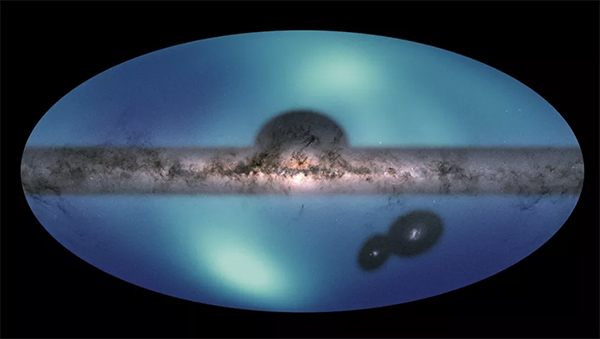
A mysterious wake of stars, stirred up by a small galaxy that is set to collide with the Milky Way, could be about to unlock the mysteries of dark matter. The trail of stars, located outside the star-flecked spiral arms of the Milky Way's central disk in a region called the galactic halo, is being carried along in the cosmic slipstream of a dwarf galaxy in orbit around the Milky Way, according to a new sky map created by astronomers. The galaxy, called the Large Magellanic Cloud (LMC), is orbiting some 130,000 light-years away from Earth and stirring up the wake of cosmic material behind it. At first glance, the LMC's trail appears to consist solely of stars, but the researchers know that the stars are just along for the ride. They are suspended inside a far larger, completely invisible presence.
Dark matter could be made of black holes from the beginning of time Live Science - April 1, 2021
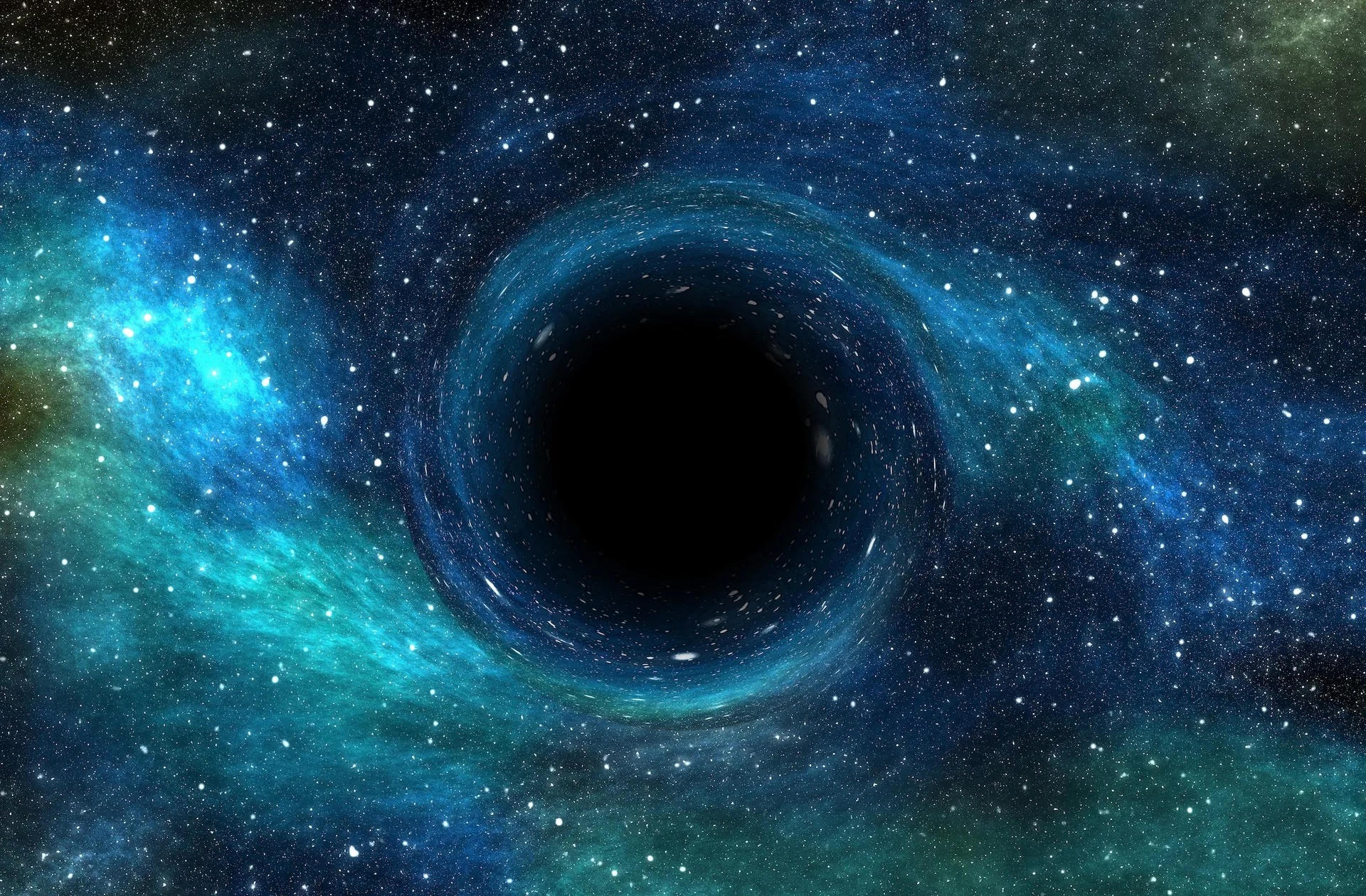
An analysis of ripples in space-time suggests the mysterious substance consists of primordial black holes.
New study suggests supermassive black holes could form from dark matter Science Daily - February 25, 2021
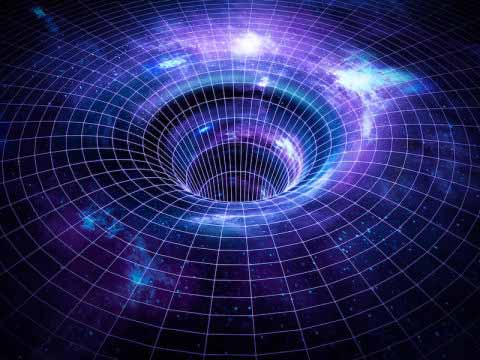
A new theoretical study has proposed a novel mechanism for the creation of supermassive black holes from dark matter. The international team find that rather than the conventional formation scenarios involving 'normal' matter, supermassive black holes could instead form directly from dark matter in high density regions in the centers of galaxies. The result has key implications for cosmology in the early Universe.
New study suggests supermassive black holes could form from dark matter PhysOrg - February 25, 2021
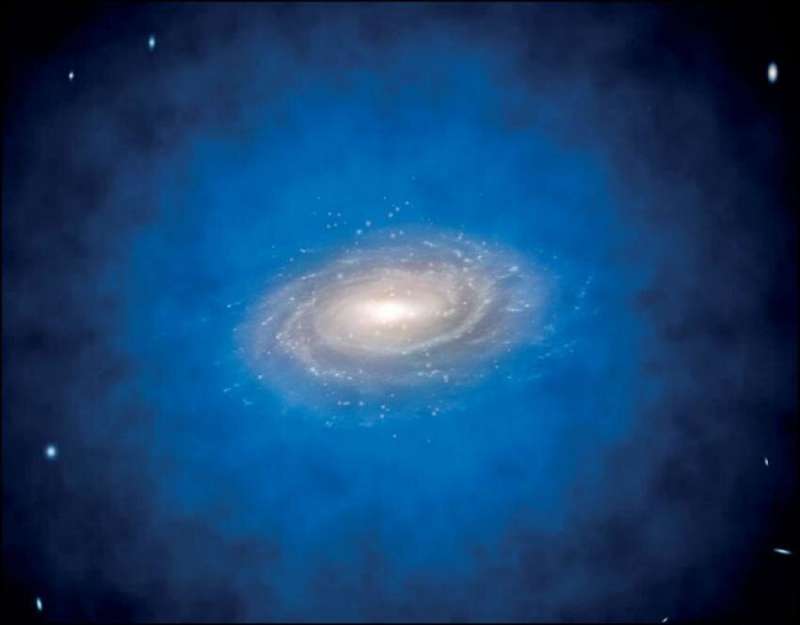
A new theoretical study has proposed a novel mechanism for the creation of supermassive black holes from dark matter. The international team find that rather than the conventional formation scenarios involving 'normal' matter, supermassive black holes could instead form directly from dark matter in high density regions in the centers of galaxies. Exactly how supermassive black holes initially formed is one of the biggest problems in the study of galaxy evolution today. Supermassive black holes have been observed as early as 800 million years after the Big Bang, and how they could grow so quickly remains unexplained.
X-ray emission from dark matter PhysOrg - February 8, 2021
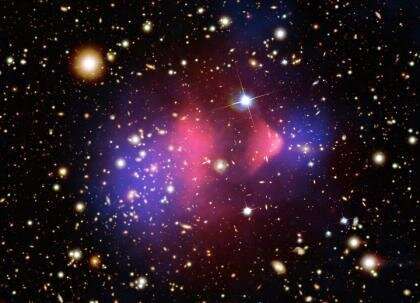
About eighty-five percent of the matter in the cosmos emits neither light nor any other known kind of radiation as far as is known, and hence is called dark matter. One of its other notable qualities is that it only interacts with other matter via gravity; it carries no electromagnetic charge, for example. Dark matter is also called "dark" because it is mysterious. It is not composed of atoms or their usual constituents (like electrons and protons) or of any other kind of known elementary particle. Because dark matter is by far the dominant component of matter in the universe, its distribution and gravity have profoundly influenced the evolution of galactic structures as well as the distribution of the cosmic microwave background radiation. Indeed, the remarkable agreement between the values of key cosmic parameters (like the universe's rate of expansion) derived independently from two completely different cosmic structures, galaxies and the microwave background, lend credence to big bang models that require an important role for dark matter.
Mystery of galaxy's missing dark matter solved Live Science - December 2, 2020
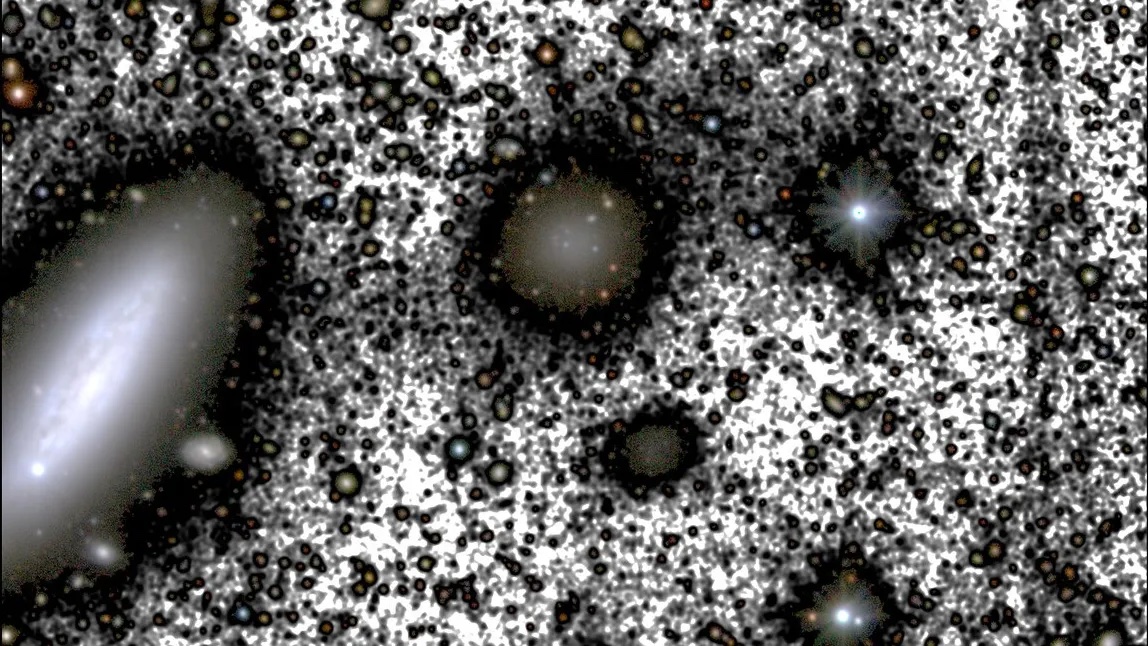
A small, mysterious galaxy 44 million light-years away is finally yielding up its secrets. Revealed last year to have a shockingly low amount of dark matter, the galaxy NGC 1052-DF4 posed a significant challenge to our models of galaxy formation. Those models yet live another day. According to new research, NGC 1052-DF4 is indeed lacking in dark matter - but only because another nearby galaxy nicked it.
Hubble detects smallest known dark matter clumps PhysOrg - January 9, 2020
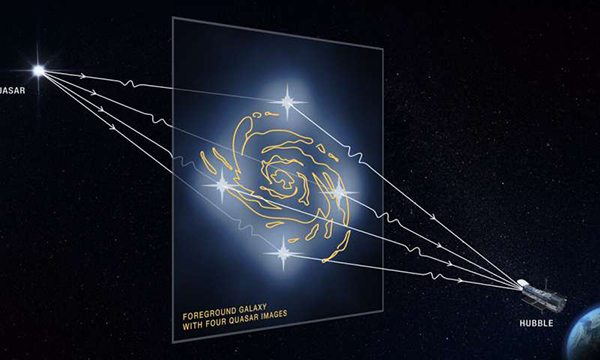
When searching for dark matter, astronomers must go on a sort of "ghost hunt." That's because dark matter is an invisible substance that cannot be seen directly. Yet it makes up the bulk of the universe's mass and forms the scaffolding upon which galaxies are built. Dark matter is the gravitational "glue" that holds galaxies as well as galaxy clusters together. Astronomers can detect its presence indirectly by measuring how its gravity affects stars and galaxies. The mysterious substance is not composed of the same stuff that makes up stars, planets, and people. That material is normal "baryonic" matter, consisting of electrons, protons, and neutrons. However, dark matter might be some sort of unknown subatomic particle that interacts weakly with normal matter.
Nineteen newly discovered dwarf galaxies seem to be missing their dark matter, and physicists aren't sure why. Live Science - December 4, 2019
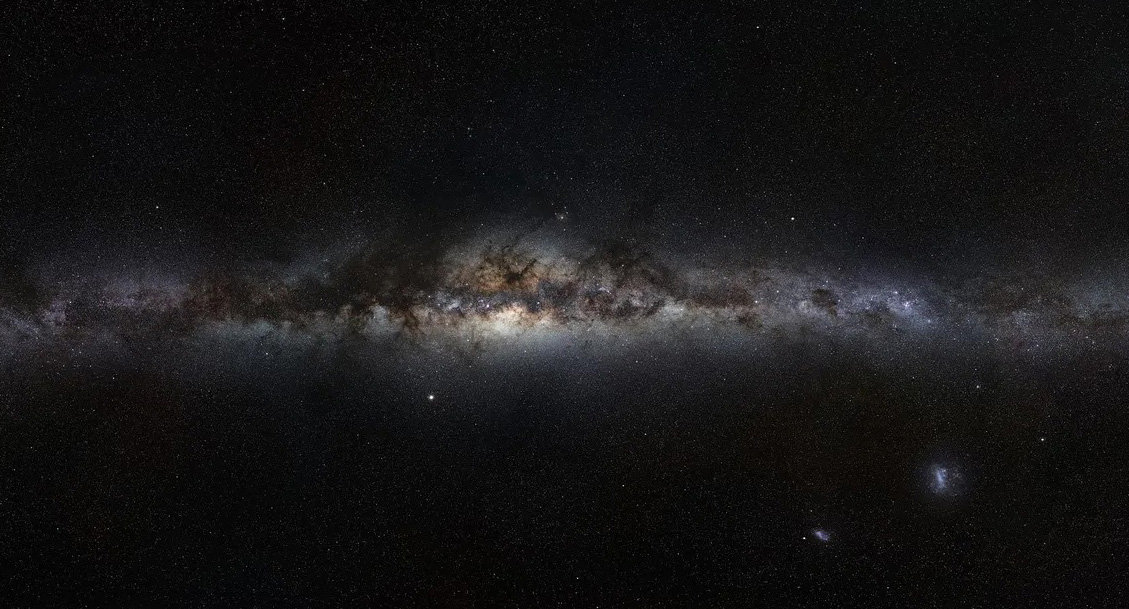
The find dramatically increases the number of galaxies that appear to be missing dark matter, the mysterious, invisible stuff that exerts gravitational pull, yet emits no light. Dark matter is thought to be a key ingredient in galaxy formation, with its gravity pulling together atoms of gas to form galaxies. We can tell dark matter is present in a galaxy because it makes the matter in that galaxy swirl faster than it would if the matter we see made up the galaxy's whole mass. This faster swirling has shown up in every galaxy that could be precisely measured. Recently, however, researchers have found that certain small galaxies, now including these 19, behave as if they're dominated by baryons - the particles that make up ordinary matter. The evidence for their unseen halos of dark matter is missing.
Physicists report a way to 'hear' dark matter PhysOrg - October 9, 2019
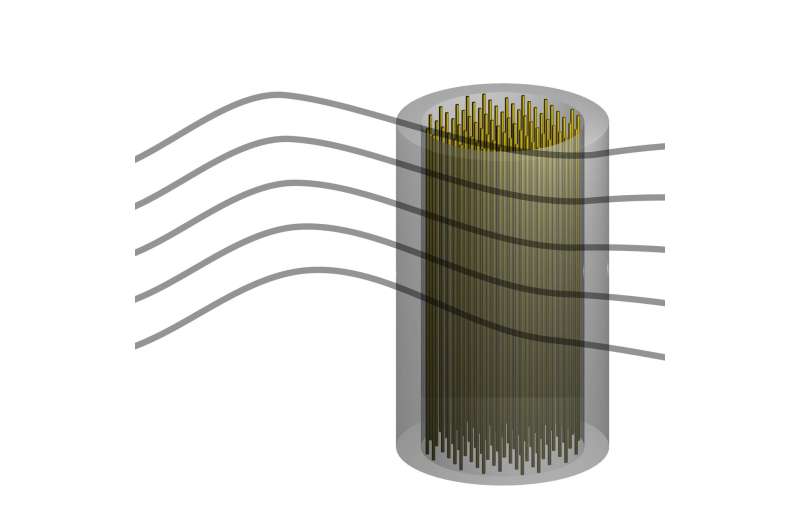
Physicists have turned to plasmas in a proposal that could revolutionize the search for the elusive dark matter. Dark matter makes up 85 percent of the matter in the universe. Originally introduced to explain why the strong force, which holds together protons and neutrons, is the same backwards and forwards in time, the so-called axion would provide a natural explanation for dark matter. Rather than discrete particles, axion dark matter would form a pervasive wave flowing throughout space.
Dark matter may be older than the Big Bang Science Daily - August 9, 2019
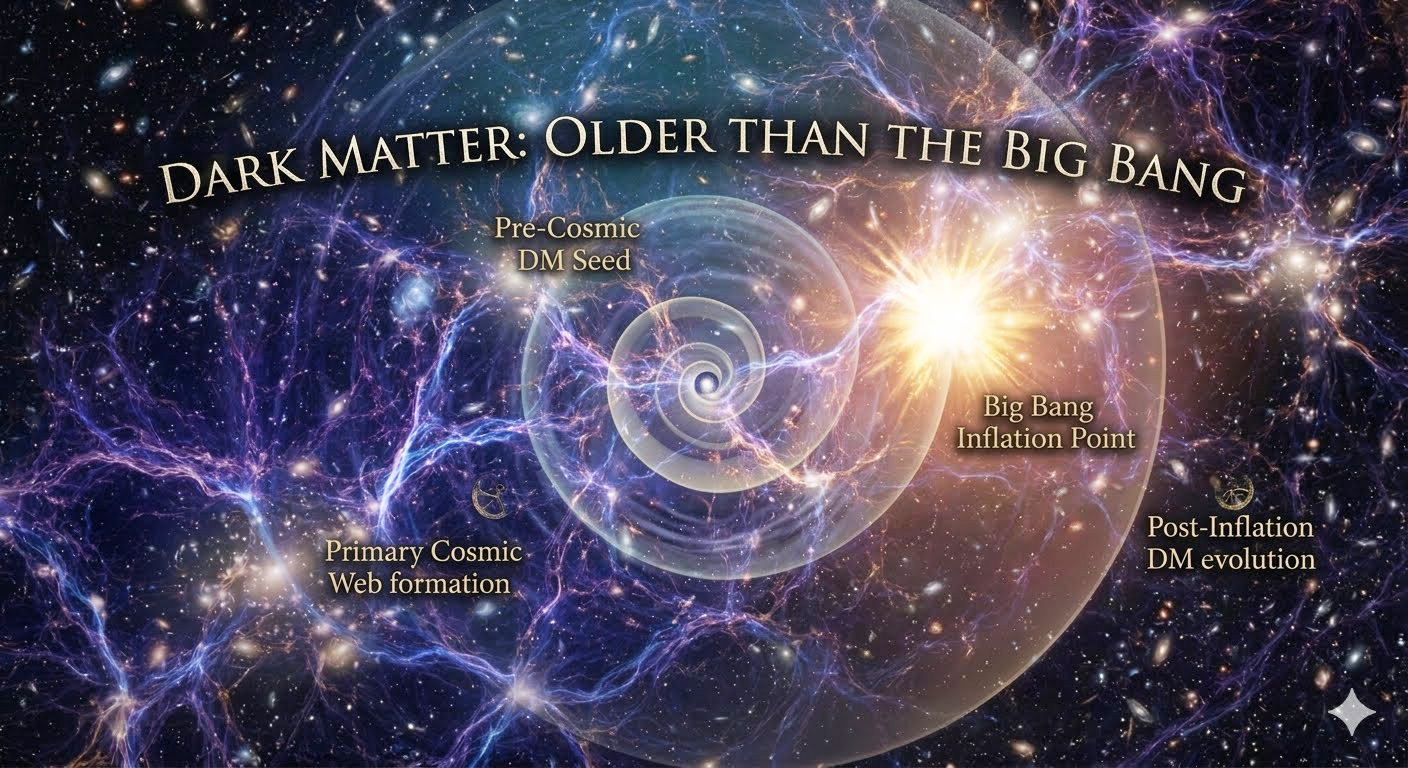
Dark matter, which researchers believe make up about 80% of the universe's mass, is one of the most elusive mysteries in modern physics. What exactly it is and how it came to be is a mystery, but a new study now suggests that dark matter may have existed before the Big Bang.
These Odd 'Quasiparticles' Could Finally Unmask Dark Matter Live Science - July 8, 2019
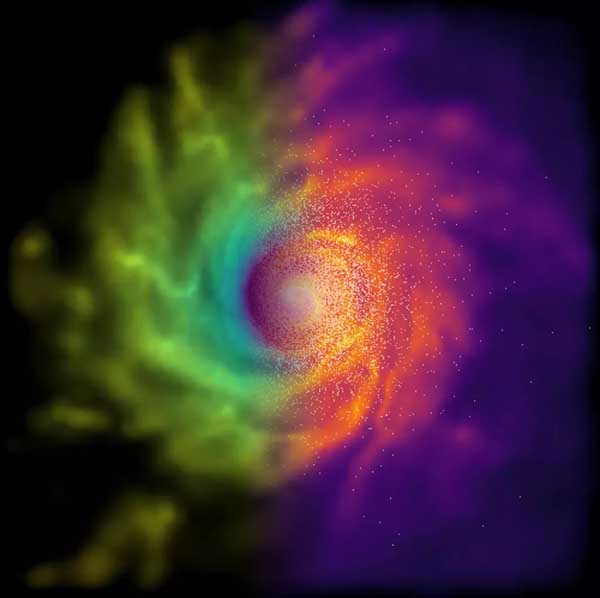
About 80% of all the matter in the cosmos is of a form completely unknown to current physics. We call it dark matter, because as best we can tell it'sÉdark. Experiments around the world are attempting to capture a stray dark matter particle in hopes of understanding it, but so far they have turned up empty. Recently, a team of theorists has proposed a new way to hunt for dark matter using weird "particles" called magnons, a name I did not just make up. These tiny ripples could lure even a fleeting, lightweight dark matter particle out of hiding, those theorists say.
Dark matter exists: Observations disprove alternate explanations PhysOrg - April 30, 2019
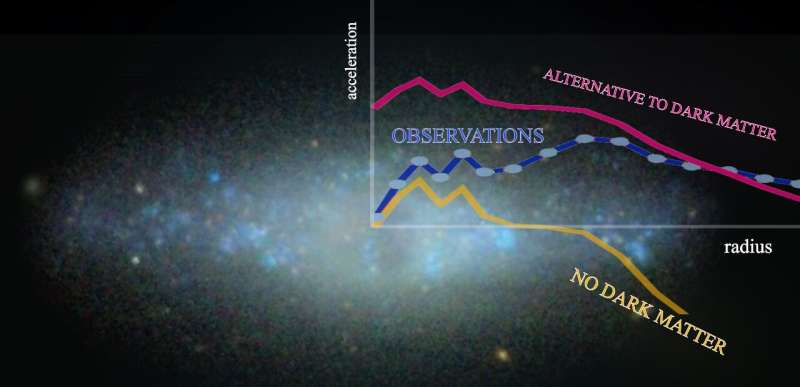
As fascinating as it is mysterious, dark matter is one of the greatest enigmas of astrophysics and cosmology. It is thought to account for 90 percent of the matter in the universe, but its existence has been demonstrated only indirectly, and has recently been called into question. New research conducted by SISSA removes the recent doubts on the presence of dark matter within galaxies, disproving the empirical relations in support of alternative theories.
Dark matter detector observes rarest event ever recorded PhysOrg - April 24, 2019
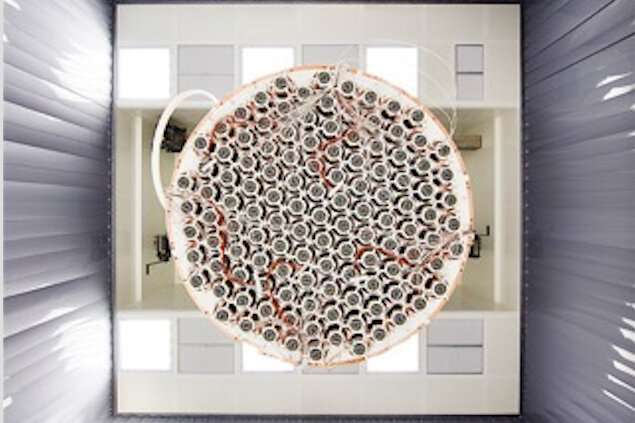
How do you observe a process that takes more than one trillion times longer than the age of the universe? The XENON Collaboration research team did it with an instrument built to find the most elusive particle in the universe - #DarkMatter. They saw this decay happen. It's the longest, slowest process that has ever been directly observed, and the dark matter detector was sensitive enough to measure it
Scientists Find the 'Missing' Dark Matter from the Early Universe Live Science - January 2, 2019
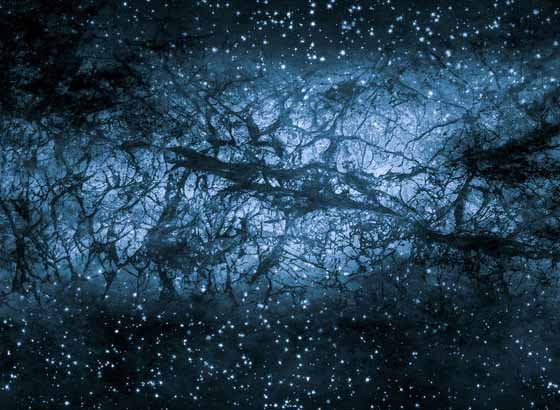
Dark matter, it seems, has been clinging to galaxies for a very long time. Most galaxies that existed 10 billion years ago had about as much dark matter as galaxies do today, contradicting earlier studies that suggested less dark matter lurked around galaxies in the early universe.
Faint glow within galaxy clusters illuminates dark matter PhysOrg - December 20, 2018
A new look at Hubble images of galaxies could be a step toward illuminating the elusive nature of dark matter, the unobservable material that makes up the majority of the universe
Physicists Keep Trying - and Failing - to Find Dark Matter in Dark Places Space.com - December 11, 2018
Scientists started watching crystals sparkle in the 1990s. Those crystals sparkled more in the summer, which researchers took as evidence of dark matter. But those scientists were probably wrong, new research suggests.
Scientists Pinpoint Where Dark Matter Is Hiding in the Universe Space.com - October 2, 2018
There's a huge amount of matter in the universe that we can't directly see. But scientists can tell it's there. They call it dark matter.
They know it's there because its gravity tugs on the stars and galaxies around it, altering their movement. Dark matter also tugs on light as it passes, bending its path, a phenomenon called gravitational lensing. And now, by studying where that lensing appears in the sky, an international team of scientists have released a detailed, 3D map of dark matter. The biggest advantage of the cosmic map, which was published Monday (Sept. 24) in the preprint journal arXiv, is that it will help scientists figure out precisely how and where dark energy - an unseen energy that suffuses the universe, accelerating its expansion - operates in space, researchers said in a statement
Is dark matter made of primordial black holes? PhysOrg - April 20, 2018
Astronomers studying the motions of galaxies and the character of the cosmic microwave background radiation came to realize in the last century that most of the matter in the universe was not visible. About 84 percent of the matter in the cosmos is dark matter, much of it located in halos around galaxies. It was dubbed dark matter because it does not emit light, but it is also mysterious: it is not composed of atoms or their usual constituents like electrons and protons.
Is Dark Matter Made Up of Mini Black Holes from the Big Bang? Live Science - April 6, 2018
Dark matter, the mysterious extra mass in the universe that emits no light yet exerts a gravitational pull, may actually be made up of primordial black holes that originated with the Big Bang. And these mini black holes can thank the Higgs boson for their birth - at least according to a new theory. This theory posits that these primeval black holes were created from instabilities in the field that gives rise to the Higgs Boson, the mysterious "God" particle discovered at the Large Hadron Collider (LHC).
Unexpected interaction between dark matter and ordinary matter in mini-spiral galaxies PhysOrg - December 15, 2016
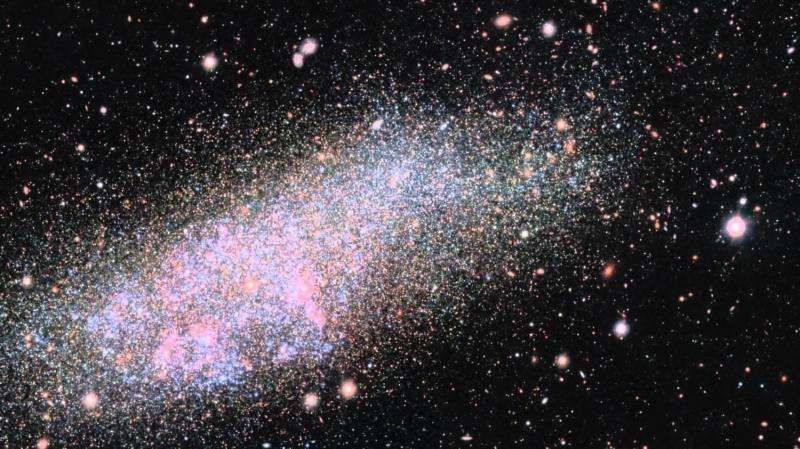
Statistical analysis of mini-spiral galaxies shows an unexpected interaction between dark matter and ordinary matter. According to the SISSA study where the relationship is obvious and cannot be explained in a trivial way within the context of the Standard Model, these objects may serve as "portals" to a completely new form of Physics which can explain phenomena like matter and dark energy. They resemble a spiral galaxy like ours, only ten thousand times smaller.
Gravitational waves spotted for a second time: Scientists make 'spectacular' new detection of ripples in space-time Daily Mail - June 15, 2016
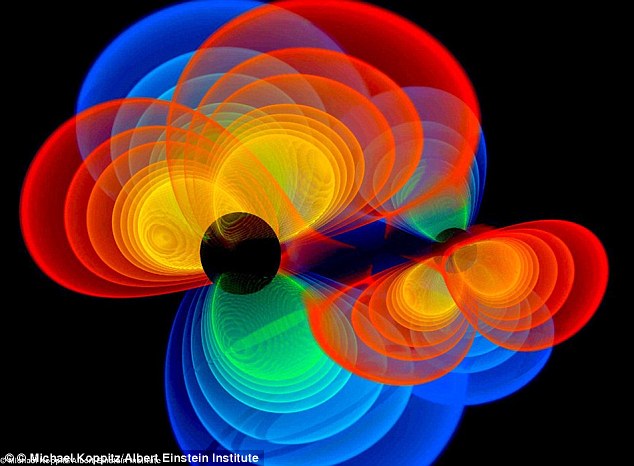
The detection was made by the Ligo (Laser Interferometer Gravitational-Wave Observatory) Scientific Collaboration (LSC) and Virgo collaboration on 26 December last year, just three months after the first gravitational wave was detected by the same group. Known as the 'Boxing Day event', the newly detected gravitational wave came about from the merging of two black holes over a billion years ago. The gravitational waves of the Boxing Day signal were produced by a pair of black holes, of around 14 and 8 solar masses, that travelled for over a billion years before reaching Earth. 'Einstein gave us a Christmas present!' said a spokesman from the American Astronomical Society.
Potential signs of 'interacting' dark matter suggest it is not completely dark after all PhysOrg - April 14, 2015

Astronomers believe they might have observed the first potential signs of dark matter interacting with a force other than gravity. An international team of scientists, led by researchers at Durham University, UK, made the discovery using the Hubble Space Telescope and the European Southern Observatory's Very Large Telescope to view the simultaneous collision of four distant galaxies at the centre of a galaxy cluster 1.3 billion light years away from Earth.
Telecommunications expert suggests Earth may have dark matter disc PhysOrg - January 3, 2014

Dark matter is of course the mysterious stuff that physicists have come to believe exists all throughout the universe. We can't see it, but researchers have managed to sense its presence in a variety of ways (such as measuring its gravitational impact on stars, other planets, etc.). In so doing, most in the field have come to believe that it makes up approximately 80 percent of all matter. Unfortunately (mainly because it doesn't appear to absorb or emit light or electromagnetic radiation) none of the studies done so far have been able to prove that dark matter truly exists thus, the search goes on for some new kind of method to prove that dark matter isn't just a theory, or alternatively, for some other explanation of what has been observed.