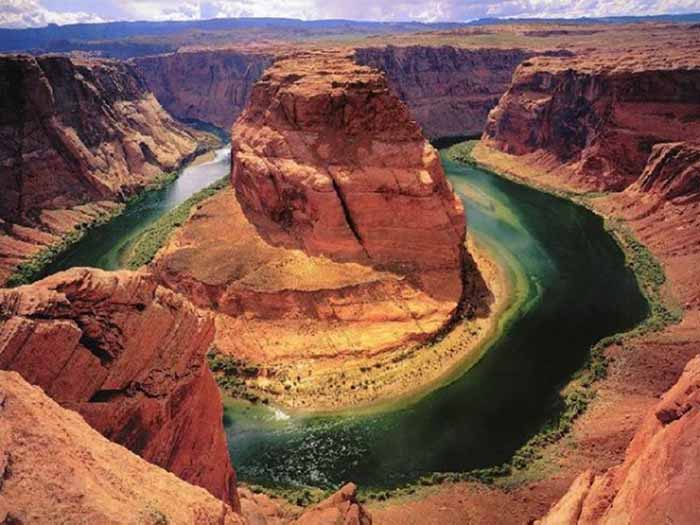
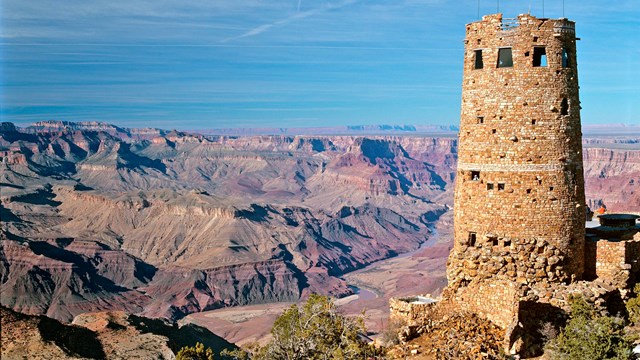
The Grand Canyon is the second largest canyon in the world - The Tsangpo Canyon in Tibet is actually deeper and longer than the Grand Canyon.
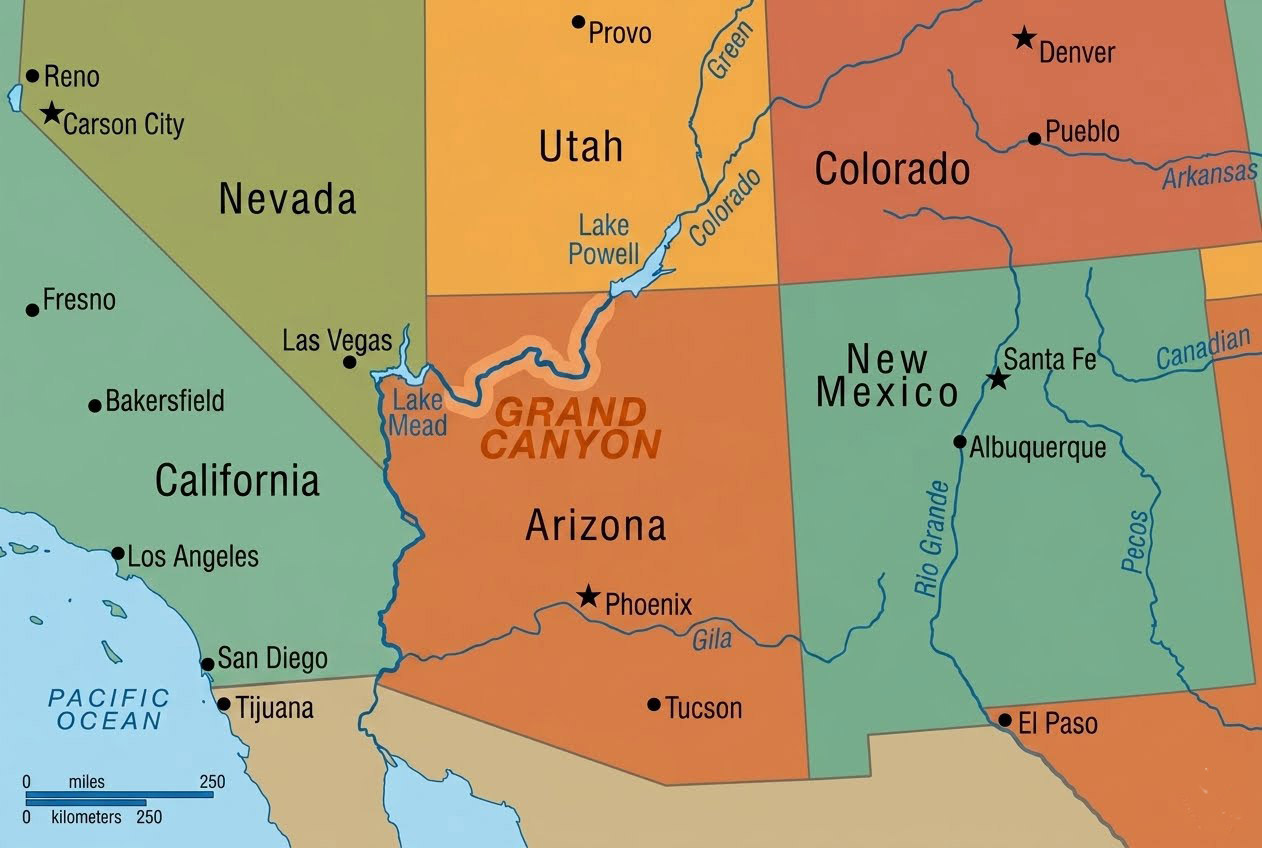
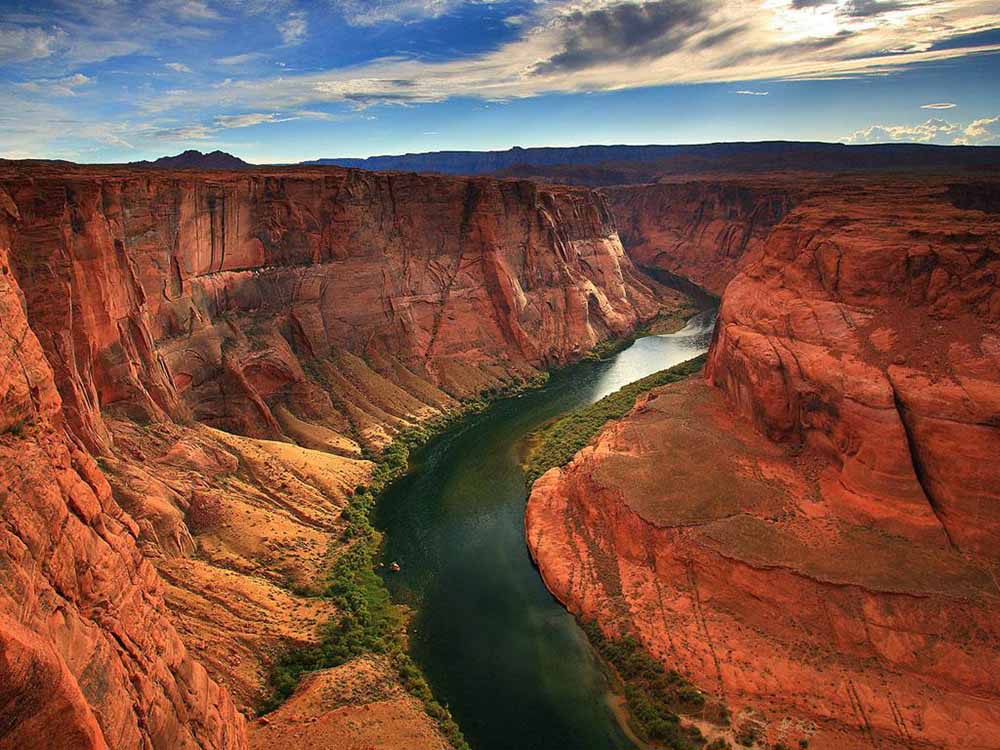
The Grand Canyon is a steep-sided canyon carved by the Colorado River in the United States in the state of Arizona. It is contained within and managed by Grand Canyon National Park, the Hualapai Tribal Nation, and the Havasupai Tribe. President Theodore Roosevelt was a major proponent of preservation of the Grand Canyon area, and visited it on numerous occasions to hunt and enjoy the scenery. It is considered one of the Seven Natural Wonders of the World.
The Grand Canyon is 277 miles (446 km) long, up to 18 miles (29 km) wide and attains a depth of over a mile (6,000 feet / 1,800 metres) Nearly two billion years of the Earth's geological history has been exposed as the Colorado River and its tributaries cut their channels through layer after layer of rock while the Colorado Plateau was uplifted. While the specific geologic processes and timing that formed the Grand Canyon are the subject of debate by geologists, recent evidence suggests the Colorado River established its course through the canyon at least 17 million years ago. Since that time, the Colorado River continued to erode and form the canyon to its present-day configuration.
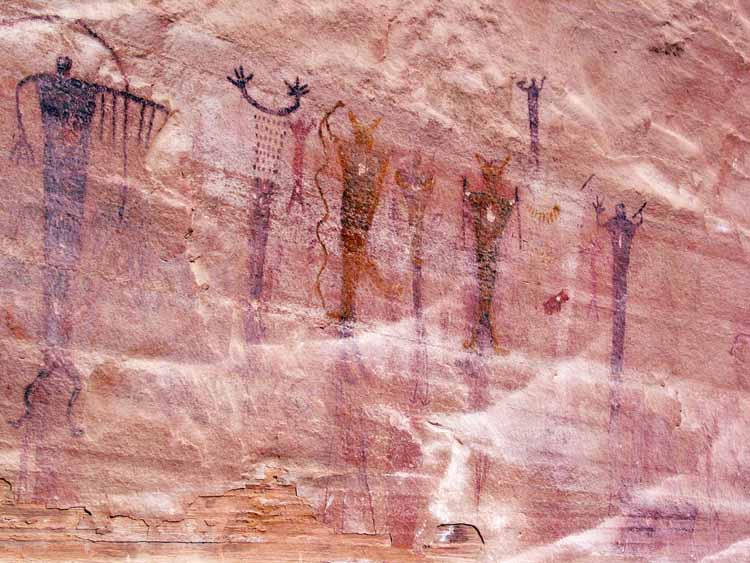
For thousands of years, the area has been continuously inhabited by Native Americans who built settlements within the canyon and its many caves. The Pueblo people considered the Grand Canyon ("Ongtupqa" in Hopi language) a holy site and made pilgrimages to it.
The first European known to have viewed the Grand Canyon was Garcia Lopez de Cardenas from Spain, who arrived in 1540.
The Ancient Pueblo People were a Native American culture centered on the present-day Four Corners area of the United States. The Ancient Puebloans were the first people to live in the Grand Canyon area. The cultural group has often been referred to in archaeology as the Anasazi, although the term is not preferred by the modern Puebloan peoples. The word Anasazi People" is Navajo for "Ancient Ones" or "Ancient Enemies". Archaeologists still debate when this distinct culture emerged. The current consensus, based on terminology defined by the Pecos Classification, suggests their emergence around 1200 BCE, during the archaeologically designated Basketmaker II Era. Beginning with the earliest explorations and excavations, researchers have believed that the Ancient Puebloans are ancestors of the modern Pueblo peoples.
In addition to the Ancestral Puebloans, a number of distinct cultures have inhabited the Grand Canyon area. The Cohonina lived to the west of the Grand Canyon, between 500 and 1200 AD. The Cohonina were ancestors of the Yuman, Havasupai, and Walapai peoples who inhabit the area today.
The Sinagua were a cultural group occupying an area to the southeast of the Grand Canyon, between the Little Colorado River and the Salt River, between approximately 500 AD and 1425 AD. The Sinagua may have been ancestors of several Hopi clans.
The name Sinagua was given to this culture by archaeologist Harold Colton, founder of the Museum of Northern Arizona. Sinagua is derived from the Spanish words sin meaning "without" and agua meaning "water", referring to the name originally given by Spanish explorers to the San Francisco Peaks near Flagstaff, Arizona, the "Sierra Sin Agua". The name reflects the surprise the Spaniards felt that such large mountains did not have perennial rivers flowing from them as is common in Spain.
Colton also distinguished between two different Sinagua cultures. The Northern Sinagua were clustered around the Flagstaff area, with Walnut Canyon National Monument, Wupatki National Monument, and Elden Pueblo the best-known publicly accessible sites. The Southern Sinagua were found throughout the Verde Valley of Central Arizona; Montezuma's Castle, Montezuma Well, Tuzigoot National Monument, Palatki Archaeological Site and the V-Bar-V Petroglyph Site are notable Southern Sinagua localities open to the public.
The last known record of Sinagua occupation for any sites are for Montezuma Castle National Monument around 1425 AD. The reasons for abandonment of their habitation sites are not yet known, but warfare, drought, and clashes with the newly arrived Yavapai people have been suggested. Several Hopi clans trace their roots to immigrants from the Sinagua culture. The Hopis believe their ancestors left the Verde Valley for religious reasons
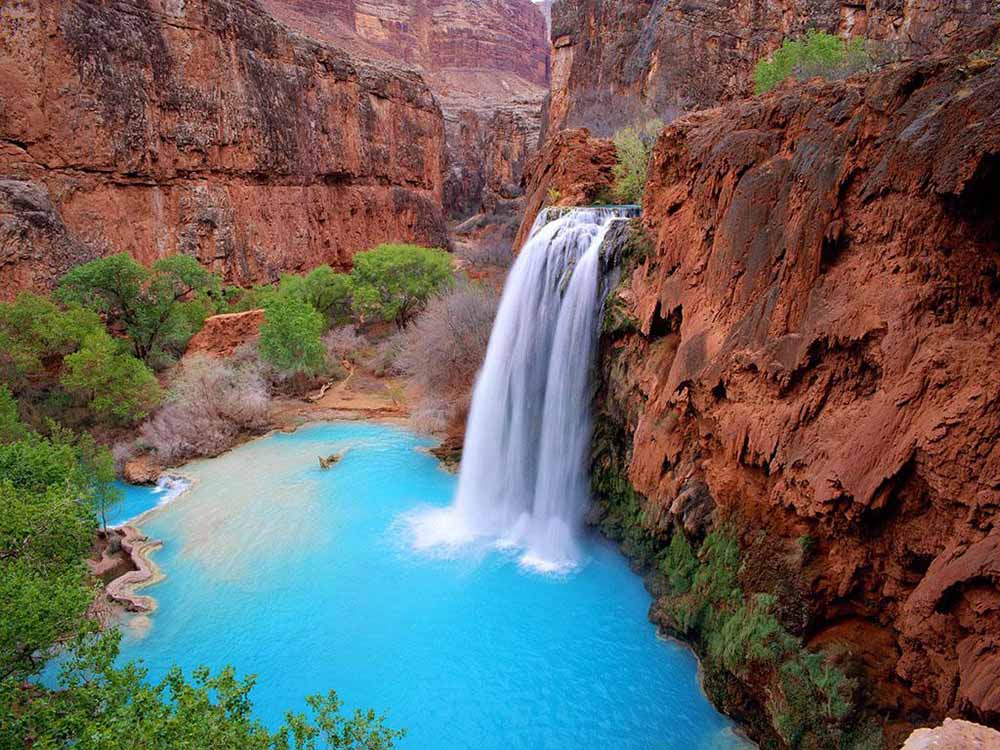
By the time of the arrival of Europeans in the 16th century, newer cultures had evolved. The Hualapai inhabit a 100-mile (160 km) stretch along the pine-clad southern side of the Grand Canyon. The Havasupai have been living in the area near Cataract Canyon since 1200 AD, occupying an area the size of Delaware. The Southern Paiutes live in what is now southern Utah and northern Arizona. The Navajo or Dine, live in a wide area stretching from the San Francisco Peaks eastwards towards the Four Corners. Archaeological and linguistic evidence suggests the Navajo descended from the Athabaskan people near Great Slave Lake, Canada, who migrated after 1000 AD.
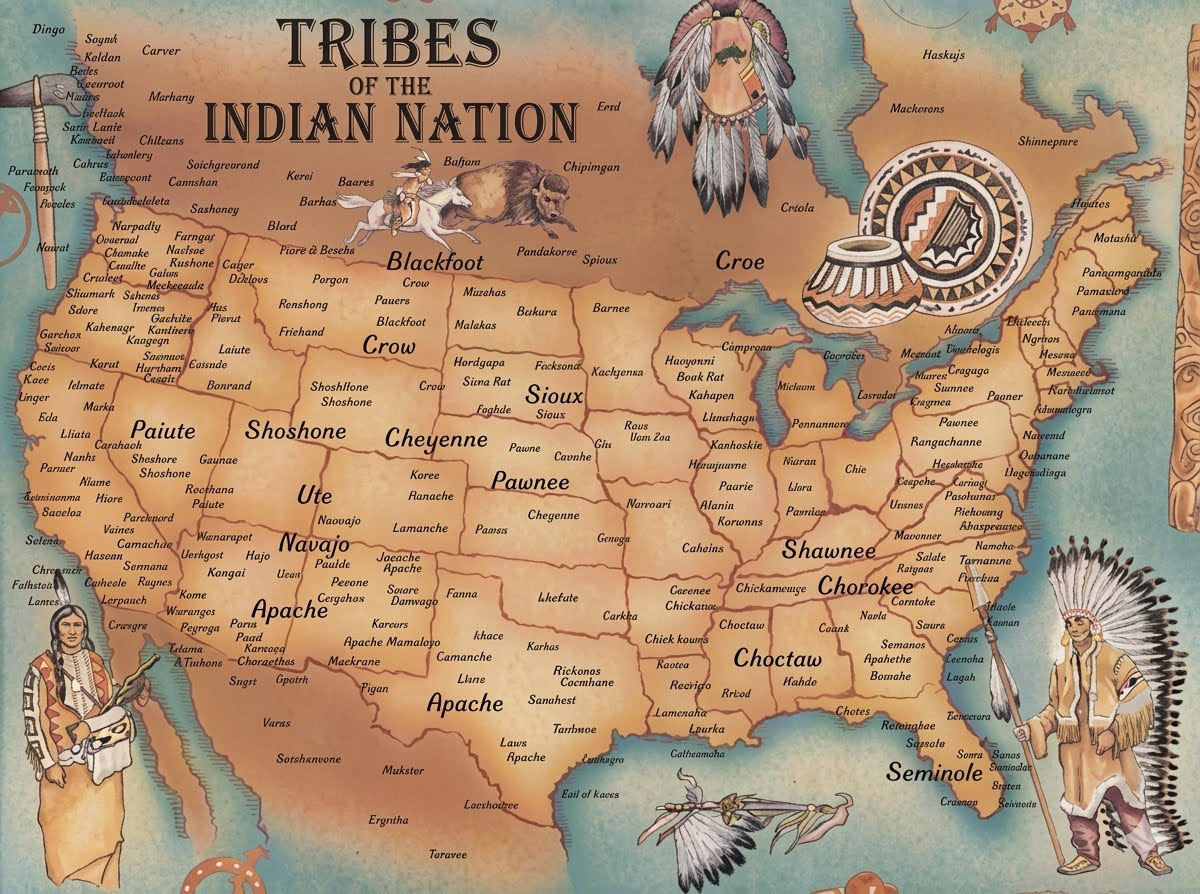
Native American Files
In September 1540, under orders from the conquistador Francisco Vazquez de Coronado to search for the fabled Seven Cities of Cibola, Captain Garcia Lopez de Cardenas, along with Hopi guides and a small group of Spanish soldiers, traveled to the South Rim of the Grand Canyon between Desert View and Moran Point.
Pablo de Melgrossa, Juan Galeras, and a third soldier descended some one third of the way into the Canyon until they were forced to return because of lack of water. In their report, they noted that some of the rocks in the Canyon were "bigger than the great tower of Seville." It is speculated that their Hopi guides must have been reluctant to lead them to the river, since they must have known routes to the canyon floor. Afterwards, no Europeans visited the Canyon for over two hundred years.
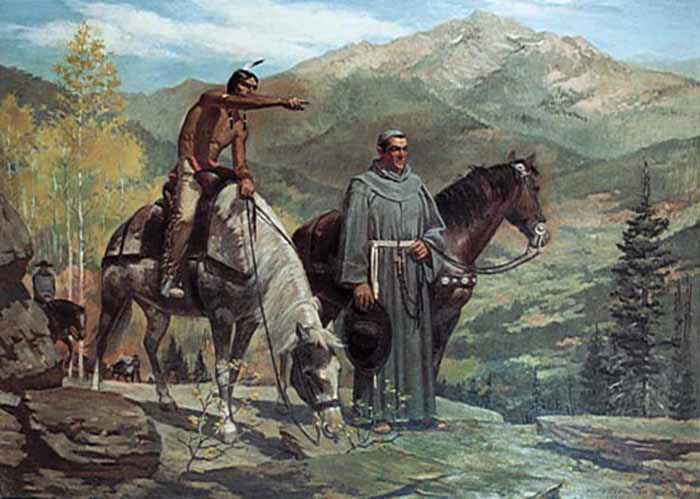
Fathers Francisco Atanasio Dominguez and Silvestre Velez de Escalante were two Spanish priests who, with a group of Spanish soldiers, explored southern Utah and traveled along the North Rim of the Canyon in Glen and Marble Canyons in search of a route from Santa Fe to California in 1776. They eventually found a crossing, formerly known as the "Crossing of the Fathers," that today lies under Lake Powell.
Also in 1776, Fray Francisco Garces, a Franciscan missionary, spent a week near Havasupai, unsuccessfully attempting to convert a band of Native Americans to Christianity. He described the Canyon as "profound".
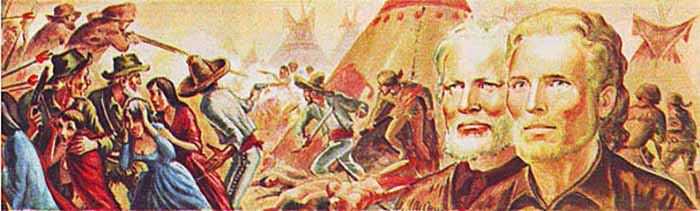
James Ohio Pattie, along with a group of American trappers and mountain men, may have been the next European to reach the Canyon in 1826.
Jacob Hamblin, a Mormon missionary, was sent by Brigham Young in the 1850s to locate easy river crossing sites in the Canyon. Building good relations with local Native Americans Hualapai Nation and white settlers, he discovered the Crossing of the Fathers, Lee's Ferry in 1858 and Pierce Ferry (later operated by, and named for, Harrison Pierce) - the latter two the only two sites suitable for ferry operation. He also acted as an advisor to John Wesley Powell before his second expedition to the Grand Canyon, serving as a diplomat between Powell and the local native tribes to ensure the safety of his party.
In 1857, Edward Fitzgerald Beale was superintendent of an expedition to survey a wagon road along the 35th parallel from Fort Defiance, Arizona to the Colorado River. He led a small party of men in search of water on the Coconino Plateau near the Canyon's South Rim. On September 19, near present day National Canyon, they came upon what May Humphreys Stacey described in his journal as " ... a wonderful canyon four thousand feet deep. Everyone (in the party) admitted that he never before saw anything to match or equal this astonishing natural curiosity."
Also in 1857, the U.S. War Department asked Lieutenant Joseph Ives to lead an expedition to assess the feasibility of an up-river navigation from the Gulf of California. Also in a stern wheeler steamboat "Explorer", after two months and 350 miles (560 km) of difficult navigation, his party reached Black Canyon some two months after George Johnson. The "Explorer" struck a rock and was abandoned. Ives led his party east into the Canyon - they may have been the first Europeans to travel the Diamond Creek drainage and traveled eastwards along the South Rim. In his "Colorado River of the West" report to the Senate in 1861 he states that "One or two trappers profess to have seen the canon."
According to the San Francisco Herald, in a series of articles run in 1853, they give this honor to Captain Joseph R. Walker, who in January 1851 with his nephew James T. Walker and six men, traveled up the Colorado River to a point where it joined the Virgin River and continued east into Arizona, traveling along the Grand Canyon and making short exploratory side trips along the way. Walker said he wanted to visit the Moqui Indians, as the Hopi were then called by whites. He had met these people briefly in previous years, thought them exceptionally interesting and wanted to become better acquainted. The Herald reporter took it from there, writing: "We believe that Capt. Joe Walker is the only white man in this country that has ever visited this strange people."
In 1858, John Strong Newberry became probably the first geologist to visit the Grand Canyon.
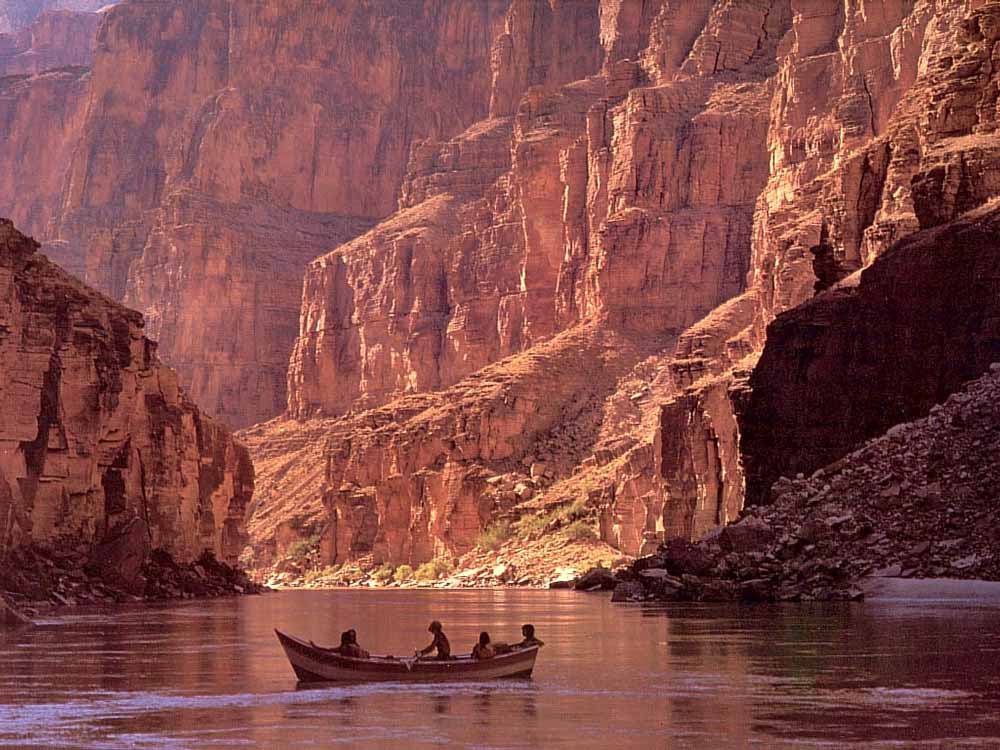
In 1869, Major John Wesley Powell led the first expedition down the Canyon. Powell set out to explore the Colorado River and the Grand Canyon. Gathering nine men, four boats and food for 10 months, he set out from Green River, Wyoming on May 24. Passing through dangerous rapids, the group passed down the Green River to its confluence with the Colorado River, near present-day Moab, Utah and completed the journey with many hardships through the Grand Canyon on August 13, 1869.
In 1871 Powell first used the term "Grand Canyon"; previously it had been called the "Big Canyon".
In 1889, Frank M. Brown wanted to build a railroad along the Colorado River to carry coal. He, his chief engineer Robert Brewster Stanton, and 14 others started to explore the Grand Canyon in poorly-designed cedar wood boats, with no life preservers. Brown drowned in an accident near Marble Canyon: Stanton made new boats and proceeded to explore the Colorado all of the way to the Gulf of California.
In 1908, the Grand Canyon became an official national monument and became a national park in 1919.
U.S. President Theodore Roosevelt visited the Grand Canyon in 1903. An avid outdoorsman and staunch conservationist, he established the Grand Canyon Game Preserve on November 28, 1906. Livestock grazing was reduced, but predators such as mountain lions, eagles, and wolves were eradicated. Roosevelt added adjacent national forest lands and re-designated the preserve a U.S. National Monument on January 11, 1908. Opponents such as land and mining claim holders blocked efforts to reclassify the monument as a U.S. National Park for 11 years. Grand Canyon National Park was finally established as the 17th U.S. National Park by an Act of Congress signed into law by President Woodrow Wilson on February 26, 1919.
The federal government administrators who manage park resources face many challenges. These include issues related to the recent reintroduction into the wild of the highly endangered California condor, air tour overflight noise levels, water rights disputes with various tribal reservations that border the park, and forest fire management.
The Grand Canyon National Park superintendent is Steve Martin. Martin was named superintendent on February 5, 2007, to replace retiring superintendent Joe Alston. Martin was previously the National Park Service Deputy Director and superintendent of several other national parks, including Denali and Grand Teton. Federal officials started a flood in the Grand Canyon in hopes of restoring its ecosystem on March 5, 2008. The canyon's ecosystem was permanently changed after the construction of the Glen Canyon Dam in 1963.
Between 2003 and 2011, 2,215 mining claims have been requested that are adjacent to the Canyon, including claims for uranium mines. Mining has been suspended since 2009, when U.S. Interior Secretary Ken Salazar temporarily withdrew 1 million acres (4,000 km2) from the permitting process, pending assessment of the environmental impact of mining. Critics of the mines are concerned that, once mined, the uranium will leach into the water of the Colorado River and contaminate the water supply for up to 18 million people.
2026 - Tourism at the Grand Canyon National Park is experiencing a major shift as compounding climate factors and severe natural disasters disrupt travel and alter the visitor experience. Traditionally a crown jewel of American tourism drawing over four million annual visitors, the park faces a challenging reality marked by extreme weather volatility, infrastructure failures, and shifting seasonal travel patterns.
Devastating Flash Flooding and Infrastructure Failure: 2026 Grand Canyon Flood Wikipedia
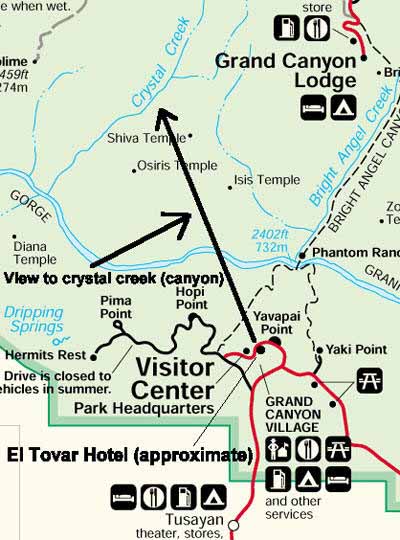
In late August 2026, intense monsoon rains triggered a deadly flash flood through Bright Angel Canyon and the Phantom Ranch area, killing two people and necessitating the helicopter and foot rescue of roughly 80 stranded hikers. This disaster was amplified by historical droughts and the burn scars from recent wildfires (such as the 2025 Dragon Bravo fire), which prevented the soil from absorbing moisture and created heavy, debris-laden torrents.
The August 2026 flood severely fractured the Transcanyon Waterline - the sole 12.5-mile pipeline supplying freshwater from the North Rim to tourist hubs on the South Rim. The resulting operational failure forced the National Park Service to implement emergency Stage 4 water restrictions and completely halt overnight guest accommodations at iconic park lodges like El Tovar, Bright Angel Lodge, and Maswik Lodge.
Climate change has caused heat waves to happen repeatedly across multiple months each summer rather than during a single brief window. Park rangers now issue recurrent heat advisories to protect tourists against life-threatening heat-related illnesses, as temperatures deep inside the canyon frequently soar to dangerous levels.
Due to intense summer heat and unpredictable monsoon patterns, summer tourism has seen a noticeable decline. Travelers are increasingly pivoting to the "shoulder seasons" of spring and autumn to capture more comfortable, safe weather windows.
Escalating wildfire threats in the upper watersheds have caused significant closures. Utility providers have also begun proactively shutting off electrical grids during periods of high fire risk to safeguard the regional landscape, occasionally catching surrounding communities and tour operators off guard

Wildfire destroys a historic Grand Canyon lodge and other stores and structures (Video) CNN - July 15, 2025
A wildfire that tore through a historic Grand Canyon lodge and raged out of control Monday had been allowed to burn for days before erupting over the weekend, raising scrutiny over the National Park Service’s decision to not aggressively attack the fire right away. The wildfire along the canyon’s more isolated North Rim where most visitors don’t venture was burning quickly with no containment, fire officials said. No injuries had been reported, but more than 70 structures were lost, including a visitors center and several cabins. At first, the fire didn’t raise alarms after igniting from a lightning strike on July 4. Four days later, the Park Service said the fire was being allowed to burn to benefit the land and fire crews were keeping close watch.