
Friday May 8, 2026
Humans strive to live in a world that makes sense and offers positive emotional value - a goal that often feels unattainable because of the dualistic, almost bipolar nature of reality itself. Joy and suffering, order and chaos, creation and destruction seem forever intertwined. As a result, humanity constantly searches for meaning within the contradictions.
At the same time, human consciousness appears to be evolving alongside technology, as though both are moving together according to some larger pre-programmed design. From the discovery of fire to artificial intelligence, every technological leap has transformed not only civilization, but also the way humans perceive themselves and the universe around them. The boundary between mind and machine grows thinner with each generation.
Some believe this evolution is random. Others see patterns - as if humanity is participating in a vast experiment in awareness, where technology acts as both a mirror and an accelerant for consciousness itself. In this view, reality becomes less about survival alone and more about awakening - a process in which humans gradually recognize their interconnectedness with each other, with the planet, and perhaps with forms of intelligence not yet fully understood.
Whether driven by destiny, simulation, biology, or collective imagination, one thing remains clear: humanity continues searching for purpose in a world suspended between fear and possibility, while technology reshapes the very definition of what it means to be human.

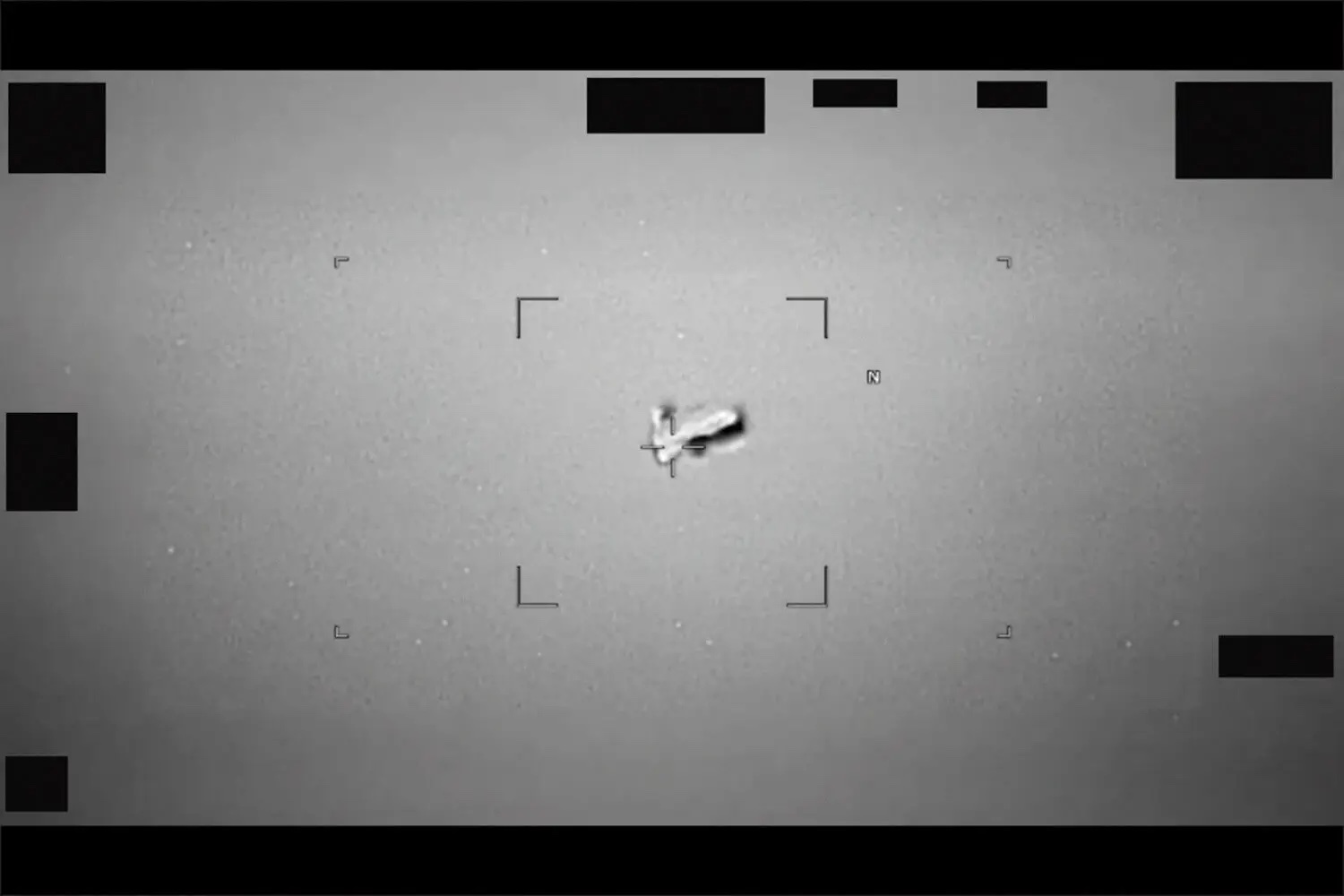
The Catholic Church on UFOs and alien life. nbsp; EWTN News - May 12, 2026
New UFO files offer no answers but something is happening in the skies The Conversation - May 13, 2026
Realty segues to "Alien Agendas" and the endless cycle of disclosure, speculation, denial, and renewed fascination surrounding UFOs and UAPs. The latest release of decades-old files by the Pentagon once again floods the public consciousness with blurry lights in the sky, unexplained maneuvers, radar anomalies, and objects that seem to mirror the archetypes humanity has carried for generations: visitors from elsewhere watching from the edges of perception.
Each new 'document dump' promises revelation, yet rarely delivers the answers humanity has been searching for since the beginning of time - or since the beginning of the simulation, depending on your perspective. Who are we? Why are we here? Is consciousness evolving toward something greater? What exactly is the destiny of the Human Experiment? Governments release information in fragments, enough to sustain intrigue but never enough to resolve the mystery.
We look toward extraterrestrials to help define the algorithm of human existence - hoping they possess answers about consciousness, creation, time, and the nature of reality itself. Yet I often question whether they actually have the answers we seek, or whether we have simply projected humanity's need for meaning onto the unknown.
Perhaps advanced civilizations, if they exist, struggle with the same existential questions we do. Who created them? What is the purpose of consciousness? Is existence random, engineered, cyclical, or simulated?
Technological advancement does not necessarily equal spiritual or philosophical enlightenment. A civilization capable of traversing galaxies may still be searching for the same truths humanity has pursued through religion, science, myth, and metaphysics since the dawn of awareness. In that sense, the UFO phenomenon may reveal less about extraterrestrials and more about ourselves.
It exposes humanity's longing for connection, guidance, and confirmation that we are part of something larger than the isolated drama of Earth. We search the skies hoping someone else has decoded the program - someone who can finally explain why reality feels both intelligently designed and fundamentally unstable at the same time.
Perhaps there is no final answer waiting to be handed to us. Maybe consciousness evolves through the search itself - through questioning, imagining, doubting, and expanding perception. The "Human Experiment" may not be about arriving at absolute truth, but about the experience of seeking it while navigating a reality built on paradox, emotion, memory, and time.
UFO dissemination of information always seems to circle back to Barack Obama, who helped move the subject from the fringe into mainstream conversation by openly acknowledging that there are objects in the sky the government cannot fully explain.
When a former president casually discusses unexplained aerial phenomena on television, it changes the cultural dynamic. Suddenly the topic no longer belongs solely to conspiracy theorists, science fiction fans, or late-night radio shows. It becomes part of the official narrative.
The last time Barack Obama spoke publicly about UFOs/UAPs earlier this year, the comments once again reignited speculation about what governments actually know versus what they are willing to reveal. Soon afterward, Trump stated that he too planned to release new, never-before-seen files and videos, continuing the modern pattern of disclosure through media moments and carefully staged revelations.
Trump has relished portraying himself as the president willing to spill the secrets - the outsider figure challenging hidden systems while hinting that extraordinary information has long been kept from the public. Whether a diversion from the Epstein Files, political theater, strategic distraction, controlled disclosure, or genuine curiosity, the result is the same - humanity once again becomes captivated by the possibility that world leaders know more about the phenomenon than they admit.
Despite decades of rumors, leaks, hearings, whistleblowers, and declassified footage, the core mystery remains untouched. The public receives fragments - enough to sustain fascination, never enough to produce resolution. This perpetual state of partial disclosure almost feels engineered to keep humanity psychologically suspended between skepticism and belief.
The UFO phenomenon has evolved into more than a question about extraterrestrials. It now intersects with artificial intelligence, surveillance, quantum theory, simulation theory, military technology, and the evolution of human consciousness itself. Every new release of information acts like another breadcrumb in a maze that may ultimately lead humanity back to the oldest question of all: not whether aliens exist, but why humans need them to.
On May 6, 2026, Stephen Colbert interviewed Barak Obama at the Obama Presidential Center in Chicago. They discussed many topics including UFOs and government coverups. Here's the video.
In conclusion, we all know - or perhaps have been led to believe that human-extraterrestrial contact has been occurring for at least the past hundred years, and possibly since ancient times. Across generations, thousands of people around the world have reported witnessing unexplained spacecraft, anomalous lights, and encounters that challenge conventional explanations. That number appears to be increasing as humanity moves toward what feels like some form of closure, revelation, or transition point in the Human Experiment.
There are those, myself included, who have been taken - experiences so vivid and transformative that doubt no longer exists about a connection to entities from somewhere beyond the limits of ordinary perception. Whether these beings originate from another star system, dimension, timeline, reality, or layer of consciousness within the simulation itself - remains unknown.
It's fun to speculate and compare the knowledge we have been programmed with against evolving information. 'The Truth May Be Out There' - but it may be beyond human comprehension. It may be more about asking the questions than finding the answers.