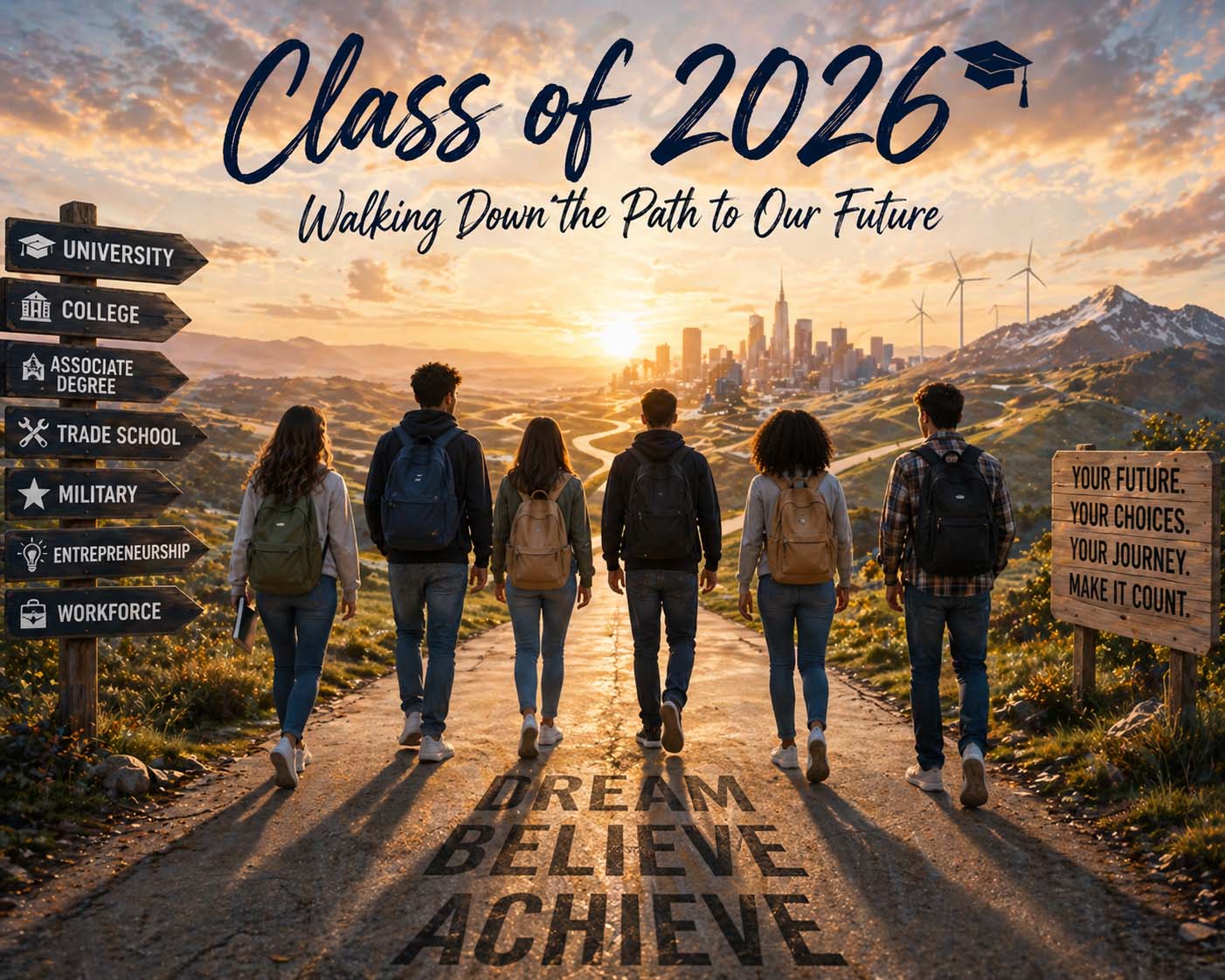
It's the last day of April 2026, and by now most high school seniors, and others, have chosen their college or university. This is a time of high emotion for both students and parents, as plans are set into motion and long-anticipated transitions become real.
In the past, earning top grades and meeting the expected academic standards almost guaranteed admission into a student's college of choice. Strong test scores, extracurricular activities, and recommendations were often enough to secure a place at a respected university. There was a clearer sense of predictability in the admissions process, giving students confidence that hard work would be rewarded with acceptance letters from the schools they dreamed of attending.
Today, however, the landscape has changed dramatically. Competition has intensified as applications pour in from across the country and around the world. Many universities receive record numbers of applicants each year, making even highly qualified students uncertain about their chances.
Factors beyond academics - such as essays, personal stories, diversity goals, financial considerations, legacy admissions, athletic recruitment, institutional priorities, and scholarships, now play a significant role in decisions.
As a result, students anxiously wait for admissions results knowing that even near-perfect grades may no longer guarantee acceptance. The process can feel unpredictable and emotionally exhausting, especially for those who have spent years striving toward a specific goal. For many families, this period becomes a mixture of hope, stress, excitement, and fear of disappointment as young people stand at the threshold of an important new chapter in life.
For some the feeling is excitement because they got into their college of choice. For others it's the uncertainty about leaving behind friends and family to go off on a journey that will shape their future. Some already know what they want from college while others expect college to show them the way.
Teens, as you know, are very emotional people - especially as those are the years that full blown mental illness shows itself. They are influenced not only by their emotions but by many factors such as social media, friendships, family expectations, and the world at large - all playing a role in how decisions are made and experienced.
For some in 2026 it is a time of joy while for others it's a feeling that they have settled because they didn't get into their first college choice. Little do they know that wherever they wind up - destiny has already planned their futures. Where they begin is only one part of a much larger story.
Even small factors can shape big decisions. A recent survey noted that something as simple as the weather on a campus visit can influence a student's choice - too hot, too cold, or too rainy, and a school might suddenly feel less appealing. This "Goldilocks Effect" can quietly tip the scales, even when more meaningful factors are at play.
I remember when my four grandsons in Connecticut and New Jersey were exploring colleges in the South. The idea of spending four years in places like Miami or California certainly had its appeal, but in the end, their decisions were guided by more lasting considerations - academic programs, distance from home, finances, and a willingness to see where the next four years might lead.
The world will be a very different place in four years. Wherever students land today - their paths will continue to evolve. The college they choose is not the final destination - it's simply the starting point.
When choosing a major, students are increasingly encouraged to think beyond immediate interests and consider fields that have the potential to shape their long-term future. A major is no longer simply about selecting a subject to study - it can influence career opportunities, financial stability, personal fulfillment, and the ability to adapt in a rapidly changing world.
Many students now weigh factors such as advances in technology, the growth of artificial intelligence, healthcare needs, environmental challenges, and global economic shifts when making their decision. Others focus on choosing a path that has the potential to make a meaningful impact on society or align with personal passions and values.
At the same time, the pressure to choose correctly can feel overwhelming for young people standing at the crossroads of adulthood. Some worry about selecting a major that may become less relevant in the future, while others fear committing to a path before fully understanding who they are or what they truly want from life. Despite these uncertainties, choosing a major remains an important step - not necessarily a permanent definition of one's future, but the beginning of a journey filled with growth, discovery, and evolving possibilities.
Whether students move on to a university, community college, associate degree program, trade school, military service, or directly into the workforce after finishing high school, they are stepping into a world far more uncertain and rapidly changing than previous generations experienced. The transition into adulthood has always carried challenges, but today's young people face an environment shaped by economic instability, rising living costs, political division, technological disruption, and constant social change.
Many students are entering adulthood while questioning what career paths will remain stable in the future as artificial intelligence and automation continue transforming industries at remarkable speed. Others worry about financial independence, affordable housing, healthcare, student debt, and whether traditional ideas of success still apply in a world that seems to evolve almost daily.
At the same time, this generation is also entering adulthood with extraordinary access to information, innovation, and opportunities that did not exist decades ago. Technology allows young people to learn, create, connect, and build careers in ways previous generations could scarcely imagine. Trade schools and skilled labor professions are becoming increasingly valuable, while entrepreneurial paths and digital careers continue to expand beyond conventional office jobs.
No matter which direction students choose after high school, the journey ahead will require adaptability, resilience, emotional strength, and a willingness to continue learning throughout life. The world they are inheriting may feel unpredictable, but it is also filled with possibilities for those prepared to grow alongside change rather than fear it.
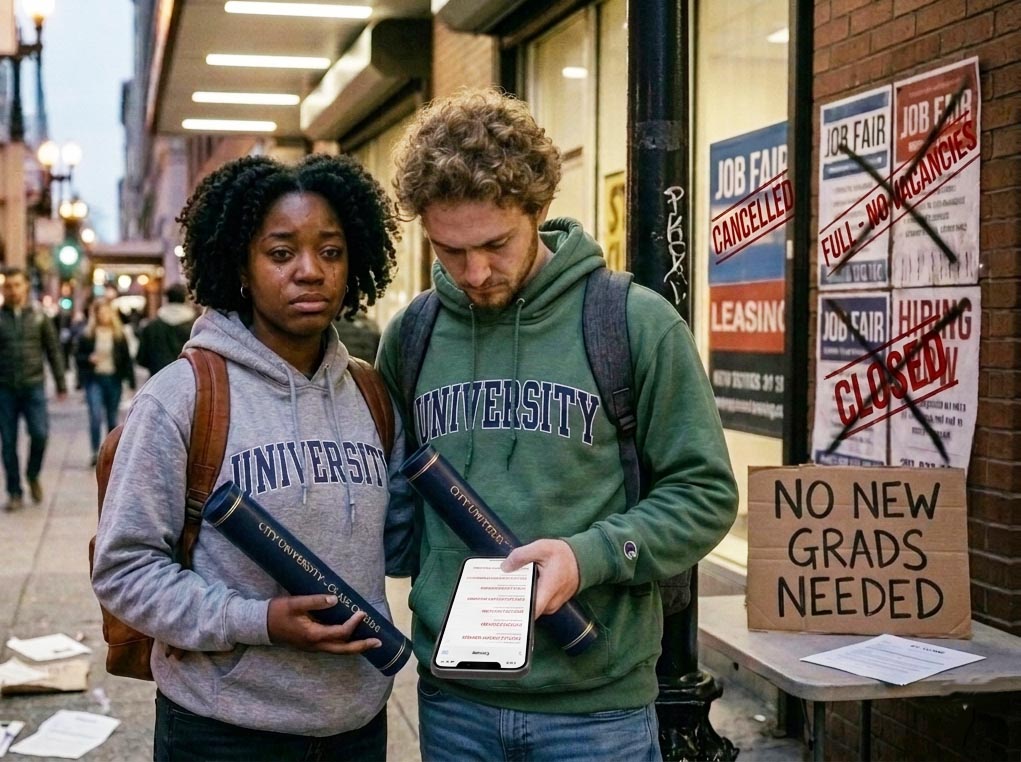
In an uncertain world filled with political tension, economic instability, technological disruption, and social chaos, recent college graduates are facing one of the most dismal and unpredictable job markets in years - with hopes that the future carves out a better path.
Employers across many industries are slowing hiring, reducing opportunities for young adults attempting to enter the workforce for the very first time. Positions once considered stepping stones into professional careers are becoming harder to find, leaving many graduates questioning where they fit into an increasingly competitive economy.
Adding to these anxieties is the rapid rise of artificial intelligence and automation. As A.I. systems continue to evolve and perform tasks once handled by humans, fears are growing that many traditional entry-level jobs may disappear altogether. Careers in administration, customer service, media, technology, and even creative fields are already being reshaped by machines capable of working faster and at lower cost than human employees.
For graduates who spent years studying, preparing resumes, and accumulating student debt in pursuit of stability, the future can suddenly feel uncertain and fragile. Many now face the difficult reality of competing not only against one another, but against technologies advancing at extraordinary speed.
Some are reconsidering career paths entirely, while others are attempting to adapt by developing skills that emphasize creativity, critical thinking, emotional intelligence, and human connection - qualities still difficult for machines to fully replicate.
Yet despite the uncertainty, this generation also possesses remarkable resilience and adaptability. History has shown that periods of disruption often create entirely new industries, opportunities, and ways of living. The challenge for today's graduates may not simply be finding a job, but learning how to evolve alongside a rapidly changing world that is redefining the meaning of work itself.
Graduates Reset Ambitions in Pursuit of First Jobs. Young people aiming to build careers are entering fields they had not considered to find their footing. NYT - April 28, 2026