The 1999 crop circle season is widely regarded as the era of geometric refinement and a peak period for the "cosmic signpost" philosophy. As the 20th century drew to a close, fields across Wiltshire, England, were carved with massive designs reflecting astronomical anomalies, complex mathematical constants, and ancient spiritual motifs that captured the anxious energy of the pre-millennium public.
The final summer of the 1990s delivered several historic formations that cemented the decade's legacy.
Standout Formations of 1999
The Hackpen Hill "Swarastika" / Cosmic Cross: Materializing in early July, this highly controversial and striking formation utilized a spinning, four-armed cross layout. It was heavily analyzed by researchers as a symbolic representation of a rotating galaxy or an ancient sun wheel tracking cosmic cycles.
The Windmill Hill Triple Julia Set: Following the legendary fractal designs of the mid-90s, this massive 1999 iteration featured a beautifully fluid, swirling array of graduated circles looping outward in three distinct arms. The precision of the circle sizes rolling across the natural field contours remains a marvel of landscape drafting.
The Avebury Manor "Menorah" / Candelabra: Discovered near the historic stone circle, this unique design resembled a sprawling, multi-branched candelabra or tree structure. It marked a definitive shift from abstract geometry into literal, symbolic glyphs that fed into the era's widespread esoteric and spiritual theories.
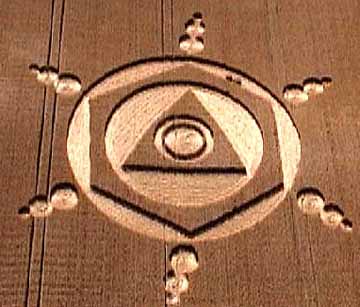
The Barbury Castle Overlapping Triangles: Emerging in late summer, this clean formation featured perfectly balanced, interlocking triangles. The pristine lay of the crops within the design showcased a remarkably sharp boundary between the standing stalks and the flattened barley floors.
The summer of 1999 coincided with the initial mainstreaming of the consumer internet. For the first time, websites like The Crop Circle Connector allowed aerial photographers to upload high-resolution digital images within hours of a dawn discovery.
This rapid distribution of visual media fundamentally changed how the public interacted with the phenomenon. Rather than waiting months for printed journals, enthusiasts worldwide could immediately debate the geometric accuracy, analyze ground-level plant nodes, and coordinate field visits, setting the stage for the hyper-connected research boom of the early 2000s. In 1999, crop circles in England were a notable phenomenon, with 1999 being a particularly prolific year for their appearance. The formations, characterized by their intricate designs and overnight appearance in fields of standing grain, drew both public fascination and scientific scrutiny. Some formations, like the Menorah at Barbury Castle and the Cube at Allington, became iconic examples of the season's crop circle art.

Avebury Manor, nr Avebury, Wiltshire - September 1, 1999
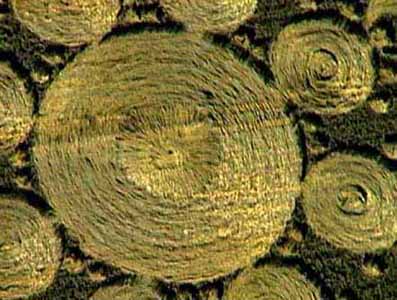
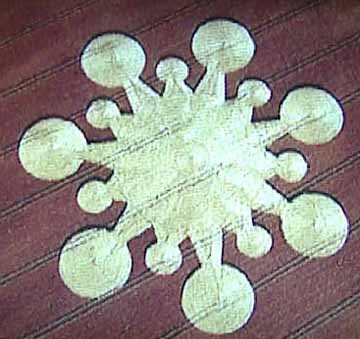
The 90-foot center circle has a bird's nest in the middle, which spirals out for a few feet, overlapping a radial lay, which in turn overlaps a clockwise lay that completes that circle. Each of the eight medium size circles has a different lay, ranging from the conventional, to S-swirl, to a sort of bizarre, spiral snake. These circles are each crowned with a small crescent, and (counting the ones inside the crescents) eight grapeshot adorn all of the eight "branches."
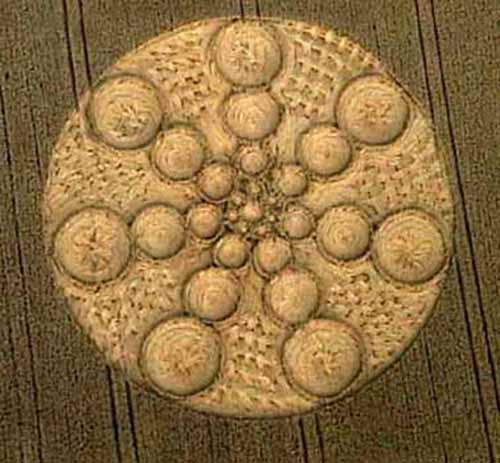
Roundway Hill, Wiltshire "The Basket" - August 6, 1999
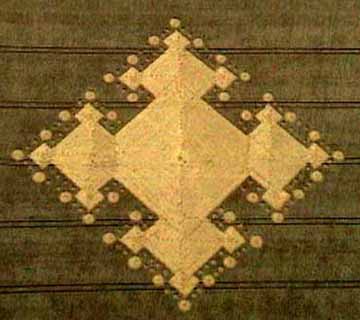
East Kennett, Avebury, Wiltshire - August 4, 1999
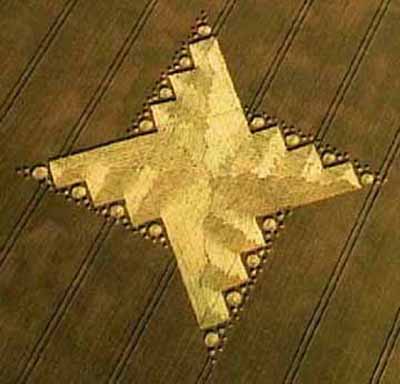
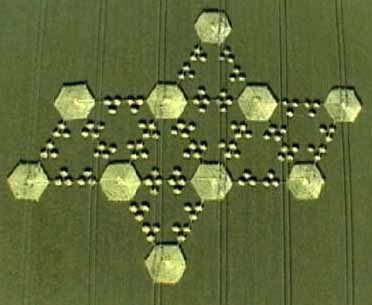
West Overton
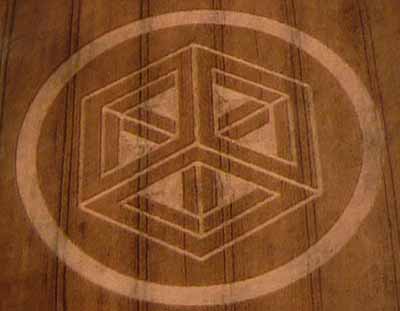
Wimpole - July 31, 1999
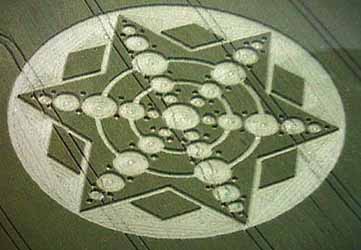
Devils Den, Wiltshire - July 20, 1999
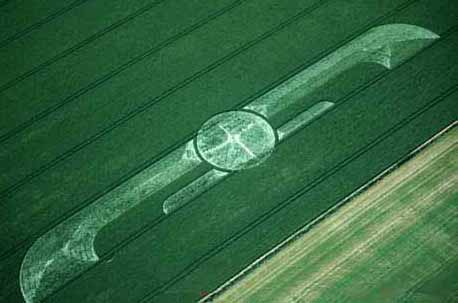
Allington Down, Wiltshire June 1999

Horus
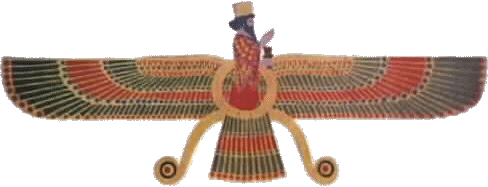
Zoroaster
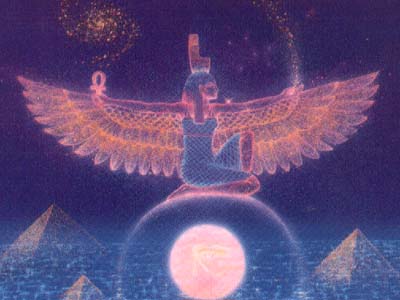
Isis
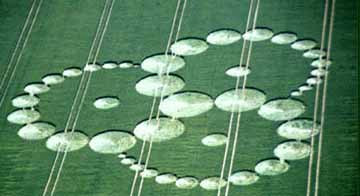
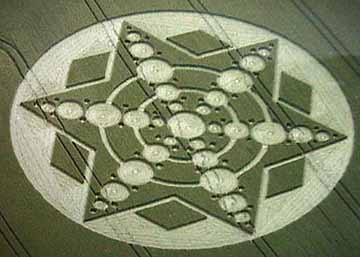

Crop Circles and A.I.