The 1991 crop circle season stands as the most critical turning point in the entire history of the phenomenon, defined by a massive paradigm shift that completely transformed the public and scientific debate. It was the year that the crop circle mystery transitioned overnight from a suspected supernatural anomaly into an acclaimed medium of clandestine performance landscape art.
Standout Formations of 1991
Despite the sudden exposure of the human mechanics behind the craft, the summer of 1991 produced some of the most geometrically advanced, historic formations ever recorded:
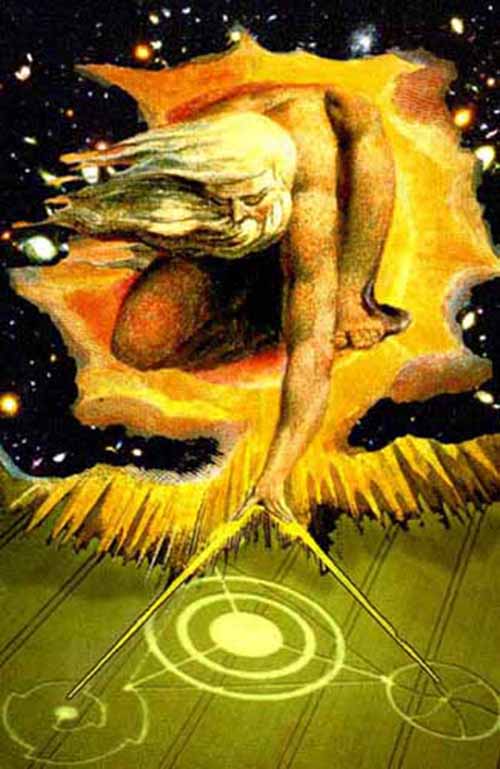
The Barbury Castle Triangular Pictogram: Materializing in mid-July 1991 in Wiltshire, this massive, legendary formation shattered the era of simple circular arrays. It depicted a highly complex, three-pronged tetrahedral layout embedded with deep esoteric and geometric constants, signaling a massive evolution in design capability.
On July 17, 1991, a significant crop circle formation appeared near Barbury Castle, a prehistoric hill fort in Wiltshire, England This formation, often called "The Bicycle" or the "Barbury Castle Tetrahedron", was notable for its complex geometric design and its timing, coinciding with reports of unusual aerial phenomena and a town-wide power outage in Wroughton. The formation covered approximately 12,000 square yards and has been interpreted as having alchemical and philosophical significance, relating to the creation of the universe according to some researchers.


The Ickleton Mandelbrot Set Fractal: Emerging in August 1991 near Cambridge, this groundbreaking design perfectly replicated the intricate mathematics of a Mandelbrot fractal. It marked the definitive dawn of mathematical fractal geometry in field art, paving the way for the mega-spiral formations that defined the late 1990s.
The Kent Wheatfield Array: A highly elegant arrangement of multiple interlocking circles and channels that famously fooled leading international crop circle researchers, who publicly declared the site to be completely clear of human influence just days before the artists revealed their methods.
On September 9, 1991, two elderly British co-conspirators from Southampton, Doug Bower and Dave Chorley, came forward to publicly confess that they had been secretly constructing over 200 crop circles across southern England since 1978. Utilizing nothing more advanced than wooden planks, ropes, baseball caps with wire sights, and simple geometry tracking tricks, they demonstrated exactly how they could flatten intricate patterns into wheat and barley within minutes. While many die-hard enthusiasts - known as "cereologists" - continued to defend otherworldly theories, the confession permanently recontextualized the phenomenon as a highly coordinated human art form.

Crop Circles and A.I.