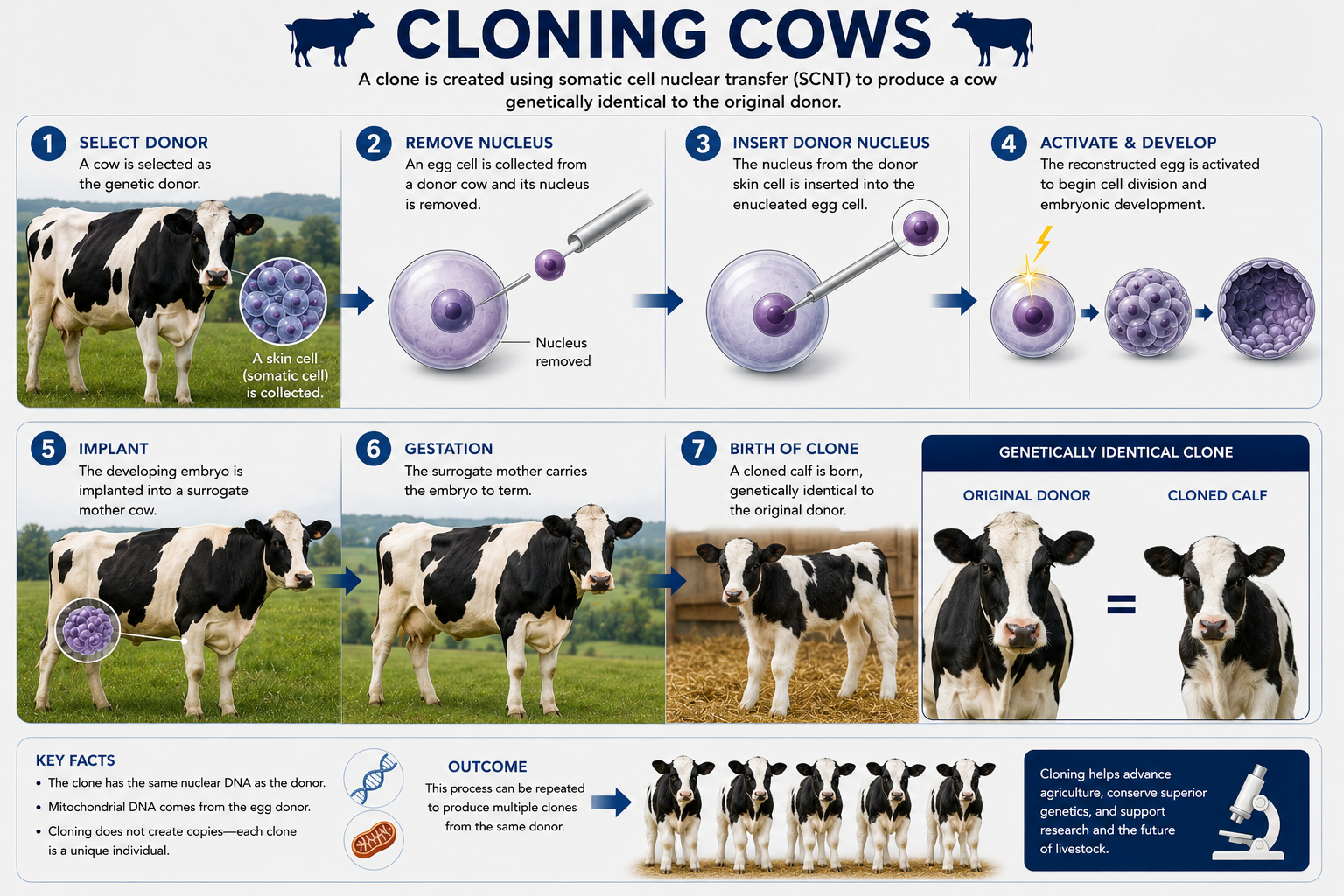
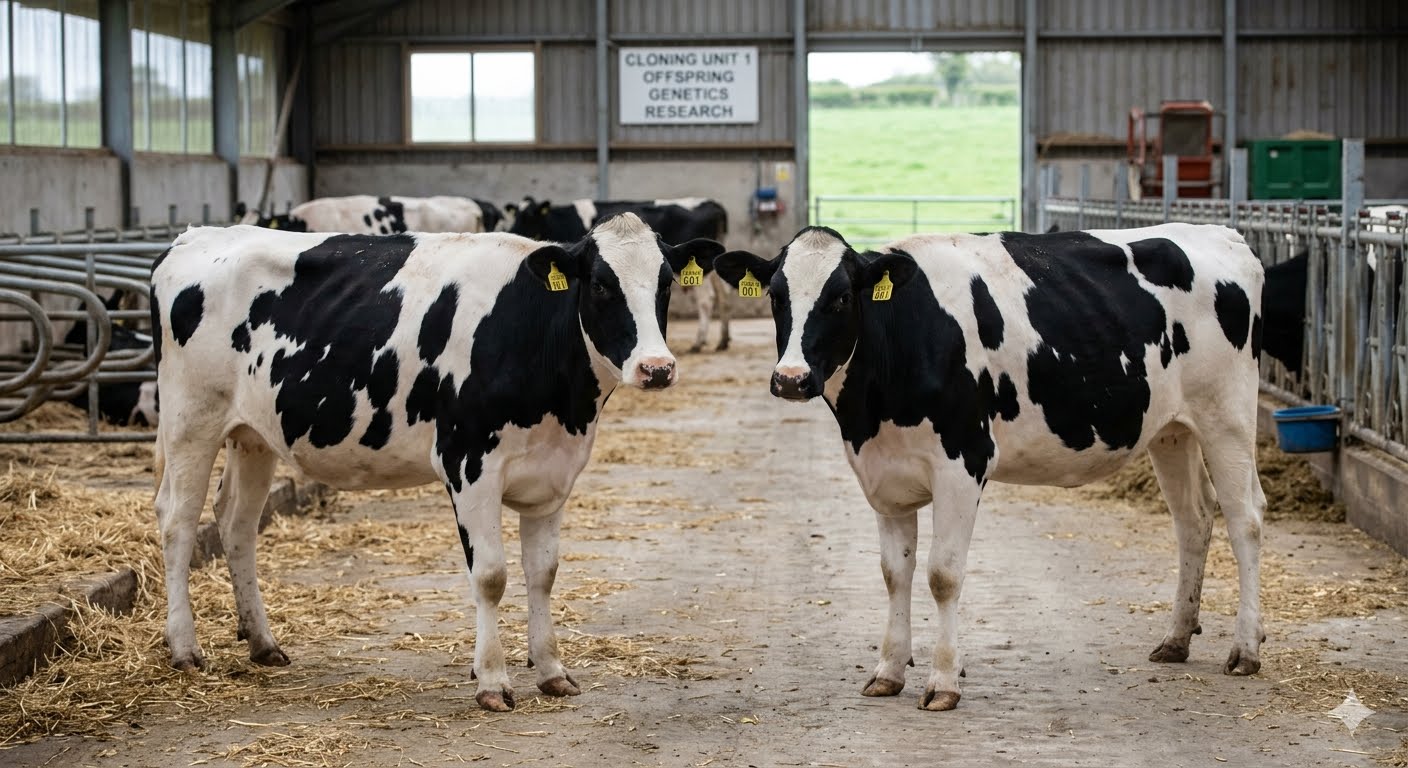
Bovine cloning is an advanced reproductive technology used primarily to replicate elite breeding stock with exceptional genetic traits, such as high milk production or superior disease resistance. Rather than producing commercial meat and milk directly from clones, the agricultural industry uses these genetically identical "super cows" as foundational breeders. Their conventionally bred offspring then enter the standard food supply chain.
The Science Behind the Process: The primary technique used to clone cattle is Somatic Cell Nuclear Transfer (SCNT). The process unfolds in several precise scientific steps:
Cell Sourcing: Scientists harvest a somatic cell (such as a skin or ear tissue cell) from the elite donor cow containing the desired genetic blueprint.
Enucleation: An unfertilized egg cell is harvested from a separate donor cow, and its nucleus - which holds its original DNA - is entirely removed.
Fusion: The "empty" egg and the donor somatic cell are placed next to each other. An electrical pulse is applied, causing them to fuse together.
Activation: This same electrical charge jumpstarts cellular division, tricking the egg into acting like a naturally fertilized embryo.
Implantation: The growing embryo is cultivated in a laboratory dish before being transferred into a surrogate mother cow to be carried to term.
Current Applications and Breakthroughs
Global interest in bovine cloning has accelerated due to its potential to solve local supply chain vulnerabilities and preserve valuable livestock genetics:
The "Super Cow" Initiative: Scientists have successfully cloned highly productive Holstein Friesian dairy cows capable of producing up to 18 tons of milk per year. This technology helps nations rapidly build elite domestic herds and reduce their dependence on imported cattle breeds.
High-Altitude Adaptability: Recent advancements include cloning unique bovine species, such as yaks in mountainous regions, using full-genome selection to quickly replicate animals that naturally resist disease and thrive in low-oxygen environments.
Genetic Insurance: Cloning provides a fallback mechanism for farmers to duplicate a "once-in-a-lifetime" prize bull or steer that was castrated, injured, or died prematurely, keeping their valuable genetic lines alive.
On average, fewer than 10% of cloned embryos result in a live, surviving birth. High rates of pregnancy loss remain a constant issue. Cloned calves frequently suffer from developmental anomalies, such as "Large Offspring Syndrome," which can cause high birth weights and complicate the health of the surrogate mother.
Scientists clone endangered Asian wild cattle - bantengs CNN - April 2003
A pair of banteng calves born last week were cloned from an animal that died more than 20 years ago
GM cheese from cow clones BBC - January 2003
Cows are being modified to produce drugs and improved milk. Scientists in New Zealand have created the world's first cow clones that produce special milk that can increase the speed and ease of cheese-making.