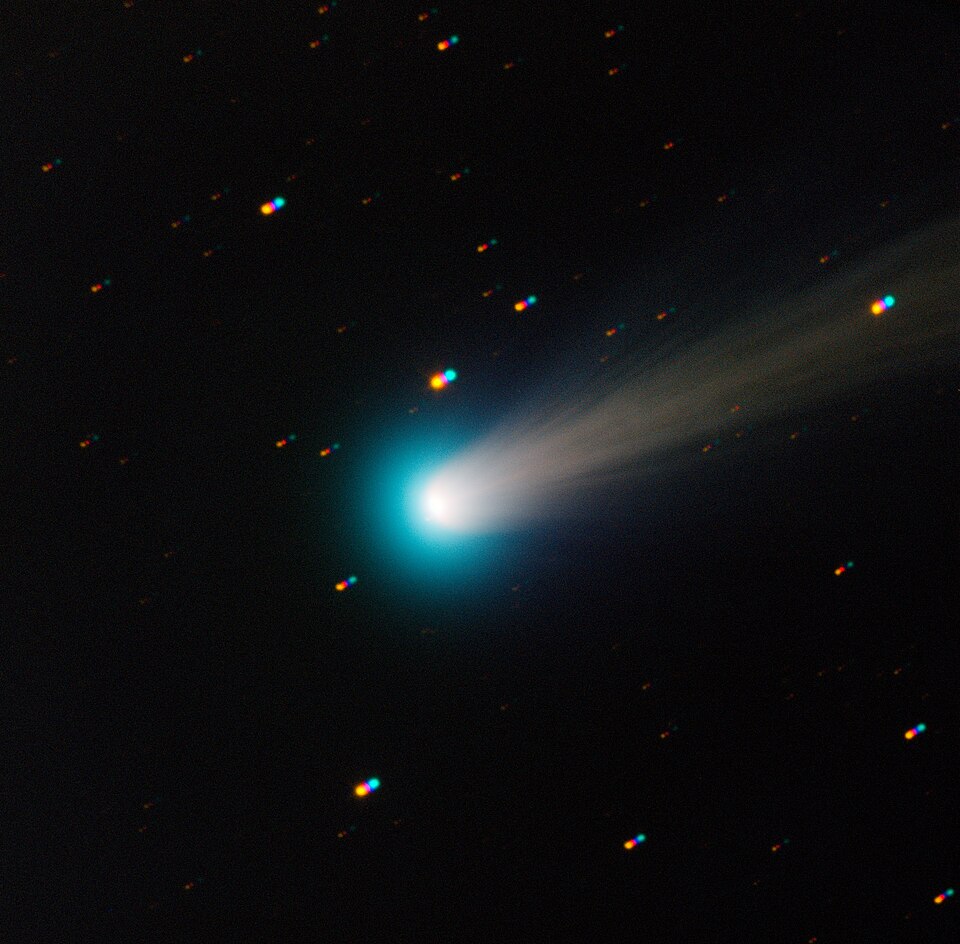
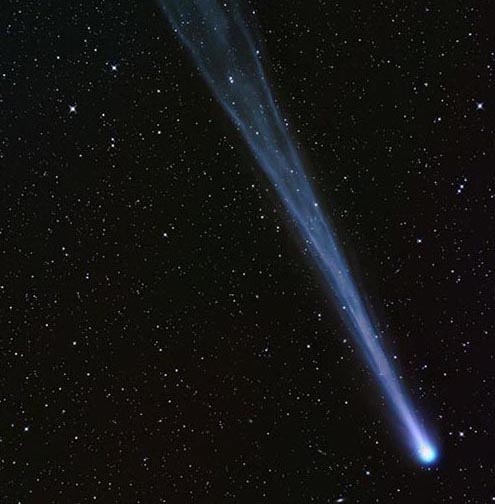

Comet ISON, formally known as C/2012 S1, was a sungrazing comet from the Oort cloud which was discovered on 21 September 2012. The discovery was made using the 0.4-meter (16 in) reflector of the International Scientific Optical Network (ISON) near Kislovodsk, Russia.
Shortly after Comet ISON's discovery, the media reported that it might become brighter than the full Moon. However, as events transpired, it never became bright enough to be readily visible to the naked eye. Furthermore, it broke apart as it passed close to the Sun. Read more
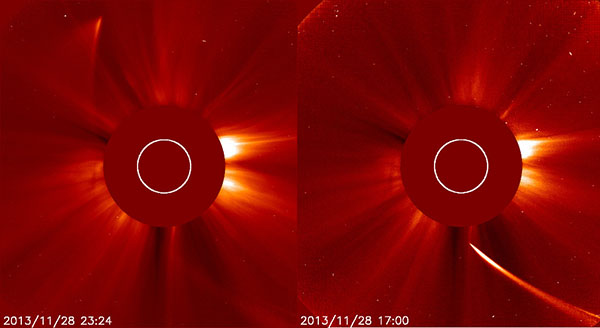
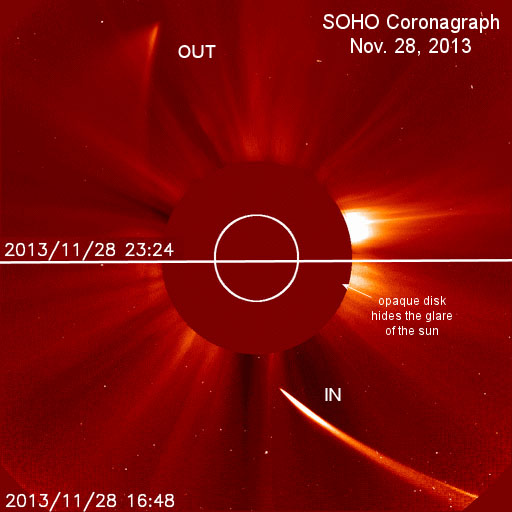
Comet ISON's leftovers fade away, right before a satellite's eyes NBC - November 30, 2013
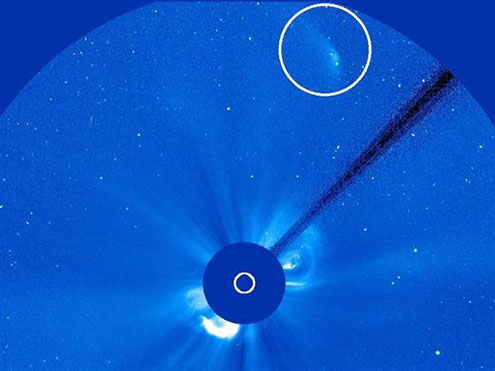
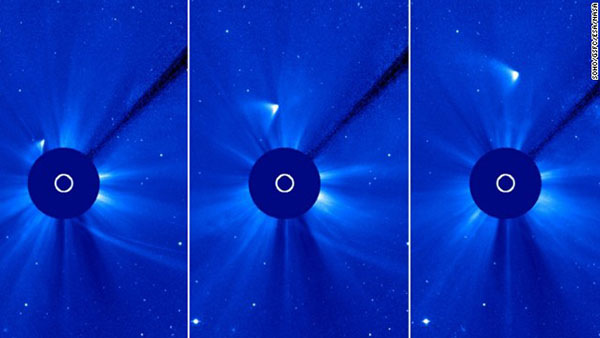
The white circle highlights Comet ISON's remnants toward the edge of the viewing field for the Solar and Heliospheric Observatory's LASCO C3 ultraviolet detector. The sun's glare is blocked out by an occulting disk, but a solar storm can be seen emerging toward the lower edge of the frame. Previous reports of Comet ISON's death may have been somewhat exaggerated, but this time it looks like the real thing. Remnants of the object once touted as the "comet of the century" passed through the viewing field of the Solar and Heliospheric Observatory in the wake of Thursday's close encounter with the sun - and as it passed, the bright spot that survived grew dimmer and dimmer.