
Ultra-fast pulsar found near the Milky Way's supermassive black hole Science Daily - February 17, 2026
Artist's impression of the Green Bank Telescope gathering data on the center of the Milky Way. The inset image shows the black hole at our Galaxy's center, and a nearby candidate (unconfirmed) pulsar. Scientists scanning the heart of the Milky Way have spotted a tantalizing signal: a possible ultra-fast pulsar spinning every 8.19 milliseconds near Sagittarius A*, the supermassive black hole at our galaxy's core. Pulsars act like incredibly precise cosmic clocks, and finding one in this extreme environment could open a rare window into how space-time behaves under intense gravity.
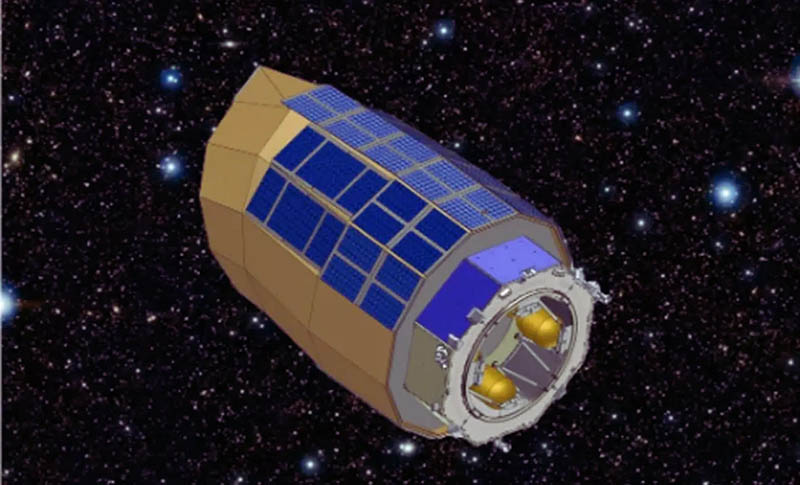
Meet Lazuli: The Private Space Telescope That Could Outshine Hubble by 2029 Daily Galaxy - January 22, 2026
A new era of astronomy begins as Schmidt Sciences prepares to launch Lazuli, the first privately funded space telescope, promising to surpass Hubble and redefine open science. A bold new era in astronomy is on the horizon. By 2029, Schmidt Sciences, the philanthropic foundation founded by former Google CEO Eric Schmidt and Wendy Schmidt, plans to launch Lazuli, the first-ever privately funded space telescope, as part of a network of four interconnected observatories. This initiative, known as the Eric and Wendy Schmidt Observatory System, will unite ground and space-based telescopes under a single vision of open, accessible science.

A powerful new telescope in Chile has released its first images, showing off its unprecedented ability to peer into the dark depths of the universe BBC - June 23, 2025

The Vera C Rubin observatory, home to the world's most powerful digital camera, promises to transform our understanding of the universe. If a ninth planet exists in our solar system, scientists say this telescope would find it in its first year.
Behold! World's Largest Camera Snaps Millions of Galaxies in First Pics Science Alert - June 24, 2025

The Vera C. Rubin Observatory has just dropped its very first images. Expected to revolutionize our understanding of the Universe, the new eye on the sky hasn't disappointed. For 10 hours, the US National Science Foundation and Department of Energy facility stared deep into the cosmos, using its powerful camera to record in near-ultraviolet, optical, and near-infrared wavelengths. The result is a tantalizing and exciting set of observations that bode well for the years to come.

South Pole Telescope
The South Pole Telescope (SPT) is a 10-metre (390 in) diameter telescope located at the Amundsen–Scott South Pole Station, Antarctica. The telescope is designed for observations in the microwave, millimeter-wave, and submillimeter-wave regions of the electromagnetic spectrum, with the particular design goal of measuring the faint, diffuse emission from the cosmic microwave background (CMB).
The first major survey with the SPT - designed to find distant, massive, clusters of galaxies through their interaction with the CMB, with the goal of constraining the dark energy equation of state - was completed in October 2011. In early 2012, a new camera (SPTpol) was installed on the SPT with even greater sensitivity and the capability to measure the polarization of incoming light. This camera operated from 2012–2016 and was used to make unprecedentedly deep high-resolution maps of hundreds of square degrees of the Southern sky. In 2017, the third-generation camera SPT-3G was installed on the telescope, providing nearly an order-of-magnitude increase in mapping speed over SPTpol.
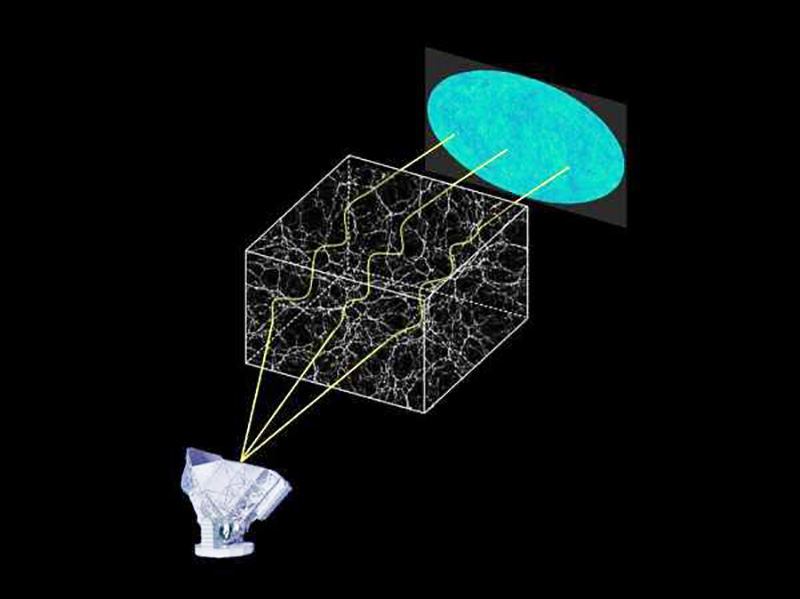
For more than five years, scientists at the South Pole Telescope in Antarctica have been observing the sky with an upgraded camera. The extended gaze toward the cosmos is picking up remnant light from the universe's early formation PhysOrg - February 9, 2024
The CMB is a treasure map for cosmologists. Its minuscule variations in temperature and polarization provide a unique window into the universe's infancy.
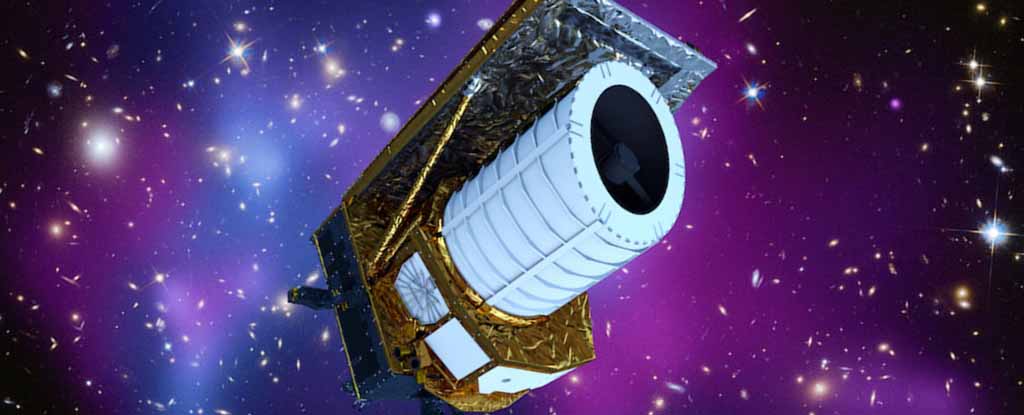
Euclid Telescope
Euclid space telescope: The groundbreaking mission to study dark matter and dark energy Live Science - July 6, 2023
Euclid is a spacecraft carrying a wide-angle space telescope with a 600-megapixel camera to record visible light and a near-infrared spectrometer and photometer to determine the redshift of the detected galaxies.
Euclid Telescope: Europe's First Mission to Discover The Dark Side of The Universe launches successfully BBC - July 2, 2023
The Euclid mission, which will investigate the mysteries of dark matter and dark energy, released its first five science images PhysOrg - November 8, 2023
Europe's Euclid telescope is ready to begin its quest to understand the greatest mysteries in the Universe. BBC - November 7, 2023 ,BR>
Exquisite imagery from the space observatory shows its capabilities to be exceptional. Over the next six years, Euclid will survey a third of the heavens to get some clues about the nature of so-called dark matter and dark energy. These unknown "influencers" appear to control the shape and expansion of everything that's out there.
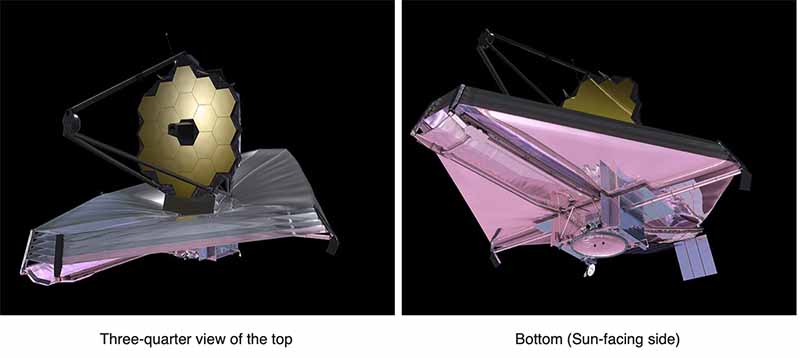
NASA's Webb Reveals Cosmic Cliffs, Glittering Landscape of Star Birth
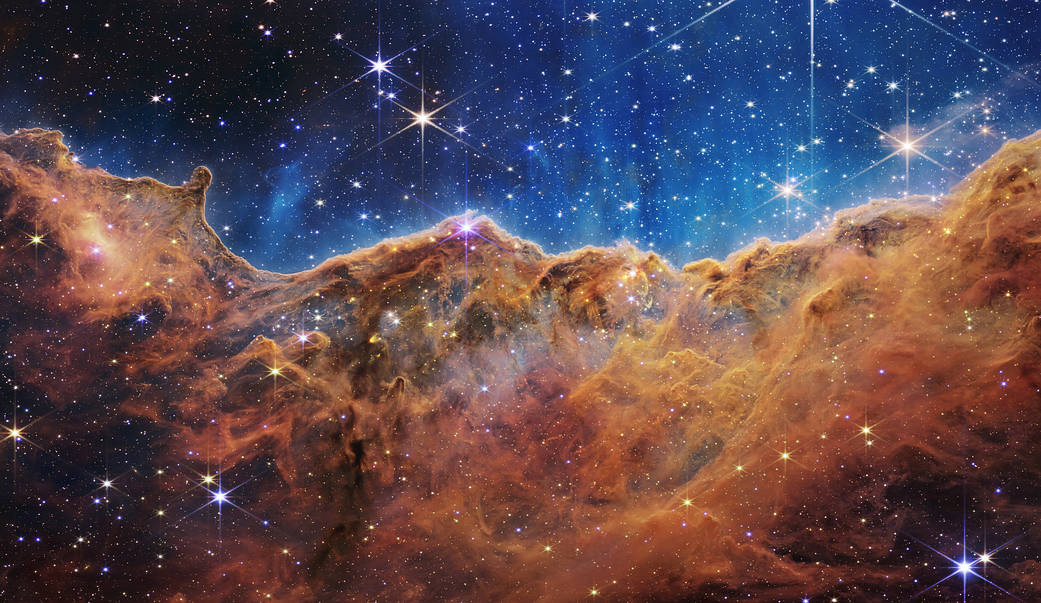
The Carina Nebula was a classic target of the Hubble telescope - Webb's predecessor - although in this Webb version we get a very different rendering. Carina is one of the largest and brightest nebulae in the sky, located roughly 7,600 light-years from Earth. Nebulae are stellar nurseries. They are a massive clouds of gas and dust in which new stars are forming. Except in this Webb image, we not only see the stars - our eyes are drawn to all that gas and the dust. Astronomers refer here to a "cosmic reef", or "cosmic cliff" - a kind of broad demarcation between dust in the bottom half, and then gas in the top half. One of Webb's key scientific goals is to study how stars form, and Carina is an excellent place to do that.
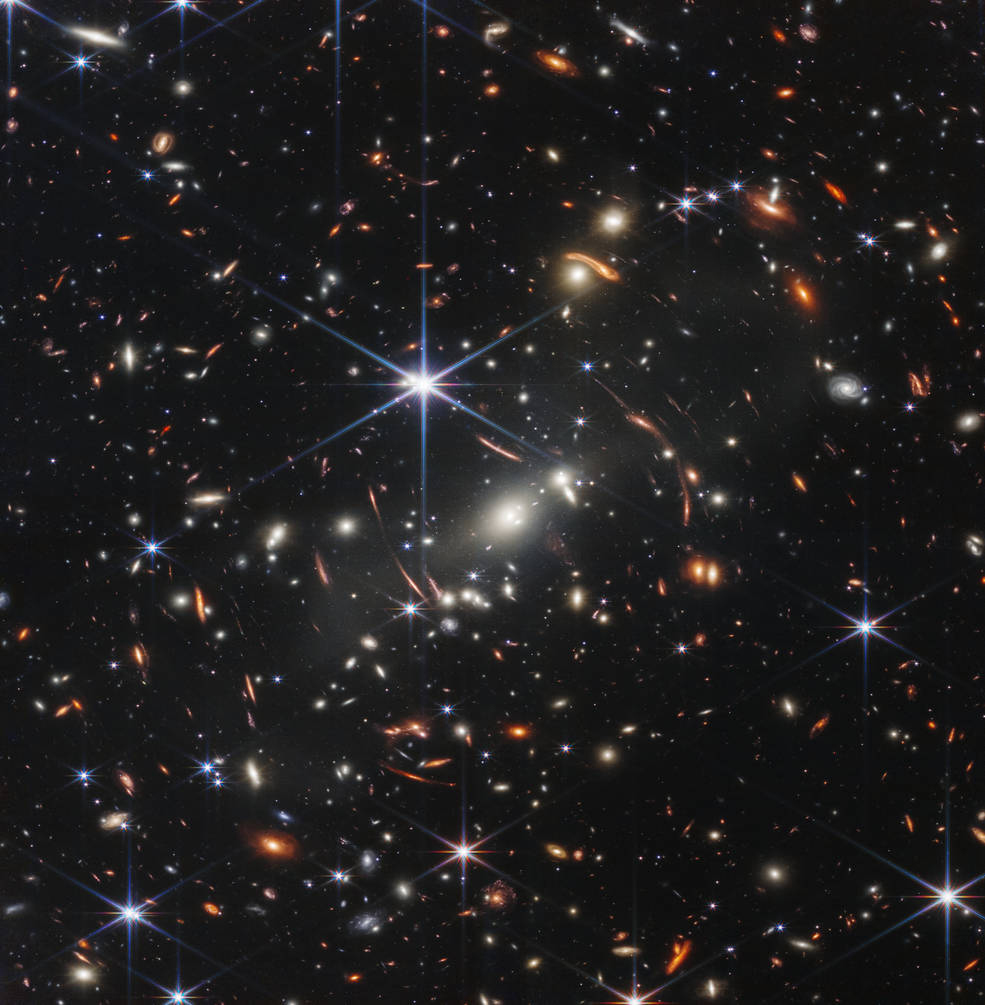
SMACS 0723 is a huge cluster of galaxies. It's known to astronomers as a "gravitational lens" because the mass of the cluster bends and magnifies the light of objects that are much further away. Everywhere you see a red arc-like structure - that's something - a galaxy - way off in the distance and far further back in time. The light in some of those arcs has taken over 13 billion years to reach us. And here's the slightly bizarre thing - some of those arcs on either side of the image are actually the same object. Their light has been bent through SMACS 0723 on more than one path.
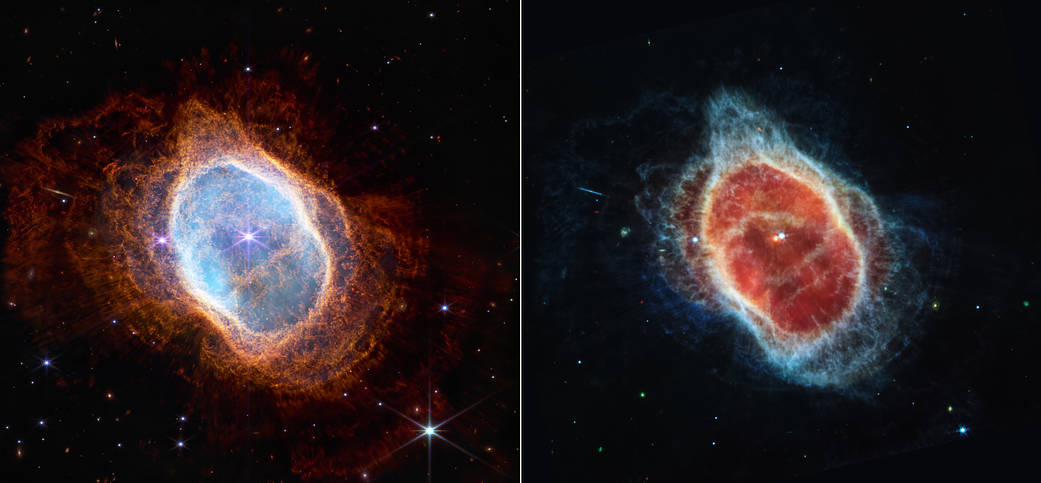
The Southern Ring, or "Eight-Burst" nebula, is a giant expanding sphere of gas and dust that's been lit up by a dying star in the centre. As stars age, they change the way they make energy and eject their outer layers. And then, when the star gets very hot again, it energizes all that material it had previously spurned. The Southern Ring is nearly half a light-year in diameter and is located about 2,000 light-years from Earth. This type of structure is called a "planetary nebula", but it actually has nothing to do with planets. It's a misnomer from the early days of telescopes when they didn't have anything like the resolution they have today. Just as Webb wants to see how stars are born, it wants to see how they die, also.
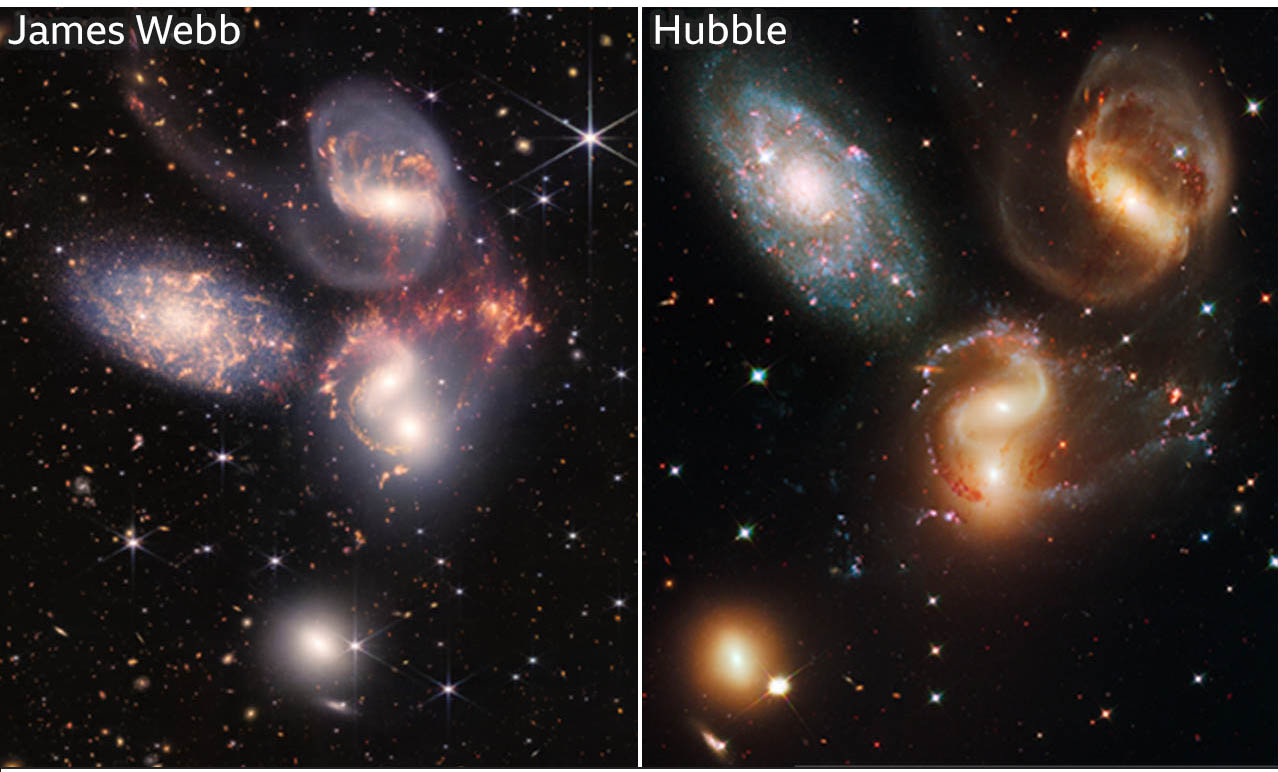
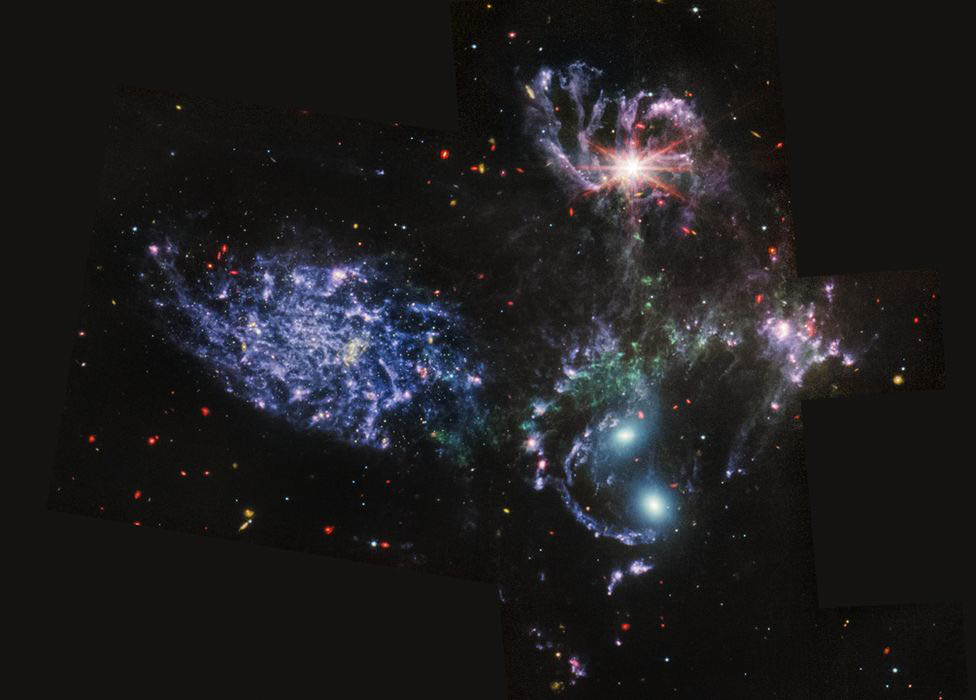
About 290 million light-years away, Stephan's Quintet is located in the constellation Pegasus. It's notable for being the first compact galaxy group ever discovered. Four of the five galaxies within the quintet are locked in a cosmic dance of repeated close encounters. This Webb image doesn't look that different from the Hubble version at first glance, but the new telescope's infrared sensitivity will pull out different features for astronomers to study. And this was the great hope - that we would have Webb working alongside Hubble. They have different strengths and being able to compare and contrast will give scientists a new dimension to their studies. We don't know for how much longer Hubble will operate. It's 32 years old and prone to technical glitches. But the officials at Nasa who are in charge of the old warhorse have just submitted a five-year budget plan. Keep your fingers crossed.
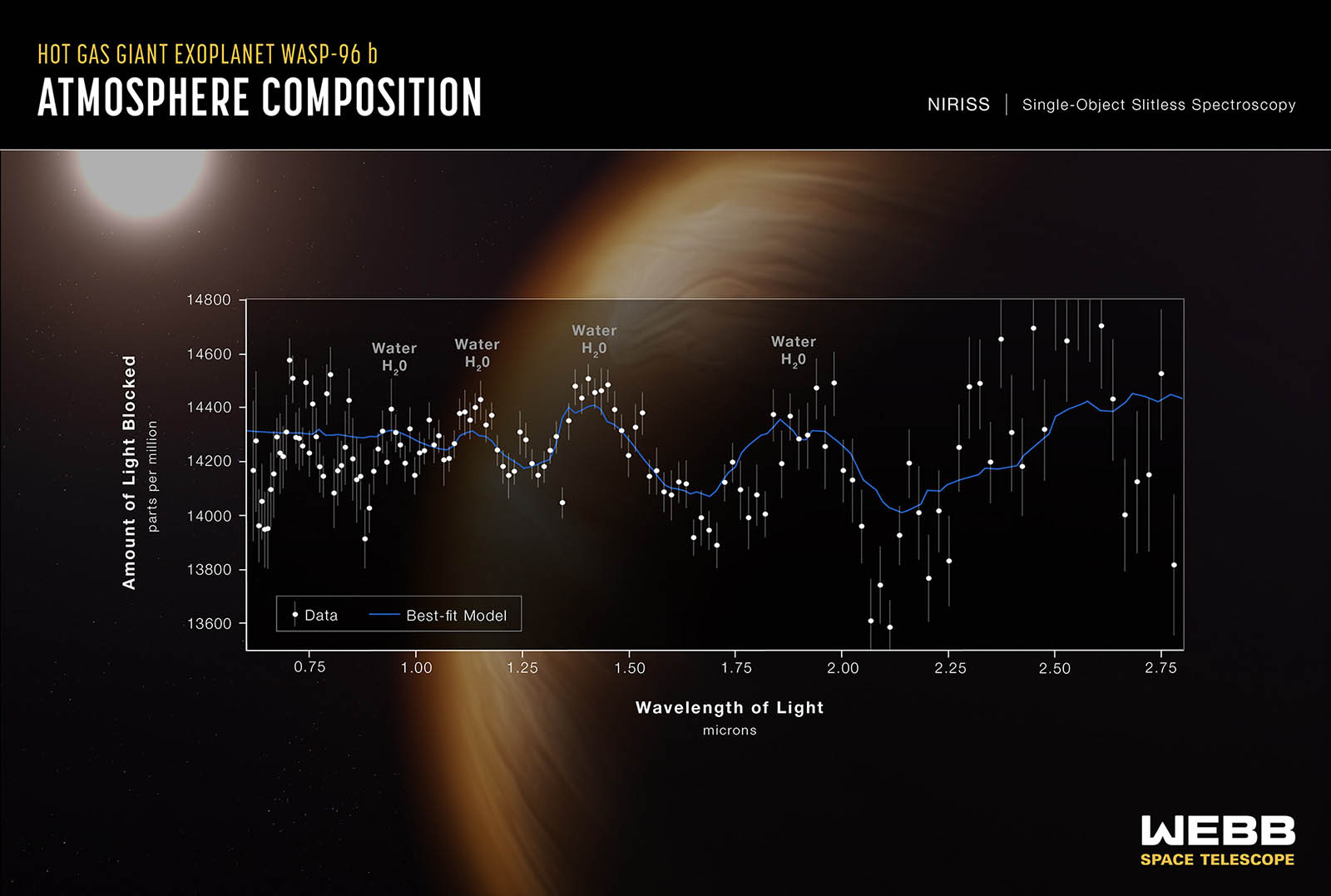
The giant planet WASP-96b, is located about 1,150 light-years from Earth. This mostly gaseous planet measures about half the mass of Jupiter, but orbits so closely to its home star that one year on the planet lasts the equivalent of just 3.4 Earth days. That quick orbital period is important, because it allows astronomers to easily study how light from the planet's home star is absorbed and reemitted by molecules in the planet's atmosphere. By breaking this spectrum of light down into its component wavelengths, scientists can discern the type and quantity of elements in the planet's atmosphere. This image reveals, for example, that there is a good deal of water vapor in WASP-96b's atmosphere. Blazing hot, is unlikely to harbor life. However, astronomers plan to take spectrum images of many other planets beyond our solar system, advancing the hunt for life beyond our solar system.
Since launching on Dec. 25, 2021, NASA's James Webb Space Telescope (JWST) has been pelted by at least 19 tiny space rocks - including one large one that left noticeable damage on one of the telescope's 18 gold-plated mirrors. In a sprawling new status report posted to the pre-print database arXiv.org (opens in new tab), NASA researchers have shared the first images showing the extent of that damage. Seen on the C3 mirror in the lower right-hand corner of the image, the impact site appears as a single bright white dent besmirching the golden mirror's surface.
Amazing New JWST Images of Spiral Galaxies
Science Alert - July 21, 2022
The first is NGC 628, also known as the Phantom Galaxy. The other is NGC 7496. Both are relatively close to the Milky Way, and both are the subject of ongoing observations as part of the Physics at High Angular resolution in Nearby GalaxieS (PHANGS) survey, to better chart the connections between young stars and the clouds of cold molecular gas that give birth to them.
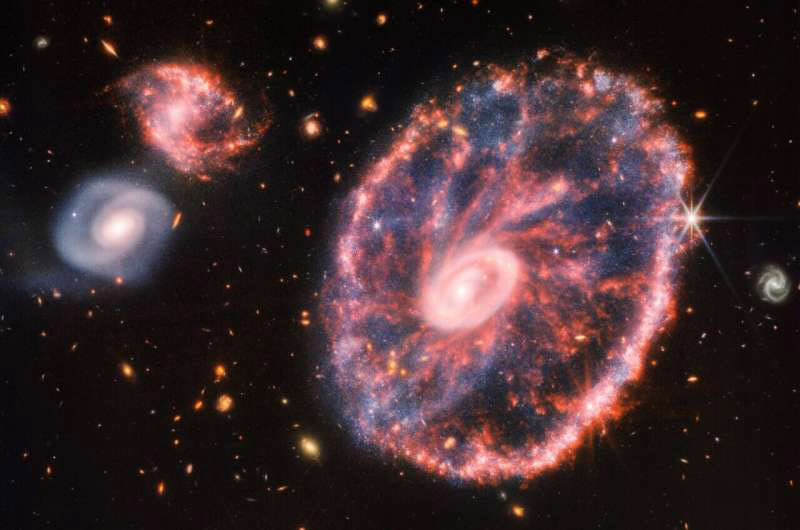
The James Webb Space Telescope has peered through time and huge amounts of dust to capture a new image of the Cartwheel Galaxy, revealing the spinning ring of color in unprecedented clarity. Located around 500 million light-years from Earth in the constellation Sculptor, the Cartwheel gained its shape during a spectacular head-on collision between two galaxies.
James Webb telescope captures 'Pillars of Creation' as never seen before
BBC - October 19, 2022
Stars are formed inside these towering mountains of gas and dust. It's all part of the Eagle Nebula one of the most productive star factories in the Milky Way Galaxy.
JWST Has Found Life's Elemental Building Blocks in The Depths of Darkest Space
Science Alert - January 28, 2023
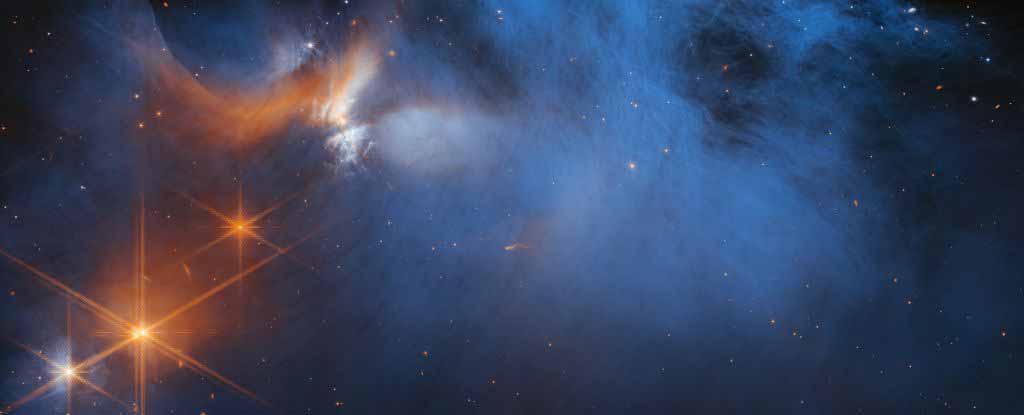
JWST's unparalleled ability to peer into the shrouded hearts of distant clouds has revealed the elements of biochemistry in the coldest and darkest place we've seen them yet. In a molecular cloud called Chamaeleon I, located over 500 light-years from Earth, data from the telescope has revealed the presence of frozen carbon, hydrogen, oxygen, nitrogen, and sulfur - elements vital to the formation of atmospheres and molecules such as amino acids, collectively known as CHONS. These elements are important components of prebiotic molecules such as simple amino acids - and thus ingredients of life, so to speak.
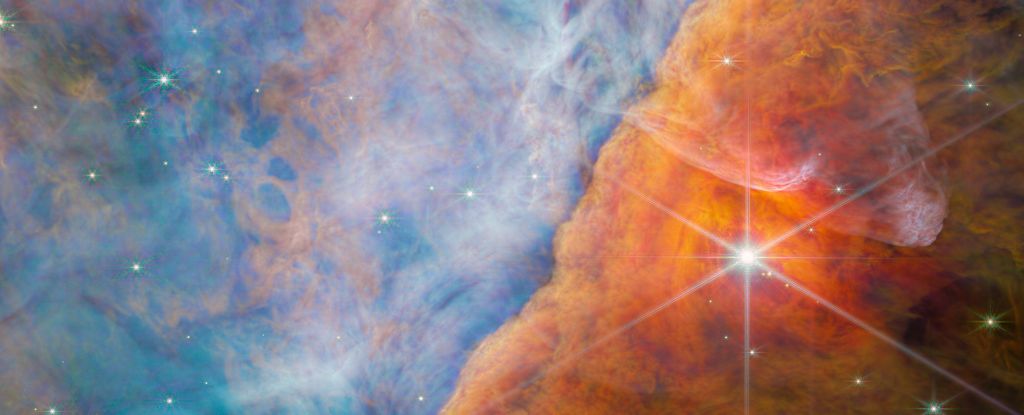
JWST Discovers Crucial Carbon Molecule in The Orion Nebula
Science Alert - June 27, 2023
Deep in the delicate traceries of the Orion Nebula, we've finally found an important carbon molecule never before seen in interstellar space. Methenium, also known as the methyl cation (CH3+), is a carbon compound long predicted to play a pivotal role in organic chemistry in interstellar space. Now, using the James Webb Space Telescope, scientists have identified it in the disk of dust and gas surrounding a baby star, confirming the plausibility of this role.
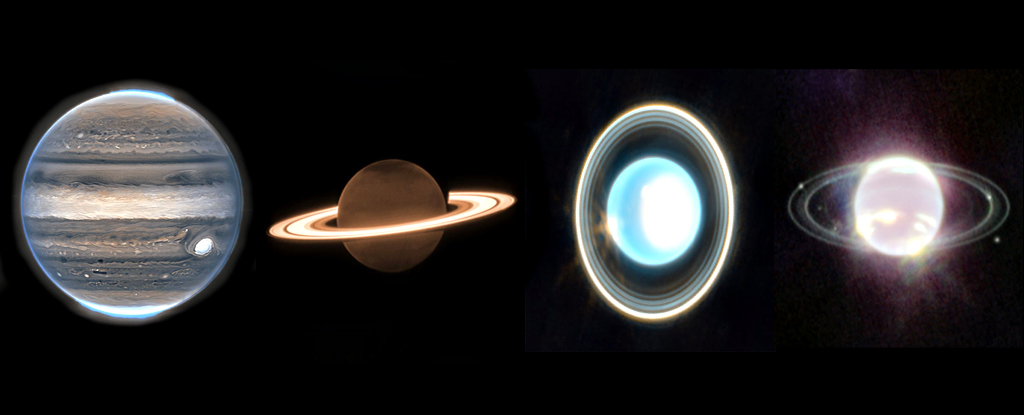
JWST Has Now Captured All 4 Giant Planets Science Alert - July 3, 2023
The Earliest Supermassive Black Hole Ever Found Has Been Identified Science Alert - July 6, 2023
An object lurking in the foggy dawn of the Universe has given astronomers a big surprise. Observations collected through the James Webb Space Telescope have revealed an active supermassive black hole 9 million times the mass of the Sun - one that is actively growing as it slurps up matter from the space around it.
Stunning New JWST Anniversary Image Shows Baby Stars Sparking to Life Science Alert- July 12, 2023
A glittering treasure trove of baby stars hidden in the thick dust of their nursery is revealed in a stunning new image from the James Webb Space Telescope. To celebrate its first successful year of operations, the JWST has turned its honeycomb eye to the Rho Ophiuchi cloud complex some 390 light-years away, peering through the thick shroud to the bright star formation occurring therein.
Young Stars Shooting Jets Snapped By JWST IFL Science - July 26, 2023
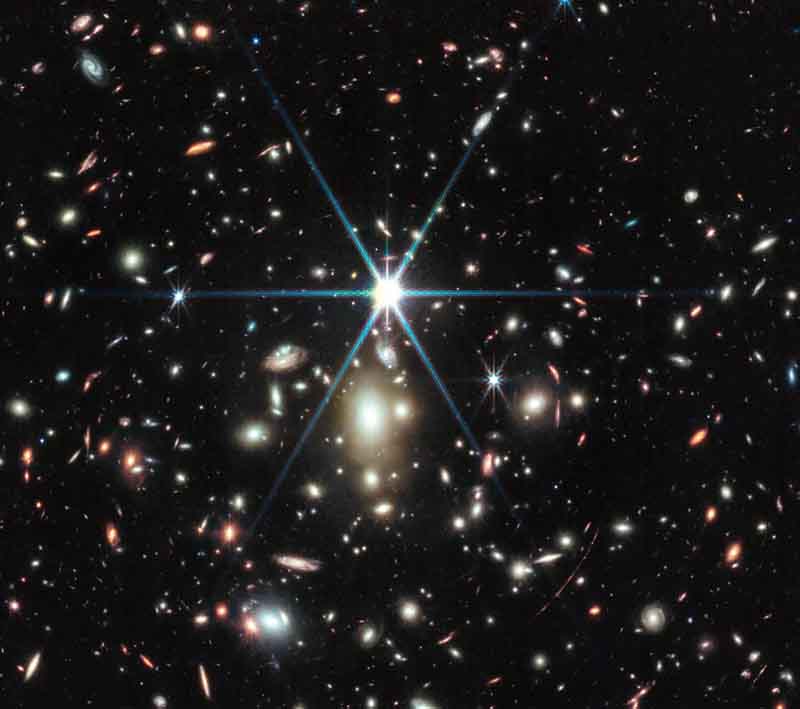
JWST Reveals Color Of The Most Distant Known Star. Earendel is a type B star. These stars are very bright and blue IFL Science - August 9, 2023
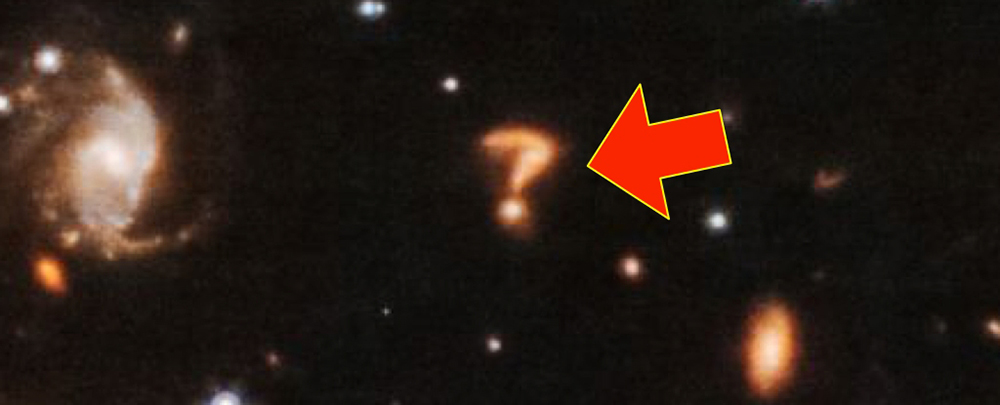
JWST - Scientists Appear to Have Found a Gigantic Question Mark in Space Science Alert - August 11, 2023
Zoom in on a stunning new image from the James Webb Space Telescope and you might be in for a little surprise. There, in the background of spectacular star birth lurks a curlicue and blob of light in the shape of an English punctuation mark: the question mark.
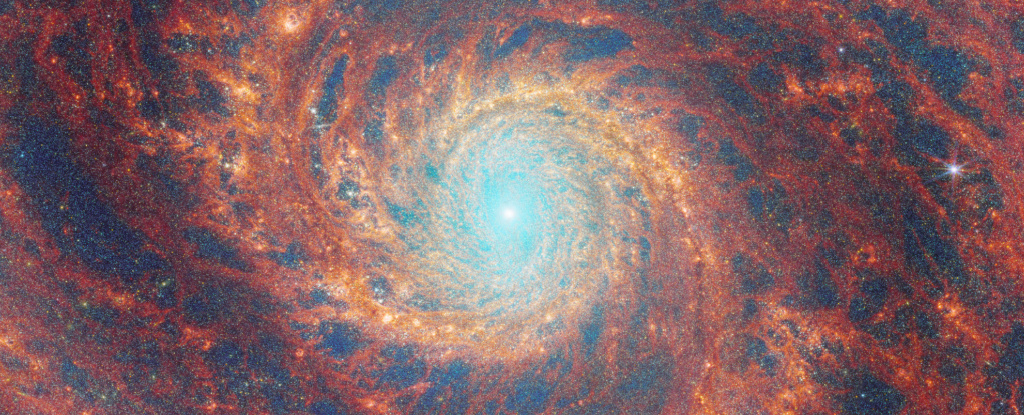
JWST Captures The Whirlpool Galaxy, And It May Be Its Most Mesmerizing Image Yet Science Alert - August 30, 2023
The Whirlpool Galaxy, aka M51, is one of the most well-known objects in the night sky. It's close enough and prominent in the northern sky that amateur astronomers have shared stunning pictures of it for decades.
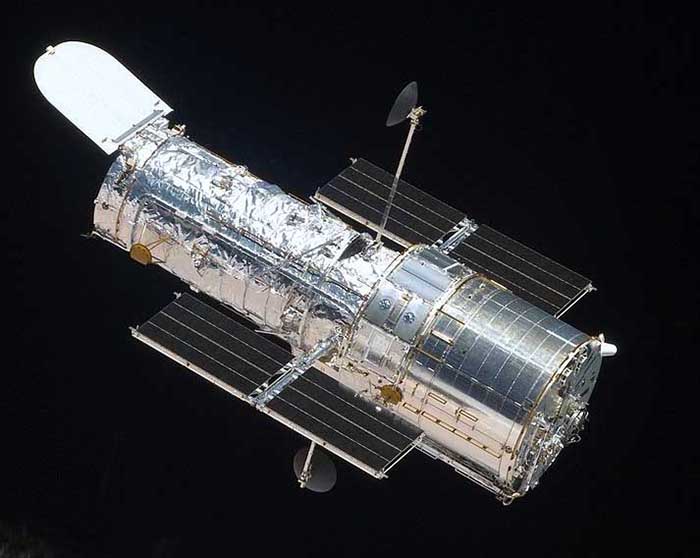
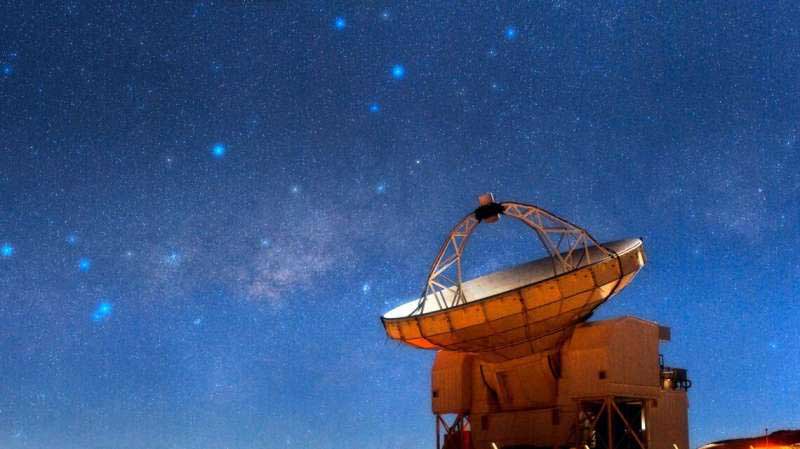
Chile: The Atacama Pathfinder Experiment Telescope PhysOrg - March 23, 2022
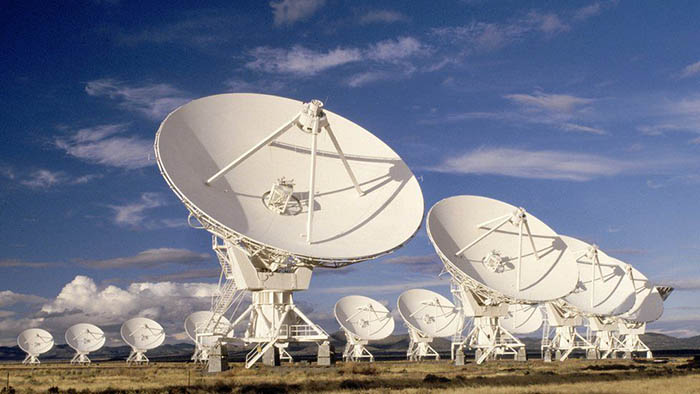
Man has always looked to the skies for answers ... as if a celestial blueprint that tells the story of humanity's journey in time and space. Creation myths connect gods with the heavens, often the constellations, sometimes with a link to ancient aliens who came to Earth to seed humanity and will one day return. As the millennia progressed, so too did the use of telescopes to find answers to many of these age-old questions. That quest continues today with new and more advanced technologies as we venture into space. One has to wonder ... have any of the advanced telescopes ever captured the image of a UFO.
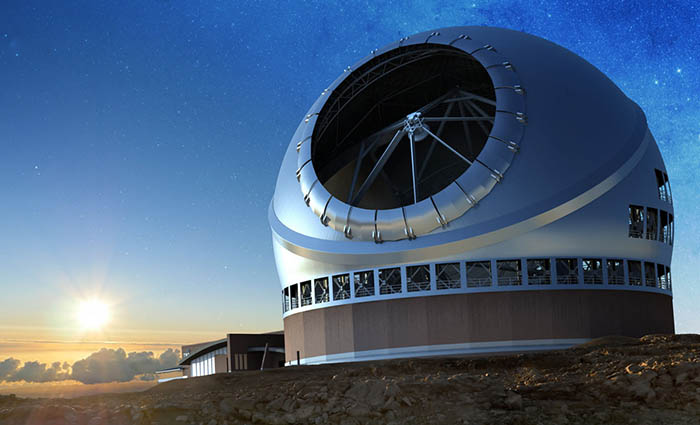
A telescope is an instrument that aids in the observation of remote objects by collecting electromagnetic radiation (such as visible light). The first known practical telescopes were invented in the Netherlands at the beginning of the 17th century, using glass lenses. They found use in terrestrial applications and astronomy.
Within a few decades, the reflecting telescope was invented, which used mirrors. In the 20th century many new types of telescopes were invented, including radio telescopes in the 1930s and infrared telescopes in the 1960s. The word telescope now refers to a wide range of instruments detecting different regions of the electromagnetic spectrum, and in some cases other types of detectors.
The word "telescope" was coined in 1611 by the Greek mathematician Giovanni Demisiani for one of Galileo Galilei's instruments presented at a banquet at the Accademia dei Lincei. In the Starry Messenger Galileo had used the term "perspicillum". Read more
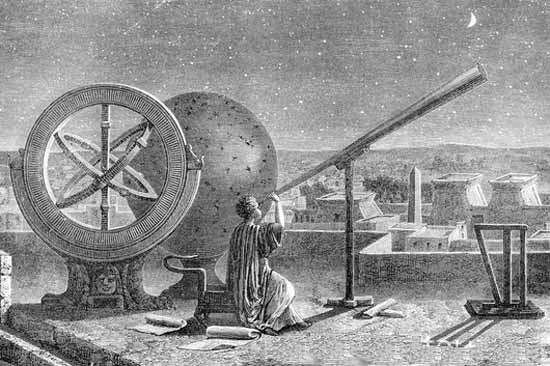
The earliest recorded working telescopes were the refracting telescopes that appeared in the Netherlands in 1608. Their development is credited to three individuals: Hans Lippershey and Zacharias Janssen, who were spectacle makers in Middelburg, and Jacob Metius of Alkmaar. Galileo heard about the Dutch telescope in June 1609, built his own within a month, and greatly improved upon the design in the following year.
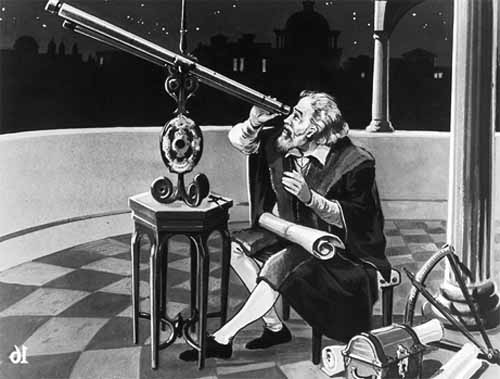
The idea that the objective, or light-gathering element, could be a mirror instead of a lens was being investigated soon after the invention of the refracting telescope. The potential advantages of using parabolic mirrors - reduction of spherical aberration and no chromatic aberration - led to many proposed designs and several attempts to build reflecting telescopes. In 1668, Isaac Newton built the first practical reflecting telescope, of a design which now bears his name, the Newtonian reflector.
The invention of the achromatic lens in 1733 partially corrected color aberrations present in the simple lens and enabled the construction of shorter, more functional refracting telescopes. Reflecting telescopes, though not limited by the color problems seen in refractors, were hampered by the use of fast tarnishing speculum metal mirrors employed during the 18th and early 19th century a problem alleviated by the introduction of silver coated glass mirrors in 1857, and aluminized mirrors in 1932. The maximum physical size limit for refracting telescopes is about 1 meter (40 inches), dictating that the vast majority of large optical researching telescopes built since the turn of the 20th century have been reflectors. The largest reflecting telescopes currently have objectives larger than 10 m (33 feet).
The 20th century also saw the development of telescopes that worked in a wide range of wavelengths from radio to gamma-rays. The first purpose built radio telescope went into operation in 1937. Since then, a tremendous variety of complex astronomical instruments have been developed. Continue reading